


Mauprat
"Jean Epstein adapts George Sand's Mauprat."
Keys: Space play/pause · ←/→ 10s · F fullscreen · M mute · </> speed
About this film
Romantic novelist George Sand's Mauprat as adapted by cinema visionary Jean Epstein. As a child, orphan Bernard de Mauprat was adopted by Tristan, a brigand who brought him up with his biological sons to hate, kill and pillage. Hubert de Mauprat, the elder brother of Tristan, the.
Cast & crew
More films like this

More Drama films
View all →







More from Jean Epstein
View all →

More about this film
About the production
Release dateDecember 17, 1926 (France)
Box officeBox office records from 1926 France are not well documented
ProductionSociété des Films Jean Epstein, Les Films Albatros
Filmed inFrance - likely studio locations in or around Paris
Jean Epstein adapted George Sand's 1837 novel with his characteristic avant-garde sensibility, blending literary adaptation with cinematic innovation. The film was produced during Epstein's most creative period, when he was developing his theories of photogénie - the idea that cinema could reveal the essence of reality through the camera lens. The production faced challenges typical of silent era filmmaking, including the need for elaborate period costumes and sets to depict 18th century France.
Themes
Redemption and transformationThe power of love to change human natureNature versus nurtureSocial class and mobilityThe civilizing influence of education and culture
Themes & topics
transformationredemptionromanceperiod dramasocial classeducationlove story18th centuryFrench nobilitymoral developmentcoming of agearranged marriagereformationcivilizationwild to refined
Historical background
Mauprat (1926) reached screens through Société des Films Jean Epstein. Exhibitors of the time built silent-era bills that mixed shorts, features, and live acts, so a clear premise helped Mauprat travel between cities and exchange markets.
Why this film matters
Archivists and revival programmers still cite Mauprat (1926) when tracing studio habits, casting pools, and the visual rhetoric audiences once took for granted. Even modest surviving prints help map how Mauprat fit beside competing releases of its day.
Making of
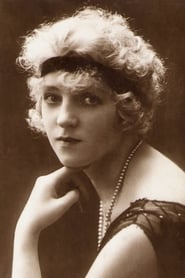
Jean Epstein approached the adaptation of George Sand's novel with both reverence for the source material and his desire to push cinematic boundaries. The production involved extensive location scouting for appropriate 18th-century settings, though much was filmed on studio sets. Epstein worked closely with his cinematographers to achieve the visual effects he wanted, particularly in scenes showing Bernard's transformation from savage to nobleman. The casting of Sandra Milovanoff as Edmée was considered a coup, as she was at the height of her popularity. Epstein, who was also a film theorist, used the production as an opportunity to experiment with his ideas about rhythm, movement, and the emotional power of images. The film's editing reflects Epstein's interest in creating emotional impact through rapid cuts and expressive camera movements, techniques that were innovative for the time.
What critics said
Trade coverage around 1926 discussed Mauprat for pacing, clarity, and program fit rather than blockbuster grosses. Later writers value it as evidence of period style and as a reference point beside other films from the same era.
Did you know?
- Jean Epstein was only 28 years old when he directed this ambitious literary adaptation
- The film is based on George Sand's 1837 novel of the same name, one of her most popular works
- Sandra Milovanoff, who plays Edmée, was especially popular French actresses of the 1920s
- The film highlights Epstein's theory of 'photogénie' - his belief that cinema could reveal the essential nature of reality
- Mauprat was considered one of Epstein's most successful commercial films during his lifetime
- The film's restoration in recent years has brought new attention to Epstein's contribution to French cinema
- George Sand's novel was controversial in its time for its feminist themes and critique of social conventions
- The film was released during the height of the French avant-garde movement, alongside works by filmmakers like Luis Buñuel and Jean Renoir
- Epstein's adaptation was praised for preserving the romantic spirit of Sand's novel while adding cinematic innovation
- The film's period detail and costumes were particularly noted by contemporary critics for their authenticity
Awards & recognition
- No major awards documented for 1926 French films
Visual style
The cinematography of Mauprat highlights Epstein's innovative approach to visual storytelling, employing techniques that were ahead of their time. The film makes extensive use of chiaroscuro lighting to emphasize the contrast between Bernard's savage past and his emerging nobility. Epstein and his cinematographers employed expressive camera movements, including tracking shots and dramatic angles, to convey emotional states and psychological transformation. The visual style evolves throughout the film, mirroring Bernard's journey from darkness to light - early scenes are shot with darker, more claustrophobic compositions, while later scenes open up to brighter, more expansive framing. The film also makes effective use of close-ups to capture the emotional nuances of the performances, particularly in scenes between Bernard and Edmée. Period detail is rendered with careful attention to lighting and composition, creating a convincing 18th-century atmosphere while maintaining the film's modernist sensibility.
Innovations
Mauprat demonstrated several technical innovations for its time, particularly in its use of camera movement and editing techniques. Epstein employed sophisticated tracking shots and dynamic camera angles that were unusual for mid-1920s cinema, using the camera not just to record action but to actively participate in storytelling. The film's editing shows advanced understanding of rhythmic cutting, using rapid sequences to convey emotional states and psychological transformation. The production also achieved notable success in creating convincing period atmosphere through detailed set design and costume work, overcoming the technical limitations of studio filmmaking in the 1920s. The film's lighting techniques, particularly its use of shadow and contrast to represent moral and psychological states, were technically sophisticated for the period and influenced subsequent French cinema.
Music
As a silent film, Mauprat would have been accompanied by live musical performance during its original theatrical run. The typical accompaniment would have consisted of a small orchestra or pianist performing a compiled score that mixed classical pieces with original compositions. The music would have been carefully synchronized with the on-screen action, emphasizing emotional moments and dramatic transitions. For the film's romantic scenes, popular classical pieces by composers like Chopin or Debussy might have been used, while more dramatic or action sequences would have required more intense musical accompaniment. Modern screenings of restored versions often feature newly composed scores that attempt to capture both the period setting and the film's avant-garde sensibility, using a combination of period-appropriate instruments and contemporary musical techniques.
Famous quotes
As a silent film, dialogue was conveyed through intertitles. Key intertitles included: 'Can a man born to violence learn to love?' 'Her faith in him became his salvation' 'From the darkness of his past, a new man emerged' 'Love conquered the beast within' 'Nobility is not born, it is earned through deeds'
Memorable scenes
- The dramatic opening sequence showing Bernard's brutal upbringing among the brigands, establishing his savage nature through stark visual contrasts and aggressive camera work
- The first encounter between Bernard and Edmée, where her beauty and kindness immediately begin to transform him, captured through soft focus lighting and gentle camera movement
- The pivotal scene where Bernard chooses to defend Edmée's honor rather than continue his life of crime, marking his moral turning point
- The climactic duel sequence where Bernard proves his transformation through noble conduct, filmed with dynamic action and emotional intensity
- The final reconciliation scene between Bernard and Edmée, where their love triumphs over social barriers, captured through romantic lighting and intimate close-ups
What audiences thought
Mauprat was well-received by French audiences upon its release in 1926, proving to be one of Epstein's more commercially successful films. The romantic story and dramatic transformation of the protagonist resonated with moviegoers of the era, who appreciated both the literary pedigree and the visual spectacle. The film's themes of redemption and the power of love to transform human nature had broad appeal across different social classes. Sandra Milovanoff's performance as Edmée was particularly popular with audiences, cementing her status as one of France's leading actresses. While the film did not achieve the blockbuster status of some contemporary productions, it maintained a steady run in French theaters and was subsequently exported to other European countries, where it found appreciative audiences among art film enthusiasts.
Film connections
Influenced by
- George Sand's 1837 novel 'Mauprat'
- French Romantic literary tradition
- 19th century French realist literature
- German Expressionist cinema (visual style)
- Soviet montage theory (editing techniques)
- French literary adaptation tradition
- Silent era melodrama conventions
- Avant-garde film movements of the 1920s
This film influenced
- Subsequent French literary adaptations
- Period romantic dramas
- Films about redemption and transformation
- French poetic realist films of the 1930s
- Later Jean Epstein works
- French heritage films of later decades
Film restoration
Mauprat has survived the decades in varying degrees of completeness. While not considered a lost film, some versions may be incomplete or damaged. The film has undergone restoration efforts by film archives, particularly French institutions dedicated to preserving cinematic heritage. Recent digital restorations have made the film accessible to modern audiences while preserving its historical significance. The restoration work has revealed the sophistication of Epstein's visual style and the film's technical achievements. Some original elements may still be missing or degraded, but enough material exists to present a coherent version of the film.
Where to watch
- Available through specialized film archives and cinematheques
- Screenings at classic film festivals and silent cinema events
- Some versions may be accessible through academic film collections
- Potential availability through European cinema streaming services specializing in classic films
- Film museum screenings and retrospectives of Jean Epstein's work