Josep Llorens Artigas
Actor
- Born
- June 16, 1892, Barcelona, Spain
- Died
- December 11, 1980
- Active
- 1930
- Birth name
- Josep Llorens i Artigas
Films 1
About Josep Llorens Artigas
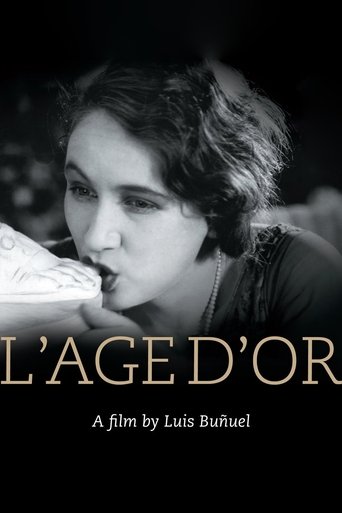
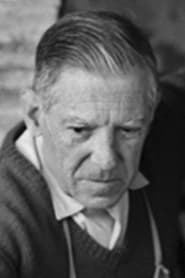
Josep Llorens Artigas was a distinguished Spanish ceramicist and art critic who is primarily remembered in the realm of classic cinema for his singular, iconic appearance in Luis Buñuel and Salvador Dalí's surrealist masterpiece 'L'Âge d'or' (1930). Born in Barcelona, Artigas was a central figure in the European avant-garde movement, bridging the gap between traditional craftsmanship and modern art. His involvement in cinema was born out of his close personal friendships with the leading Surrealists of the era, particularly Dalí and Joan Miró, with whom he collaborated extensively on ceramic works. In 'L'Âge d'or', he portrayed the Governor, a role that required him to embody the rigid, often absurd authority figures that Buñuel sought to satirize. While his filmography is limited to this seminal work, his presence in the film serves as a vital link between the visual arts and the burgeoning experimental cinema of the early 20th century. Throughout his life, he remained more dedicated to his kilns than the camera, eventually becoming one of the most influential potters of the 20th century, known for his mastery of glazes and minimalist forms.
More about Josep Llorens Artigas
On screen
Artigas employed a deadpan, stoic acting style in his cinematic appearance, which perfectly complemented the subversive and dreamlike atmosphere of Surrealist cinema. His performance relied on physical presence and the projection of bourgeois dignity, which was then systematically undermined by the film's chaotic narrative.
Impact on culture
Josep Llorens Artigas represents the intersection of fine art and early experimental cinema. His participation in 'L'Âge d'or' helped define the 'look' of Surrealist film, utilizing non-professional actors from the art world to create a sense of 'uncanny reality.' Beyond the screen, he revolutionized European ceramics by moving the medium away from ornate decoration toward a focus on pure form and the chemistry of glazes, influencing generations of craftspeople.
Lasting legacy
Artigas's legacy is twofold: he is immortalized in film history as a face of the Surrealist revolution and revered in art history as the man who elevated ceramics to the status of high art. The Fundació Tallers Josep Llorens Artigas in Gallifa continues to preserve his techniques and promote the ceramic arts, ensuring his influence persists in the 21st century.
Who they inspired
He influenced the aesthetic direction of Surrealist performance by demonstrating how a non-actor's natural gravitas could be used for satirical effect. In the art world, his minimalist approach influenced modernists like Miró and Braque.
Off screen
Artigas was deeply embedded in the intellectual circles of Barcelona and Paris. He married and had a son, Joan Gardy Artigas, who followed in his footsteps as a celebrated ceramicist and continued the family's collaboration with Joan Miró. Artigas spent much of his later life in the village of Gallifa, where he established a creative foundation.
Education
Escola de la Llotja (Barcelona), Cercle Artístic de Sant Lluc
Career milestones
- Featured as the Governor in the landmark Surrealist film 'L'Âge d'or' (1930)
- Established a world-renowned ceramics studio in Charenton-le-Pont, France
- Collaborated on over 200 ceramic pieces with Joan Miró starting in the 1940s
- Served as a prominent art critic for the publication 'La Veu de Catalunya'
- Awarded the Gold Medal of the Generalitat de Catalunya for his contributions to the arts
Iconic roles
- The Governor in L'Âge d'or (1930)
Must-see films
- L'Âge d'or (1930)
Awards
- Grand Prix at the Milan Triennale (1954)
- Gold Medal of the City of Barcelona (1971)
- Gold Medal of the Generalitat de Catalunya (1980)
Special recognition
- Honorary Member of the International Academy of Ceramics
- Subject of a major retrospective at the Picasso Museum
Worked often with
- Luis Buñuel (Director)
- Salvador Dalí (Writer/Artist)
- Joan Miró (Artist)
- Raoul Dufy (Painter)
Studios
- Studio 28 (Distributor of L'Âge d'or)
Family
- Unknown (married early 20th century)
Did you know?
- He was a close friend of Pablo Picasso and often visited him in the south of France.
- His role in 'L'Âge d'or' was essentially a cameo arranged through his social circle in the Parisian avant-garde.
- He wrote several influential books on the technique of ceramic glazing.
- Artigas lived in Paris during the 1920s, which was the height of the Surrealist movement.
- He collaborated with Raoul Dufy on a series of ceramic gardens before working with Miró.
- Despite his fame in the art world, he remained a humble craftsman who preferred the solitude of his workshop in Gallifa.
In their own words
The fire is the one who finishes the work; the artist only prepares the way.
In 'L'Âge d'or', we weren't acting; we were participating in a revolution of the mind.
Questions and answers
Who was Josep Llorens Artigas?
Josep Llorens Artigas was a world-renowned Spanish ceramicist and art critic who famously appeared as an actor in the 1930 Surrealist film 'L'Âge d'or'.
What films is Josep Llorens Artigas best known for?
He is exclusively known for his role as the Governor in 'L'Âge d'or', directed by Luis Buñuel and written by Salvador Dalí.
When was Josep Llorens Artigas born and when did he die?
He was born on June 16, 1892, in Barcelona, Spain, and passed away on December 11, 1980, in the same city.
What awards did Josep Llorens Artigas win?
While he did not win film awards, he received prestigious art honors including the Grand Prix at the Milan Triennale and the Gold Medal of the Generalitat de Catalunya.
What was Josep Llorens Artigas's acting style?
His style was characterized by a stoic, non-professional naturalism that served the Surrealist goal of placing ordinary-looking people in extraordinary or absurd situations.