Max Ernst
Actor
- Born
- April 2, 1891, Brühl, Germany
- Died
- April 1, 1976
- Active
- 1919-1976
- Birth name
- Maximilian Maria Ernst
Films 1
About Max Ernst
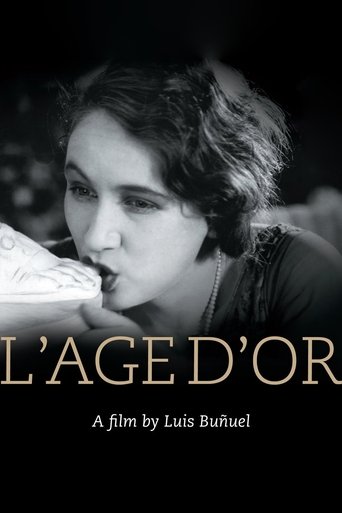
Max Ernst was a towering figure of 20th-century avant-garde art, primarily celebrated as a pioneer of the Dada and Surrealist movements. Born in Brühl, Germany, he studied philosophy and psychology at the University of Bonn before serving as a soldier in World War I, an experience that profoundly traumatized him and fueled his lifelong critique of modern society. In the early 1920s, he moved to Paris and became a central member of the Surrealist circle led by André Breton, where he revolutionized visual art through the invention of techniques like frottage and grattage. His foray into cinema was a natural extension of his interest in the 'transformation from within,' leading to his notable appearance as the Bandit Chief in Luis Buñuel's 1930 masterpiece 'L'Âge d'or.' During World War II, he fled Nazi-occupied France for the United States with the help of Peggy Guggenheim, later settling in Sedona, Arizona, before returning to France in the 1950s. Throughout his long career, Ernst remained a 'magician of infinite possibilities,' constantly bridging the gap between painting, sculpture, and the moving image.
More about Max Ernst
On screen
Ernst's acting was characterized by a stoic, almost ritualistic presence that mirrored the dreamlike and disruptive nature of Surrealist art. In 'L'Âge d'or,' he portrayed the Bandit Chief with a rugged, authoritative stillness, embodying the primal and anti-establishment spirit of the film's narrative. His performance relied less on traditional dramatic technique and more on his physical presence as a living extension of the Surrealist aesthetic, blending seamlessly into the film's bizarre and provocative vignettes.
Impact on culture
Max Ernst's impact on culture extends far beyond the canvas; he was instrumental in defining the visual vocabulary of the subconscious. By participating in 'L'Âge d'or,' he helped bridge the gap between fine art and the emerging medium of sound cinema, proving that film could be a vehicle for radical, non-linear poetic expression. His invention of techniques like frottage influenced generations of artists to embrace chance and automation, while his presence in film solidified the link between the Surrealist movement and the 'Seventh Art.'
Lasting legacy
Ernst's legacy is preserved through his massive body of work which is held in every major modern art museum globally, including the MoMA and the Tate. He is remembered as the 'magician' of the Surrealists, an artist who never stopped evolving and who successfully navigated the transition from the silent era's experimentalism to the complex psychological landscapes of post-war art. His influence persists in both contemporary visual arts and avant-garde filmmaking, where his 'cinematic' approach to collage remains a point of study.
Who they inspired
He influenced countless artists and filmmakers, from the immediate circle of Surrealists like Dorothea Tanning and Leonora Carrington to later experimental directors like Jan Švankmajer and David Lynch, who draw on his dreamlike juxtapositions.
Off screen
Ernst's personal life was as unconventional and vibrant as his art, marked by several high-profile marriages to influential women in the art world. He was a central figure in the intellectual social circles of Paris and later New York, often finding himself at the heart of the Surrealist movement's internal politics and creative breakthroughs.
Education
Studied Philosophy, Art History, Literature, Psychology, and Psychiatry at the University of Bonn (1909–1914)
Career milestones
- Co-founded the Cologne Dada group in 1919
- Invented the 'frottage' technique in 1925
- Starring role as the Bandit Chief in the surrealist film L'Âge d'or (1930)
- Published the collage novel 'Une semaine de bonté' in 1934
- Awarded the Grand Prize for Painting at the Venice Biennale in 1954
- Major retrospective at the Solomon R. Guggenheim Museum in 1955
Iconic roles
- Bandit Chief in L'Âge d'or (1930)
- Himself in Dreams That Money Can Buy (1947)
Must-see films
- L'Âge d'or (1930)
- Dreams That Money Can Buy (1947)
- 8x8: A Chess Sonata in 8 Movements (1957)
Awards
- Grand Prize for Painting at the Venice Biennale (1954)
- Lichtwark Prize (1964)
- Grand Prix National des Arts (1961)
Special recognition
- Max Ernst Museum opened in Brühl (2005)
- Officer of the Legion of Honour
- Honorary Doctorate from the University of Bonn
Worked often with
- Luis Buñuel (Director)
- Salvador Dalí (Artist/Writer)
- André Breton (Surrealist Leader)
- Hans Arp (Artist)
- Paul Éluard (Poet)
- Hans Richter (Director)
Studios
- Independent (Surrealist Cinema)
- Vicomte de Noailles (Patronage)
Family
- Luise Straus (1918–1927)
- Marie-Berthe Aurenche (1927–1942)
- Peggy Guggenheim (1942–1946)
- Dorothea Tanning (1946–1976)
Did you know?
- Ernst had a bird-like alter ego named 'Loplop' who appeared frequently in his work.
- He was once imprisoned as an 'undesirable foreigner' in France at the start of WWII.
- He had no formal artistic training, making him a self-taught master of his craft.
- The film 'L'Âge d'or' was so controversial it was banned for over 40 years in France.
- He lived in Sedona, Arizona, for several years, where he built his own house and studio.
- Ernst's father, a strict Catholic, once painted Max as a young Jesus, which may have sparked his later rebellion against religious imagery.
In their own words
Creativity is that marvelous capacity to grasp mutually distinct realities and draw a spark from their juxtaposition.
Painting is not for me either decorative amusement, or the plastic invention of felt reality; it must be every time: invention, discovery, revelation.
A painter may know what he does not want. But woe to him if he wants to know what he wants! A painter is lost if he finds himself.
Questions and answers
Who was Max Ernst in the context of cinema?
While primarily a world-renowned Surrealist painter, Max Ernst was a key figure in early avant-garde cinema, most notably starring as the Bandit Chief in Luis Buñuel's 'L'Âge d'or' (1930) and collaborating on Hans Richter's 'Dreams That Money Can Buy'.
What is Max Ernst's most famous film role?
He is best known for his role as the leader of the bandits in the opening sequence of 'L'Âge d'or' (1930), a landmark film of the Surrealist movement.
When was Max Ernst born and when did he die?
Max Ernst was born on April 2, 1891, in Brühl, Germany, and passed away on April 1, 1976, in Paris, France, just one day before his 85th birthday.
What awards did Max Ernst win?
His most prestigious award was the Grand Prize for Painting at the 1954 Venice Biennale, which brought him late-career international fame and financial stability.
What was Max Ernst's artistic style?
Ernst was a pioneer of Dada and Surrealism, known for using 'found' images and textures to create irrational, dreamlike juxtapositions. His style was experimental and often utilized techniques he invented, such as frottage (rubbing) and grattage (scraping).