
Hans Richter
Actor & Director
Born: April 6, 1888 in Berlin, Germany Died: February 1, 1976 Active: 1919-1976
Films
3 films
About Hans Richter
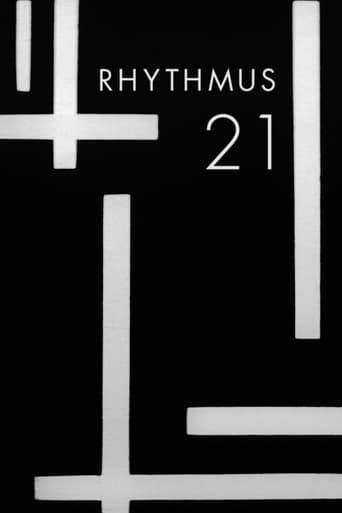
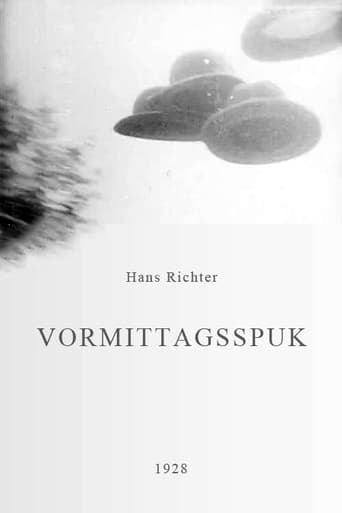
German artist, filmmaker, and key figure in the Dada movement: revolutionary approach to abstract cinema fundamentally influenced avant-garde film. Born in Berlin in 1888, Richter initially studied at the Academy of Fine Arts in Munich and Berlin before being profoundly affected by his experiences in World War I, which led him to embrace radical artistic expression. He co-founded the Dada movement in Zurich alongside Tristan Tzara and Hans Arp, creating provocative anti-art that challenged conventional aesthetics. Richter's most significant contribution to cinema came through his abstract films, particularly 'Rhythmus 21' (1921-1923), considered one of the first purely abstract films ever created, which used geometric shapes and rhythmic movement to explore the relationship between visual art and time. His 1928 film 'Ghosts Before Breakfast' (Vormittagsspuk) became a classic of surrealist cinema, featuring everyday objects rebelling against their mundane existence in a playful critique of industrial society. After the rise of Nazism forced him to flee Germany, Richter continued his artistic work in France and later the United States, where he taught at the City College of New York and influenced generations of experimental filmmakers. Throughout his career, Richter remained committed to exploring the boundaries between art forms, ultimately creating a body of work that bridged painting, film, and conceptual art, establishing him as experimental filmmakers of the 20th century.
The Craft
On Screen
While primarily known as a director, Richter appeared in his own films as part of his experimental approach, rejecting traditional acting methods in favor of performance art that blurred the boundaries between actor and artist. His on-screen presence was deliberately anti-theatrical, reflecting Dadaist principles that rejected conventional dramatic expression in favor of spontaneous, often absurdist gestures that complemented his films' surrealist visual style.
Behind the Camera
Richter's directing style was revolutionary for its complete rejection of narrative conventions, instead focusing on pure visual rhythm, abstract forms, and the musical quality of moving images. He pioneered techniques of animation, superimposition, and rapid editing to create what he called 'visual music,' using geometric shapes and everyday objects to explore the temporal possibilities of cinema. His approach was deeply influenced by Dadaist anti-art principles and constructivist theories of visual composition, resulting in films that were both intellectual exercises in form and playful subversions of cinematic expectations.
Milestones
- Co-founded the Dada movement in Zurich (1916)
- Created 'Rhythmus 21' (1921-1923), the first abstract film
- Directed 'Ghosts Before Breakfast' (1928), a surrealist masterpiece
- Fled Nazi Germany and continued work in exile (1933)
- Taught at City College of New York (1940s-1960s)
- Published influential book 'The Struggle for the Film' (1926)
- Curated major exhibitions of avant-garde art
- Influenced generations of experimental filmmakers
Best Known For
Iconic Roles
Must-See Films
Accolades
Won
- German Film Award for lifetime achievement (1973)
Nominated
- Venice Film Festival nomination for Dreams That Money Can Buy (1947)
Special Recognition
- Order of Merit of the Federal Republic of Germany
- Retrospective exhibitions at major museums worldwide
- Inducted into Experimental Film Hall of Fame
Working Relationships
Worked Often With
Studios
Why They Matter
Impact on Culture
Hans Richter fundamentally transformed the language of cinema by demonstrating that film could exist without narrative, characters, or conventional storytelling, establishing abstract cinema as a legitimate artistic medium. His work with the Dada movement helped bridge the gap between avant-garde visual arts and filmmaking, creating a new interdisciplinary approach that influenced countless artists across multiple disciplines. Richter's theoretical writings, particularly 'The Struggle for the Film,' provided intellectual justification for experimental cinema and helped establish it as a serious art form worthy of academic study. His films challenged audiences to reconsider their relationship with moving images, paving the way for music videos, abstract animation, and contemporary digital art. Richter's influence extended beyond cinema into the broader cultural landscape, affecting everything from advertising design to contemporary art installation practices.
Lasting Legacy
Hans Richter's legacy endures through his work in abstract and experimental cinema, which continues to inspire filmmakers, artists, and animators more than a century after his first films were created. His films are preserved and screened at major film archives and museums worldwide, including the Museum of Modern Art in New York and the Cinémathèque Française in Paris. Richter's theoretical contributions to film studies remain required reading in film schools, and his emphasis on the visual and musical qualities of cinema anticipated many developments in contemporary media arts. The annual Hans Richter Award for Experimental Film honors his contributions, and his work continues to be referenced by contemporary artists working in digital media, installation art, and experimental film. Richter's integration of different art forms and his commitment to artistic freedom and experimentation established a model for interdisciplinary artistic practice that remains relevant today.
Who They Inspired
Richter's influence on cinema and art is immeasurable, directly inspiring generations of experimental filmmakers including Norman McLaren, Len Lye, and Stan Brakhage, who expanded on his techniques of abstract animation and visual rhythm. His work with geometric abstraction influenced the development of computer animation and motion graphics, while his surrealist approach prefigured music videos and contemporary advertising. Richter's theoretical writings on film as an independent art form influenced the development of film studies as an academic discipline, and his emphasis on the international nature of avant-garde art helped establish global networks of experimental filmmakers. His integration of music and visual elements anticipated multimedia art installations, and his collaborative approach influenced artist collectives and interdisciplinary art movements throughout the 20th century.
Off Screen
Hans Richter's personal life was marked by political upheaval, artistic collaboration, and eventual exile. He was married twice, first to Emmy Hennings, a fellow Dada artist and performer, and later to Gisela Schmidt, with whom he had two children. His relationships often overlapped with his artistic endeavors, as he frequently collaborated with his partners on creative projects. Richter's life was dramatically affected by the rise of Nazism, forcing him to flee Germany in 1933 and eventually settle in the United States, where he continued his artistic and educational work until his death in 1976.
Education
Academy of Fine Arts, Munich; Academy of Fine Arts, Berlin; Studies under Lovis Corinth and Adolf Hölzel
Family
- Emmy Hennings (1920s)
- Gisela Schmidt (1930s-1976)
Did You Know?
- Richter's film 'Ghosts Before Breakfast' was banned by the Nazis for being 'degenerate art' and all copies were ordered destroyed, though some survived
- He served in World War I and was seriously wounded, an experience that profoundly influenced his anti-war artistic stance
- Richter was one of the signatories of the 1938 'Film and Photo' manifesto calling for experimental art
- His film 'Rhythmus 21' was created by painting directly on film strips, a technique he pioneered
- Richter collaborated with famous composers including Paul Hindemith and Darius Milhaud on film scores
- He was friends with Albert Einstein, who admired his approach to visualizing time and space
- Richter's 1947 film 'Dreams That Money Can Buy' featured segments by Man Ray, Max Ernst, and Marcel Duchamp
- He taught at the City College of New York for over 20 years, influencing thousands of students
- Richter's early work was influenced by his studies of color theory under Adolf Hölzel
- He was one of the first filmmakers to explore the relationship between abstract art and cinema
In Their Own Words
The film of the future will be the synthesis of painting, poetry, and music in motion.
I wanted to create a film that would be like music, but for the eyes.
Cinema should not imitate reality but create its own reality.
The struggle for the film is the struggle for freedom of artistic expression.
Abstract film is the visual equivalent of absolute music.
Frequently Asked Questions
Who was Hans Richter?
German artist, filmmaker, and key figure in the Dada movement known for creating some of the first abstract films in cinema history. He was instrumental in developing experimental cinema as an art form and influenced generations of avant-garde filmmakers through his innovative techniques and theoretical writings.
What films is Hans Richter best known for?
Titles linked here include Rhythmus 21 (1923), Ghosts Before Breakfast (1928).
When was Hans Richter born and when did he die?
Born April 6, 1888; died February 1, 1976.
What awards did Hans Richter win?
Richter received the German Film Award for lifetime achievement in 1973 and was nominated for the Venice Film Festival for 'Dreams That Money Can Buy' in 1947. He was also awarded the Order of Merit of the Federal Republic of Germany and has been honored with retrospective exhibitions at major museums worldwide.
What was Hans Richter's directing style?
Richter's directing style was revolutionary for its complete rejection of narrative conventions, focusing instead on abstract forms, visual rhythm, and what he called 'visual music.' He pioneered techniques of animation, superimposition, and geometric composition, influenced by Dadaist principles and constructivist theories, creating films that were both intellectual exercises and playful subversions of cinema.
How did Hans Richter influence cinema?
Richter fundamentally influenced cinema by establishing abstract film as a legitimate artistic medium and demonstrating that film could exist without narrative or characters. His techniques influenced animation, music videos, and experimental film, while his theoretical writings helped establish film studies as an academic discipline and provided intellectual justification for experimental cinema.
Why did Hans Richter leave Germany?
Richter fled Germany in 1933 after the Nazis rose to power and labeled his work as 'degenerate art.' As a prominent Dadaist and experimental filmmaker with anti-establishment views, he faced persecution and his films were banned and ordered destroyed. He eventually settled in the United States, where he continued his artistic and educational work.