Fernand Léger
Actor & Director
Born: February 4, 1881 in Argentan, Orne, France Died: August 17, 1955 Active: 1905-1955 (artistic career), 1924 (film career) Birth Name: Joseph Fernand Henri Léger
Films
1 film
About Fernand Léger
Fernand Léger (1881-1955) was a French painter and sculptor who in the development of Cubism and modern art. While primarily known for his artistic contributions, he ventured into experimental cinema with the film 'Ballet Mécanique' in 1924, collaborating with American filmmaker Dudley Murphy and composer George Antheil. Léger's involvement in cinema was brief but influential, bringing his mechanical aesthetic and modernist vision to the moving image. His artistic five decades, during which he developed a distinctive style characterized by bold colors, tubular forms, and mechanical imagery. After serving in World War I, where his experiences influenced his 'mechanical period,' Léger became fascinated with the relationship between humans and machines. This fascination culminated in 'Ballet Mécanique,' an avant-garde film that abandoned traditional narrative in favor of rhythmic visual abstraction. Though his film work was limited to this single project, it remains a landmark in experimental cinema history. Léger later taught at Yale University and continued painting until his death, leaving an indelible mark on both modern art and avant-garde film.
The Craft
On Screen
Léger did not have a traditional acting style as his film involvement was limited to experimental work. In 'Ballet Mécanique,' he appeared briefly alongside other collaborators, but the film focused primarily on mechanical objects and abstract imagery rather than human performance.
Behind the Camera
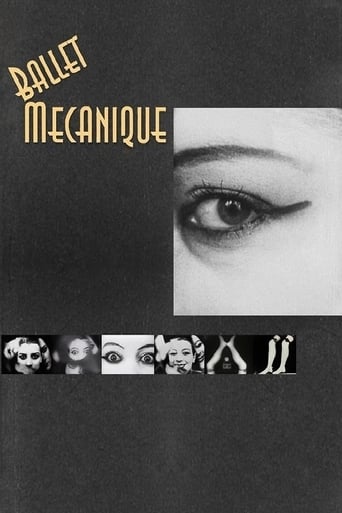
Léger's directing approach in 'Ballet Mécanique' was revolutionary, emphasizing mechanical rhythm, visual abstraction, and the synchronization of images with Antheil's complex musical score. He abandoned traditional narrative structure in favor of rapid montage, close-ups of mechanical objects, and geometric patterns. His style reflected his painting aesthetic, bringing Cubist principles to cinema through fragmented perspectives and the celebration of modern industrial forms.
Milestones
- work in Cubism movement
- Creation of 'Ballet Mécanique' (1924)
- Development of 'Tubism' style
- Teaching at Yale University (1940s)
- Major retrospective at Museum of Modern Art (1953)
- Influence on Pop Art movement
- War service and its impact on his mechanical aesthetic
Best Known For
Iconic Roles
Must-See Films
Accolades
Won
- Grand Prize at Venice Biennale (1955)
- Carnegie International Prize (1950)
- Légion d'honneur (1955)
Special Recognition
- Member of Académie des Beaux-Arts
- Major retrospectives at MoMA, Centre Pompidou
- Influenced Pop Art movement
- Pioneer of mechanical aesthetic in modern art
Working Relationships
Worked Often With
Why They Matter
Impact on Culture
Fernand Léger's impact extended far beyond traditional art boundaries, influencing visual culture, industrial design, and experimental cinema. 'Ballet Mécanique' revolutionized film language by demonstrating how cinema could exist without narrative, focusing instead on pure visual rhythm and mechanical beauty. His mechanical aesthetic anticipated the machine age fascination that would dominate 20th-century art and design. Léger's work bridged the gap between fine art and popular culture, paving the way for later movements like Pop Art. His bold use of primary colors and tubular forms influenced advertising, animation, and graphic design throughout the century. The film's innovative editing techniques and synchronization of visual and musical elements influenced generations of experimental filmmakers and music video directors.
Lasting Legacy
Fernand Léger's legacy in cinema history rests primarily on 'Ballet Mécanique,' which remains. Though his film career was brief, the work continues to be studied in film schools and screened at avant-garde festivals worldwide. His greater legacy lies in how he successfully translated Cubist principles to the moving image, demonstrating cinema's potential as an abstract art form. Léger's mechanical aesthetic influenced countless filmmakers, from the Soviet montage theorists to contemporary digital artists. His work presaged music videos, computer animation, and abstract cinema by decades. The Musée National Fernand Léger in Biot, France, preserves his artistic legacy, while 'Ballet Mécanique' continues to inspire new generations of experimental filmmakers and visual artists.
Who They Inspired
Léger influenced numerous artistic movements and individual artists. His mechanical aesthetic directly inspired Pop Art pioneers like Andy Warhol and Roy Lichtenstein. Experimental filmmakers including Stan Brakhage, Norman McLaren, and Oskar Fischinger drew inspiration from 'Ballet Mécanique's' abstract approach. His teaching at Yale influenced American artists like Robert Rauschenberg and Jasper Johns. The film's rhythmic editing anticipated music video techniques by over 50 years. Contemporary digital artists and computer animators continue to reference Léger's work when exploring the relationship between technology and visual expression. His integration of art and machinery influenced industrial designers and architects throughout the 20th century.
Off Screen
Fernand Léger led a complex personal life marked by two marriages and numerous artistic relationships. His first marriage to Jeanne-Augustine Lohy lasted from 1919 until her death in 1950. In 1952, he married Nadia Khodossievitch, who was 37 years his junior and became his primary model in his later works. Léger was known for his communist political beliefs and active participation in the French Communist Party. During World War II, he lived in exile in the United States, teaching at Yale and influencing a generation of American artists. His wartime experiences in WWI profoundly affected his artistic vision, leading to his famous mechanical period.
Education
École des Arts Décoratifs, Paris (1897-1899), Académie Julian, Paris (1900-1902), Architecture apprenticeship (1903-1904)
Family
- Jeanne-Augustine Lohy (1919-1950)
- Nadia Khodossievitch (1952-1955)
Did You Know?
- 'Ballet Mécanique' was originally intended to be synchronized with George Antheil's mechanical music score, but the technology of the time made this impossible
- The film caused a riot at its Paris premiere due to its radical departure from traditional cinema
- Léger served in the French Army during WWI and was exposed to mustard gas, which influenced his mechanical period
- He was a committed communist and his later works often included themes of workers and industrial progress
- The original version of 'Ballet Mécanique' was lost and only reconstructed in the 1990s
- Léger appeared briefly in the film alongside his collaborator Dudley Murphy
- The film features Charlie Chaplin in a brief cameo, though this was cut from most versions
- Léger's painting 'The Mechanic' (1920) shares visual themes with 'Ballet Mécanique'
- He was one of the few major Cubist artists to successfully transition to more figurative work in his later career
- The film's runtime varies between versions, from 7 to 20 minutes depending on the reconstruction
In Their Own Words
The beautiful in this age of mechanical production is no longer the beautiful of the past, but the beauty of the machine.
I have used the machine as others have used the nude, or the still life.
The contrast of volumes, the play of colors, the rhythm of forms constitute the plastic reality which I seek.
Modern life is full of violence, of contrasts, of surprises. It is the raw material of painting.
Cinema is the art of the future, the only art that can truly capture the rhythm of modern life.
Frequently Asked Questions
Who was Fernand Léger?
French painter, sculptor, and experimental filmmaker who played a crucial role in the development of Cubism. While primarily known for his artistic contributions, he created the influential experimental film 'Ballet Mécanique' in 1924, bringing his mechanical aesthetic to cinema and helping establish film as an abstract art form.
What films is Fernand Léger best known for?
Titles linked here include Ballet Mécanique (1924).
When was Fernand Léger born and when did he die?
Born February 4, 1881; died August 17, 1955.
What awards did Fernand Léger win?
Léger received numerous prestigious awards including the Grand Prize at the Venice Biennale in 1955, the Carnegie International Prize in 1950, and was named a Chevalier of the Légion d'honneur in 1955. He also became a member of the Académie des Beaux-Arts and had major retrospectives at major museums worldwide.
What was Fernand Léger's directing style?
Léger's directing style in 'Ballet Mécanique' was revolutionary and abstract, emphasizing mechanical rhythm, rapid montage, and geometric patterns. He abandoned narrative structure entirely, focusing instead on the visual beauty of machines, objects, and abstract forms synchronized to music. His approach brought Cubist principles to cinema through fragmented perspectives and industrial imagery.