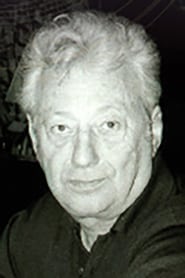
Jean Aurenche
Actor
- Born
- September 11, 1903, Pierrelatte, Drôme, France
- Died
- September 29, 1992
- Active
- 1930-1992
- Birth name
- Jean-Marie Louis Charles Philippe Aurenche
Films 1
About Jean Aurenche
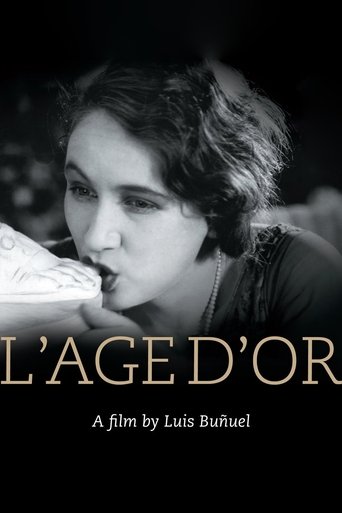
Jean Aurenche was a monumental figure in French cinema, primarily celebrated as one of the most influential screenwriters of the 20th century. Born in Pierrelatte in 1903, he began his creative journey within the vibrant Surrealist circles of the 1920s, a connection solidified by his sister Marie-Berthe's marriage to the artist Max Ernst. While he is best known for his writing, Aurenche's early foray into film included a notable acting appearance as a bandit in Luis Buñuel's surrealist masterpiece 'L'Âge d'or' (1930). Throughout the 1940s and 1950s, he formed a legendary screenwriting partnership with Pierre Bost, becoming the primary architects of the 'Tradition of Quality' in French filmmaking. This style, characterized by literary adaptations and psychological depth, dominated the industry until it was famously challenged by the critics of the Nouvelle Vague. Despite the professional setbacks caused by the New Wave's rise, Aurenche experienced a triumphant career resurgence in the 1970s through his collaboration with director Bertrand Tavernier, proving his enduring relevance and mastery of the craft until his death in 1992.
More about Jean Aurenche
On screen
Naturalistic yet stylized, fitting the avant-garde and surrealist movements of the early 1930s.
Impact on culture
Jean Aurenche was the face of the 'Tradition of Quality' in French cinema, a period defined by high production values and sophisticated literary adaptations. His work provided the backbone for French cinema's international prestige in the post-war era. However, he also became a cultural lightning rod when the French New Wave critics, led by François Truffaut, used his 'psychological realism' as the primary example of what they believed was wrong with 'stagnant' French filmmaking.
Lasting legacy
His legacy is twofold: he is remembered as the master of the classical French screenplay and as a survivor who successfully bridged the gap between the Golden Age of French cinema and the modern era. His late-career work with Bertrand Tavernier is often cited as some of the finest writing in French film history, proving that his talent for character and dialogue transcended generational shifts.
Who they inspired
He influenced a generation of screenwriters in the art of the 'literary adaptation,' showing how to translate complex novels into cinematic structures without losing their psychological essence. His resilience in the face of the New Wave's criticism also served as an inspiration for veteran filmmakers during the 1970s revival.
Off screen
Aurenche was deeply embedded in the French intellectual and artistic elite. His sister, Marie-Berthe Aurenche, was a painter and the second wife of the famed surrealist Max Ernst. He maintained close friendships with literary and cinematic giants such as Jean Cocteau, Jean Anouilh, and the Prévert brothers.
Education
Educated in France; he gained his primary 'cinematic education' through his involvement with the Groupe d'Octobre and the surrealist movement.
Career milestones
- Appeared in the landmark surrealist film L'Âge d'or (1930)
- Established the 'Aurenche and Bost' writing partnership in 1942
- Won the Palme d'Or at Cannes for La Symphonie pastorale (1946)
- Scripted the Academy Award-winning Best Foreign Language Film Forbidden Games (1952)
- Became a central target of François Truffaut's 'A Certain Tendency of French Cinema' essay in 1954
- Won three César Awards for Best Screenplay in the 1970s and 1980s
- Collaborated extensively with Bertrand Tavernier to revitalize his late career
Iconic roles
- Bandit in L'Âge d'or (1930)
Must-see films
- L'Âge d'or (1930)
- Hôtel du Nord (1938)
- La Symphonie pastorale (1946)
- Le Diable au corps (1947)
- Forbidden Games (1952)
- Gervaise (1956)
- The Clockmaker (1974)
- Coup de Torchon (1981)
Awards
- César Award for Best Original Screenplay or Adaptation - Que la fête commence (1976)
- César Award for Best Original Screenplay or Adaptation - Le Juge et l'Assassin (1977)
- César Award for Best Adaptation - L'Étoile du Nord (1983)
- Palme d'Or (as writer) - La Symphonie pastorale (1946)
- BAFTA Award for Best Film (as writer) - Gervaise (1956)
Nominations
- César Award Nomination for Best Screenplay - Coup de Torchon (1982)
- Academy Award Nomination for Best Foreign Language Film (as writer) - Gervaise (1957)
Special recognition
- Subject of the documentary 'Jean Aurenche, écrivain de cinéma' (2010)
- Portrayed by Denis Podalydès in the film 'Laissez-passer' (2002)
Worked often with
- Pierre Bost (Writing Partner)
- Claude Autant-Lara (Director)
- Bertrand Tavernier (Director)
- Jean Delannoy (Director)
- René Clément (Director)
- Max Ernst (Artist/Brother-in-law)
Studios
- Gaumont
- Pathé
- Les Films du Losange
Family
- Information regarding specific legal marriages is largely private, though he had significant long-term partners within the film community.
Did you know?
- His sister's marriage to Max Ernst gave him direct access to the inner circle of the Surrealist movement.
- He was a member of the 'Groupe d'Octobre,' a left-wing agitprop theatre troupe in the 1930s.
- François Truffaut's famous 1954 attack on French cinema specifically named 'Aurenche and Bost' as the symbols of the 'Cinema of Quality' they sought to destroy.
- He worked in advertising during the 1930s, directing commercials for brands like Nicolas Wine.
- He co-wrote the screenplay for 'Is Paris Burning?' (1966) alongside Gore Vidal and Francis Ford Coppola.
- The 2002 film 'Laissez-passer' (Safe Conduct) is a semi-biographical look at his life during the Nazi occupation of France.
In their own words
On screenwriting: 'A script is not a piece of literature; it is a blueprint for a dream that must be built by many hands.'
Regarding the New Wave: 'They wanted to kill the father, but they forgot that the father still had stories to tell.'
Questions and answers
Who was Jean Aurenche?
Jean Aurenche was a prolific French screenwriter and occasional actor, best known for defining the 'Tradition of Quality' in French cinema through his literary adaptations. He is famous for his long-standing partnership with Pierre Bost and his later work with Bertrand Tavernier.
What films is Jean Aurenche best known for?
He is best known for writing classics like 'Forbidden Games' (1952), 'Gervaise' (1956), and 'Hôtel du Nord' (1938). He also appeared as an actor in the surrealist film 'L'Âge d'or' (1930).
When was Jean Aurenche born and when did he die?
Jean Aurenche was born on September 11, 1903, in Pierrelatte, France, and passed away on September 29, 1992, in Bandol, France, at the age of 89.
What awards did Jean Aurenche win?
He won three César Awards for Best Screenplay for the films 'Que la fête commence' (1976), 'Le Juge et l'Assassin' (1977), and 'L'Étoile du Nord' (1983).
What was Jean Aurenche's writing style?
His style was characterized by 'psychological realism' and a mastery of dialogue, often focusing on the internal lives of characters within faithful but cinematically inventive literary adaptations.