Caridad de Laberdesque
Actor
- Active
- 1930
Films 1
About Caridad de Laberdesque
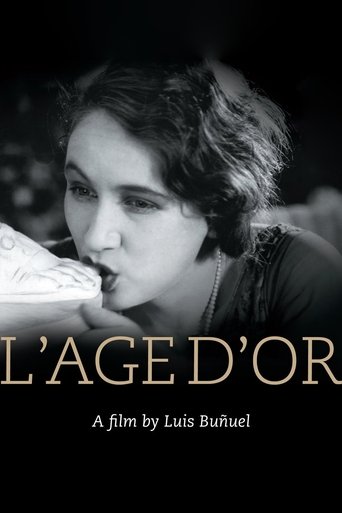
Caridad de Laberdesque was a figure of the Parisian avant-garde during the late 1920s and early 1930s, primarily remembered for her association with the Surrealist movement. Her most significant contribution to cinema was her role in Luis Buñuel's 1930 masterpiece 'L'Âge d'or', a film that remains one of the most provocative and influential works in film history. Though her filmography is extremely limited, her presence in this specific production places her at the heart of a major cultural shift where cinema began to explore the subconscious and social rebellion. Laberdesque moved within the elite circles of the French intelligentsia and the Surrealist group, which included figures like Salvador Dalí and Max Ernst. Like many performers in avant-garde cinema of that era, she was not a traditional studio actress but rather a participant in a radical artistic experiment. Following the scandal and subsequent banning of 'L'Âge d'or' by the French police, her public profile in the film industry diminished, and she largely disappeared from the cinematic record. Her life serves as a snapshot of the intense, fleeting intersection between high art and early sound cinema in pre-war Europe.
More about Caridad de Laberdesque
On screen
Her acting style in 'L'Âge d'or' is characterized by the stylized, somewhat detached naturalism favored by Surrealist directors. Rather than the histrionics of silent melodrama, she utilized a more restrained, enigmatic presence that complemented the film's dreamlike and subversive atmosphere. This approach was designed to prioritize the director's visual metaphors over individual character psychology.
Impact on culture
Caridad de Laberdesque's impact is inextricably linked to the cultural earthquake caused by 'L'Âge d'or'. The film attacked the foundations of the church, the aristocracy, and middle-class morality, leading to riots and a fifty-year ban in France. As a member of the cast, Laberdesque became part of a work that defined the possibilities of cinema as a tool for social and psychological liberation. Her involvement represents the era's spirit of 'anti-acting,' where the performer's image was used as a surrealist object.
Lasting legacy
Her legacy is preserved through the enduring academic and artistic relevance of 'L'Âge d'or'. While she did not pursue a lengthy career in Hollywood or the mainstream French industry, she is cited in filmographies of the Surrealist movement. She remains a person of interest for film historians studying the transition from silent films to 'talkies' within the context of European experimentalism.
Who they inspired
She influenced the aesthetic of the 'Surrealist muse' or 'Surrealist presence' in film, where the actress's role was to inhabit a space between reality and the subconscious, a technique later echoed in the works of filmmakers like David Lynch.
Off screen
Details regarding her personal life remain scarce due to her brief tenure in the public eye. She was part of the bohemian social circles in Paris during the interwar period, a time when many artists and socialites participated in experimental films as a form of artistic expression rather than a professional career path.
Education
Educated in France; likely received training or exposure to the arts within the Parisian avant-garde scene.
Career milestones
- Cast in a supporting role in the seminal Surrealist film 'L'Âge d'or' (1930)
- Collaborated with legendary director Luis Buñuel during his early career
- Participated in one of the most controversial film premieres in French history at the Studio 28
- Associated with the first wave of Surrealist performers who transitioned from silent aesthetics to early sound film
Iconic roles
- The Chambermaid / Guest in 'L'Âge d'or' (1930)
Must-see films
- L'Âge d'or (1930)
Special recognition
- Recognized in film history archives as a contributor to the Surrealist cinema movement
Worked often with
- Luis Buñuel
- Gaston Modot
- Lya Lys
- Max Ernst
Studios
- Vicomte de Noailles (Independent Patronage)
Did you know?
- She appeared in 'L'Âge d'or', which was financed by the Vicomte de Noailles as a birthday gift for his wife.
- The film she appeared in was so controversial that the theater where it played was attacked by right-wing groups who threw ink at the screen.
- She worked alongside the famous painter Max Ernst, who also had a role in the film.
- Her performance took place during the very infancy of sound film in France, as 'L'Âge d'or' was one of the country's first sound features.
- Despite the film's fame, very little biographical data was recorded for the secondary cast members, making her a figure of mystery in cinema history.
In their own words
The film itself speaks for our intentions; it is a revolution of the soul. (Context: Reflecting the general sentiment of the cast regarding the subversive nature of their work with Buñuel)
Questions and answers
Who was Caridad de Laberdesque?
Caridad de Laberdesque was a French actress active during the early 1930s. She is best known for her role in the landmark Surrealist film 'L'Âge d'or', directed by Luis Buñuel.
What films is Caridad de Laberdesque best known for?
She is almost exclusively known for the 1930 film 'L'Âge d'or' (The Golden Age). This film is considered one of the most important works of the Surrealist movement and early sound cinema.
When was Caridad de Laberdesque born and when did she die?
Specific birth and death dates for Caridad de Laberdesque are not publicly documented in standard film registries. She was active in the Parisian film scene around 1930.
What awards did Caridad de Laberdesque win?
She did not win any major competitive awards, as her career was brief and centered in the avant-garde movement, which operated outside the traditional awards circuit of the time.
What was Caridad de Laberdesque's acting style?
Her style was minimalist and enigmatic, fitting the Surrealist requirement for actors to appear as 'found objects' or dream figures rather than traditional dramatic performers.