Indochina: Children Gathering Coins Scattered by Western Women
"Vietnamese children scramble for coins tossed by visitors."
Keys: Space play/pause · ←/→ 10s · F fullscreen · M mute · </> speed
About this film
Vietnamese children collect coins that are thrown them by two aristocratic ladies.
Cast & crew
More films like this

More Documentary films
View all →

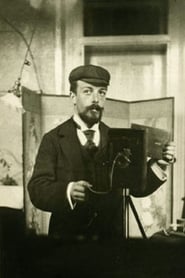
More from Gabriel Veyre
View all →
More about this film
About the production
Release date1901
Box officeNot applicable - early shorts were not tracked for box office performance
ProductionLumière Company
Filmed inIndochina (likely Vietnam or Cambodia)
Filmed by Gabriel Veyre, a Lumière company cinematographer sent to document exotic locations for European audiences. The scene was likely staged rather than captured spontaneously, as was common with early travelogue films. The use of real local children rather than actors adds an ethnographic quality to the production. The film was shot using the Lumière Cinématographe, which served as both camera and projector.
Themes
Colonial power dynamicsCultural superiorityPaternalismExoticismEconomic disparity
Themes & topics
Historical background
By 1901, Indochina: Children Gathering Coins Scattered by Western Women was shaped by the earliest projected-film era technology, distribution, and audience expectations.
Why this film matters
Indochina: Children Gathering Coins Scattered by Western Women (1901) helps trace genre evolution, performer careers, and exhibition practices of its period.
Making of
Gabriel Veyre traveled extensively throughout Indochina with the cumbersome Cinématographe equipment, which had to be hand-cranked and required careful setup. The filming of this particular scene likely involved coordinating with local authorities or colonial administrators to gather the children. The Western women featured were probably wives of colonial officials or European expatriates living in Indochina at the time. The stationary camera position was typical of early Lumière productions, which favored observational perspectives over mobile cinematography. The coin-throwing action was repeated multiple times to ensure adequate footage, as film stock was expensive and early cameras had limited shooting capacity.
What critics said
Trade coverage around 1901 discussed Indochina: Children Gathering Coins Scattered by Western Women in terms of craft and audience appeal rather than blockbuster scale.
Did you know?
- Gabriel Veyre was one of the Lumière brothers' most prolific cinematographers, documenting locations across Asia and the Middle East
- The film is part of a series of 'exotic' views that were extremely popular with European audiences in the early 1900s
- The coin-scattering scene was a recurring motif in colonial films, symbolizing the relationship between colonizers and colonized
- This film survives today and is preserved in film archives, making it one of the earliest moving images of life in Indochina
- The children in the film were likely paid participants, though the amount probably exceeded what they could earn otherwise
- Western women in colonial settings were often depicted as benevolent figures in early cinema
- The film was originally shown as part of a program of short films, not as a standalone feature
- Veyre spent several years in Asia (1899-1901) documenting various locations for the Lumière company
- The film's French title was 'Indochine: Enfants ramassant des pièces jetées par des dames occidentales'
- Early actualités like this were often presented with live musical accompaniment and sometimes a lecturer explaining the scenes
Visual style
The film employs the characteristic static camera position of early Lumière productions, with the Cinématographe mounted on a tripod for stability. The composition places the Western women in an elevated position, literally and figuratively above the local children, reinforcing colonial hierarchies through visual arrangement. The black and white images show the technical limitations of early film stock, with limited tonal range and contrast. The single continuous take without editing was standard for the period, creating an unmediated observational quality. The framing captures both the action of coin-scattering and the reaction of the children, providing a complete view of the orchestrated scene.
Innovations
While not technically innovative for its time, the film demonstrates the portable capabilities of the Lumière Cinématographe, which allowed filming in remote locations like Indochina. The successful capture of a scene with multiple moving subjects in bright outdoor lighting showcases the adaptability of early film equipment. The film represents an early example of location shooting far from the filmmaker's home country, which was logistically challenging in 1901. The preservation of the film for over 120 years also speaks to the durability of early celluloid stock when properly stored.
Music
This was a silent film produced before the advent of synchronized sound. When originally exhibited, it would have been accompanied by live music, typically a piano or small ensemble playing appropriate pieces. The musical accompaniment might have included exotic-sounding compositions or popular light classical pieces typical of the era. Some exhibitors may have used sound effects or had a lecturer provide narration explaining the scene to the audience. No original score was composed specifically for this film.
Memorable scenes
- The entire film consists of a single memorable scene: Western women in elegant colonial dress standing above and scattering coins to Vietnamese children who scramble below to collect them, creating a visual metaphor for colonial relationships
What audiences thought
Early 20th century European audiences reportedly found films like this fascinating, as they offered rare visual access to distant colonies and 'exotic' cultures. The novelty of seeing moving images of people from different parts of the world was a major draw in the cinema's first decade. Modern audiences viewing the film in archival contexts often experience a mix of historical interest and discomfort with the colonial power dynamics on display. The film is now primarily viewed by scholars, film enthusiasts, and those interested in colonial history rather than general entertainment audiences.
Film connections
Influenced by
- Lumière company actualités
- Early travelogue films
- Colonial exhibition photography
- Ethnographic documentation practices
This film influenced
- Subsequent colonial travelogues
- Early ethnographic films
- Documentaries about Southeast Asia
Film restoration
Preserved - The film survives in archives and is part of various early cinema collections. It has been digitized and is available through some film archives and educational platforms.
Where to watch
- European Film Gateway
- Lumière Institute archives
- Some academic film collections
- Various online early cinema archives