Keys: Space play/pause · ←/→ 10s · F fullscreen · M mute · </> speed
Plot
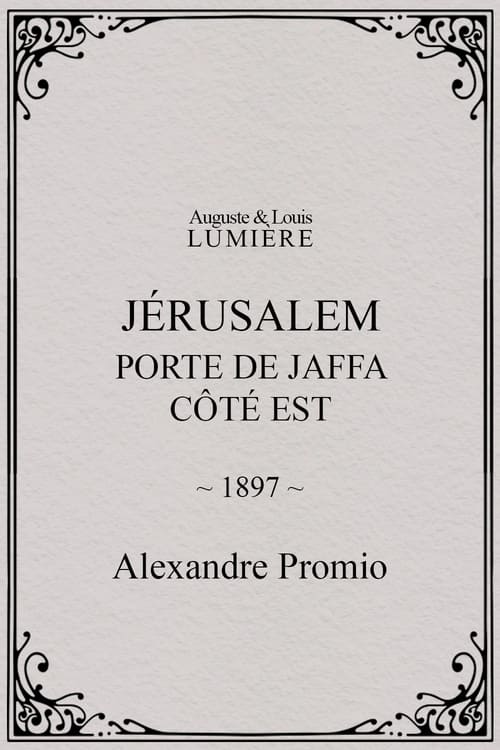
This pioneering documentary short captures a brief glimpse of daily life at Jerusalem's Jaffa Gate from its eastern perspective. The film shows pedestrians, merchants, and possibly animals moving through one of the most historic entrances to the Old City of Jerusalem. As one of the earliest motion pictures recorded in the Holy Land, it preserves a moment of 19th-century Ottoman-era Jerusalem life. The stationary camera observes the natural flow of people and activities around this ancient gateway, which has served as a primary entrance to Jerusalem for centuries. The film represents the Lumière company's effort to document exotic and historically significant locations around the world during cinema's infancy.
Director
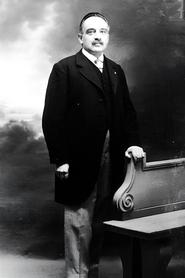 Alexandre Promio
About the Production
Release Date 1897
Box Office Not commercially released for public exhibition in the modern sense
Production Société Lumière
Filmed In Jerusalem, Ottoman Empire (specifically Jaffa Gate, eastern side)
Filmed using the Lumière Cinématographe, which served as both camera, projector, and developer. Alexandre Promio was one of the Lumière brothers' most trusted operators, sent to document locations worldwide. The camera would have been hand-cranked, creating approximately 16-18 frames per second. The filming required transporting heavy equipment to Jerusalem and setting up in a public space, which would have attracted curious onlookers unfamiliar with motion picture technology.
You Might Also Like
More Documentary Films
View all →
More from Alexandre Promio
View all →
New York, Brooklyn Bridge
1899
Panorama of the Grand Canal Taken from a Boat
1896
Leaving Jerusalem by Railway
1897
Une bataille dans le vieux Stockholm
1897
Danse au bivouac
1896
Constantinople, panorama des rives du Bosphore
1897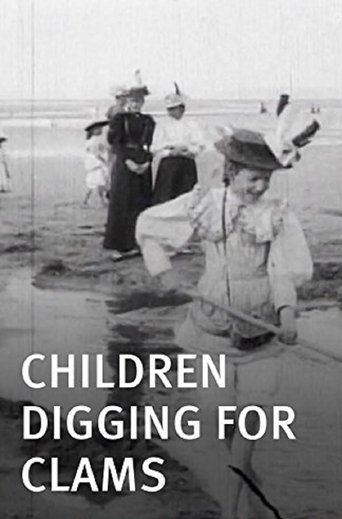
Children Digging for Clams
1896
New York: Broadway at Union Square
1896
Themes & Topics
JerusalemJaffa GateOttoman EmpireDocumentaryStreet sceneCity lifeHistorical landmarkMiddle East19th centurySilent film
Historical Background
This film was created during a pivotal moment in both cinematic and world history. 1897 was just two years after the Lumière brothers' first public film screening in Paris, marking cinema's emergence as a new medium. The late 19th century saw increased Western interest in the Holy Land, with improved transportation making Jerusalem more accessible to European travelers and documentarians. The Ottoman Empire, which controlled Jerusalem at the time, was experiencing modernization efforts while maintaining its traditional character. This period also saw the early stages of Zionist immigration to Palestine, though this movement would not significantly impact Jerusalem's demographic composition until later decades. The film captures Jerusalem at the crossroads between its ancient heritage and the approaching modern era, preserving a visual record of daily life that would soon be transformed by the technological and political changes of the 20th century.
Why This Film Matters
This film holds immense cultural and historical importance as one of the earliest moving images of Jerusalem, providing an invaluable visual record of the city during the Ottoman period. It represents the beginning of visual documentation in the Middle East and serves as a precursor to the rich tradition of filmmaking in the region. The film demonstrates how early cinema functioned as a tool for cultural exploration and documentation, bringing distant and exotic locations to European audiences. For Palestinians and Israelis today, such early films represent rare windows into their shared heritage before the profound changes of the 20th century. The preservation of everyday life at Jaffa Gate offers historians, architects, and cultural scholars authentic visual evidence of how one of the world's most contested cities appeared and functioned over 125 years ago. This documentary approach established a template for ethnographic and travel filmmaking that would influence generations of documentarians.
Making Of
Alexandre Promio was dispatched by the Lumière brothers as part of their global project to document the world through moving images. The filming of Jerusalem in 1897 presented significant logistical challenges, including transporting the fragile and heavy Cinématographe equipment through difficult terrain to reach the holy city. Local residents would have been fascinated by the strange apparatus, likely gathering around the camera operator. The filming required finding a stable position for the camera near Jaffa Gate, ensuring adequate lighting (natural sunlight only), and capturing enough movement to make the scene interesting. Promio had to work quickly due to the limited film capacity and the technical constraints of early cinema equipment. The presence of a Western filmmaker with advanced technology in Ottoman Jerusalem would have been a notable event, potentially drawing official attention from Ottoman authorities.
What Critics Said
Contemporary critical reception is virtually impossible to document as film criticism as we know it did not exist in 1897. However, these Lumière actualités were generally received with wonder and amazement by audiences who had never seen moving images before. Modern film historians and archivists regard this film as an invaluable historical document and a significant example of early documentary filmmaking. Scholars of early cinema cite it as an important example of the Lumière brothers' documentary ethos and their global vision for cinema. The film is studied in academic contexts as evidence of 19th-century Jerusalem and as a milestone in the history of documentary film. Film preservationists emphasize its rarity and importance as one of the earliest surviving motion pictures of the Middle East.
Did You Know?
- This is one of the earliest motion pictures ever filmed in Jerusalem and the broader Middle East region
- Alexandre Promio was a pioneering cinematographer who traveled extensively for the Lumière company, filming in over 20 countries
- The film was created during the Ottoman period, when Jerusalem was part of the Ottoman Empire
- Jaffa Gate is one of eight gates in the walls of the Old City of Jerusalem and was historically the main entrance for travelers from Jaffa port
- The Lumière brothers' actualités were typically single, uninterrupted shots showing real scenes rather than staged narratives
- This film predates the establishment of the film industry in Palestine/Israel by several decades
- The camera technology used could only film for about one minute before needing to be reloaded
- Early films like this were often shown as part of variety programs alongside magic lantern shows and live performances
- The film represents some of the earliest moving images of daily life in the Holy Land
- Promio is credited with developing some of the first camera movements in cinema history
More film details Visual style, music, quotes, restoration, and more
Visual Style
The cinematography represents the most basic techniques of early cinema - a stationary camera position capturing a single continuous shot. The composition would have been carefully chosen to include the architectural elements of Jaffa Gate while showing the movement of people and activities. The black and white imagery, created on 35mm film, would have had the characteristic high contrast and grain of late 19th-century motion picture technology. The camera was likely positioned at street level or slightly elevated to provide a clear view of the gate and surrounding area. No camera movements were possible beyond what could be achieved by panning the entire camera apparatus, and most early Lumière films used completely static shots. The lighting depended entirely on natural daylight, with filming likely taking place during midday to ensure adequate exposure.
Innovations
While technically simple by modern standards, this film represented cutting-edge technology in 1897. The use of the Lumière Cinématographe was itself an achievement, as it was one of the most advanced film devices of its time. The successful filming in Jerusalem demonstrated the portability and reliability of early film equipment in challenging conditions. The preservation of the film stock in the harsh climate of the Middle East was a significant technical challenge. The film contributes to the historical record of early documentary techniques and the Lumière brothers' approach to capturing reality. The very existence of this film over 125 years later is a testament to early film preservation efforts, though many films from this period have been lost.
Music
The film was created during the silent era and had no synchronized soundtrack. During original exhibitions, the film would have been accompanied by live music, typically a pianist or small ensemble playing appropriate music. The choice of music might have included exotic or oriental-themed pieces to match the location, or simply popular music of the period. Some exhibitors might have used sound effects created live to enhance the viewing experience. No original musical accompaniment specific to this film is known to exist. Modern screenings typically feature period-appropriate music or specially composed scores that reflect the historical and cultural context of the film.
Famous Quotes
No dialogue or intertitles in this silent documentary film
Memorable Scenes
- The continuous shot showing the eastern side of Jaffa Gate with pedestrians, merchants, and daily activities in Ottoman-era Jerusalem - representing one of the earliest moving images of life in the Holy City
What Audiences Thought
Original audiences in the late 1890s would have been fascinated simply by the technology of moving images, regardless of the subject matter. The exotic location of Jerusalem would have added to the film's appeal for European viewers who had limited access to images of the Holy Land. Contemporary audiences, primarily film historians, academics, and cinema enthusiasts, view this film with appreciation for its historical value rather than entertainment. The film is now typically shown in film archives, museums, and specialized cinema history screenings rather than general public exhibitions. Modern viewers are often struck by the authenticity of the scene and the realization that they are watching unscripted moments from over 125 years ago in one of the world's oldest continuously inhabited cities.
Film Connections
Influenced By
- Lumière brothers' actualité film style
- Early documentary tradition
- Travelogue photography
- Ethnographic documentation practices
This Film Influenced
- Subsequent Lumière actualités filmed in exotic locations
- Early travel documentaries
- Documentary shorts about Jerusalem and the Holy Land
- Ethnographic films of the early 20th century
Film Restoration
The film is preserved in film archives, likely including the Cinémathèque Française and possibly the Lumière Institute archives. As a Lumière production, it has benefited from the company's extensive preservation efforts. The film exists in its original 35mm format and has likely been digitized for modern access and preservation. While many films from this period have been lost, this particular title survives as part of the important Lumière collection that documents the birth of cinema.
Where to Watch
- Available through film archives and specialized cinema history platforms
- May be included in collections of early cinema documentaries
- Accessible through some academic film databases
- Potentially available in museum collections focusing on early cinema or Middle Eastern history
- May be featured in retrospective screenings of Lumière films or early documentaries