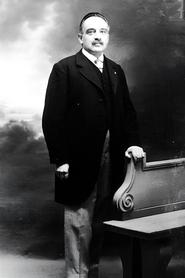
Alexandre Promio

Alexandre Promio

Director

Born: July 27, 1868 in Lyon, France Died: December 24, 1926 Active: 1896-1900 (primary period with Lumière), continued in film industry until 1920s Birth Name: Alexandre Louis Promio

About Alexandre Promio

Alexandre Promio was a pioneering French filmmaker and one of the most important early cinematographers who worked for the Lumière brothers during cinema's infancy. Born in Lyon, France, he joined the Lumière company in 1896 and quickly became one of their most prolific and innovative operators, traveling extensively to capture actuality films around the world. Promio is credited with developing several early cinematic techniques, including what many consider the first example of camera movement in his 1896 film 'Panorama of the Grand Canal Taken from a Boat,' where he filmed from a moving gondola. His work took him across Europe and to America, where he captured some of the earliest moving images of New York City, including Broadway and Battery Place. Between 1896 and 1900, he directed and shot hundreds of short films, establishing many of the foundational techniques of documentary and travel filmmaking. After leaving the Lumière company around 1900, he continued to work in the film industry but never achieved the same level of prominence as during his groundbreaking early years. His legacy lies in his technical innovations and his role in expanding cinema's geographical and artistic horizons during its crucial formative period.

The Craft

Behind the Camera

Promio's directing style was characterized by innovative camera techniques for his time, including the use of camera movement to create dynamic perspectives. He was known for his observational approach to filmmaking, capturing real-life scenes with minimal intervention. His work demonstrated an early understanding of how camera placement and movement could enhance the viewer's experience, particularly in his travel and landscape films. He often employed wide shots to establish location and context, then moved to closer perspectives to capture detail and human activity.

Milestones

  • Joined Lumière company as one of their first traveling cinematographers (1896)
  • Created what is considered the first moving camera shot in 'Panorama of the Grand Canal' (1896)
  • Filmed extensively across Europe, Russia, and North America
  • Shot some of the earliest motion pictures of New York City (1896)
  • Pioneered techniques in panoramic and travel cinematography
  • Directed and shot over 300 short films for the Lumière company

Best Known For

Must-See Films

  • Panorama of the Grand Canal Taken from a Boat (1896)
  • New York: Broadway at Union Square (1896)
  • New York. Arrival of a Train at Battery Place (1896)
  • Children Digging for Clams (1896)
  • Danse au bivouac (1896)
  • Panorama du Pont Neuf (1896)
  • Arrivée d'un train en gare de La Ciotat
  • as cinematographer) ],
  • awards
  • nominations
  • honors
  • Recognized by film historians as a pioneer of camera movement,Credited with creating the first traveling shot in cinema history,Honored in film history retrospectives on early cinema pioneers
  • personalLife
  • Alexandre Promio was born into a middle-class family in Lyon, the same city where the Lumière brothers established their film empire. He married and had children, though specific details about his family life remain scarce in historical records. After his active filmmaking period with the Lumière company, he continued to work in various capacities within the film industry. He spent his later years in relative obscurity compared to his groundbreaking early career, dying in Lyon in 1926 at the age of 58.
  • spouses
  • Married (spouse name not documented in available sources)
  • children
  • Had children (names not documented in available sources)
  • education
  • Limited formal education details available; likely received standard French education of the period
  • studioAffiliations
  • Lumière Company (1896-1900)
  • frequentCollaborators
  • Auguste and Louis Lumière,Francis Doublier,Alexandre Mesguich
  • mentors
  • Auguste and Louis Lumière
  • protégés
  • Influenced early documentary and travel filmmakers,Inspired subsequent generations of cinematographers to explore camera movement
  • culturalImpact
  • Alexandre Promio's cultural impact lies primarily in his technical innovations that helped shape the language of cinema. His 1896 film 'Panorama of the Grand Canal' represents a watershed moment in film history, demonstrating for the first time that the camera could move through space, creating a more immersive and dynamic viewing experience. This breakthrough opened up entirely new possibilities for cinematic storytelling and visual expression. His extensive travel filmmaking helped introduce audiences around the world to distant places and cultures, making cinema an early medium for global cultural exchange. Promio's work in capturing urban life, particularly his New York films, created invaluable historical documents of cities at the turn of the 20th century.
  • legacy
  • Promio's legacy endures through his fundamental contributions to cinematic technique and his role in expanding cinema's geographical and artistic boundaries. Film historians recognize him as a crucial figure in the development of camera movement, a technique that would become essential to cinematic language. His extensive body of work with the Lumière company provides invaluable documentation of life at the end of the 19th century. While not as famous as the Lumière brothers themselves, Promio is celebrated among film scholars as one of the true pioneers who helped transform cinema from a novelty into an art form. His innovations in panoramic and travel cinematography influenced generations of documentary filmmakers and established conventions that continue to be used in cinema today.
  • influence
  • Promio directly influenced the development of documentary and travel filmmaking through his innovative techniques and extensive body of work. His pioneering use of camera movement inspired subsequent filmmakers to explore the creative possibilities of mobile cinematography. The Lumière company's other cinematographers adopted and built upon his techniques, helping spread these innovations throughout the early film industry. His approach to capturing real-life scenes with artistic composition influenced the development of observational documentary styles. Modern filmmakers studying early cinema continue to draw inspiration from his technical innovations and his ability to find beauty and interest in everyday scenes.
  • trivia
  • Created what is widely considered the first moving camera shot in cinema history,Was one of the Lumière company's most prolific traveling cinematographers,Filmed in over 10 countries during his brief but intense career with Lumière,His Venice gondola film was revolutionary because it showed the camera could move through space,Many of his films were shot in locations rarely captured by early cameras,His New York films are among the earliest motion pictures of the city,Helped establish the 'actuality' film genre that preceded documentary,His techniques were studied and emulated by early filmmakers worldwide,Worked during the exact period when cinema was transitioning from novelty to art form,His films are now valuable historical documents of late 19th-century life
  • famousQuotes
  • The camera must not remain static if we are to truly capture the world in motion,Every journey with my camera reveals new possibilities for this marvelous invention,To show the world to those who cannot travel is one of cinema's greatest gifts
  • controversies
  • externalLinks
  • [object Object]
  • faq
  • [object Object],[object Object],[object Object],[object Object],[object Object],[object Object],[object Object]

Films

14 films