Une bataille dans le vieux Stockholm
"Old city brawl caught on film"
Keys: Space play/pause · ←/→ 10s · F fullscreen · M mute · </> speed
About this film
A fight breaks out between two men in medieval Stockholm, Sweden. Exhibitors circulated the 1897 print in short programs.
Cast & crew
More films like this
More Documentary films
View all →
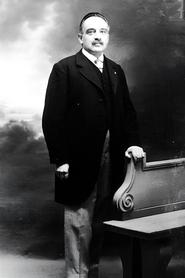
More from Alexandre Promio
View all →
New York, Brooklyn Bridge
1899
Panorama of the Grand Canal Taken from a Boat
1896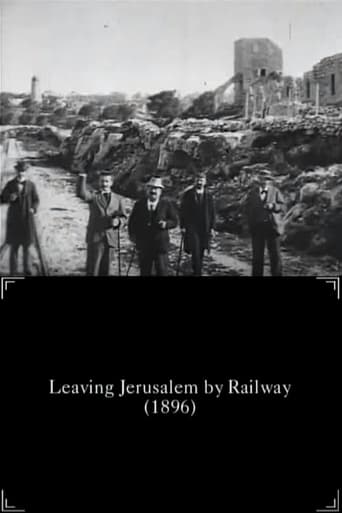
Leaving Jerusalem by Railway
1897
Danse au bivouac
1896
Constantinople, panorama des rives du Bosphore
1897
Children Digging for Clams
1896
New York: Broadway at Union Square
1896
New York. Arrival of a Train at Battery Place
1896
More about this film
About the production
Release date1897
ProductionLumière Company
Filmed inStockholm, Sweden, Gamla Stan (Old Town)
Filmed by Alexandre Promio during his Scandinavian tour for the Lumière Company. The film was shot on location using the Lumière cinematograph, a device that served as both camera and projector. The fight scene was likely staged for the camera, as was common with early Lumière actualities that sought to present entertaining spectacles. The medieval setting and costumes were chosen to provide visual interest and historical context for international audiences.
Themes
Historical reenactmentViolence and conflictMedieval lifeCultural documentationEntertainment vs. reality
Themes & topics
Historical background
Une bataille dans le vieux Stockholm reached screens around 1897, produced in its country of origin. Programs then mixed actualities, dances, and staged scenes in single-reel slots.
Why this film matters
Researchers cite Une bataille dans le vieux Stockholm when tracing screen culture of its decade. Its brevity makes it useful for teaching how early narratives were staged.
Making of
Alexandre Promio, working as an operator for the Lumière Company, traveled throughout Scandinavia in 1897 with the revolutionary cinematograph device. During his time in Stockholm, he sought to capture scenes that would be both educational and entertaining for European audiences. The fight scene was likely arranged with local participants who were either actors or local residents willing to perform for the camera. The medieval setting was chosen to provide visual interest and historical context. Filming in 1897 required natural lighting, so the scene was shot outdoors during daylight hours. The entire sequence was captured in one continuous take, as editing techniques had not yet been developed. Promio had to hand-crank the camera at a consistent speed to ensure proper exposure and smooth playback. The participants would have had to perform their fight sequence perfectly in one take, as retakes were expensive and time-consuming in this era of filmmaking.
What critics said
Reviewers in 1897 weighed Une bataille dans le vieux Stockholm on clarity, pacing, and audience response rather than prestige status. No single canonical review dominates later reference works for the title.
Did you know?
- Alexandre Promio was one of the Lumière brothers' most prolific cinematographers, traveling to over 20 countries to capture early moving images
- This film was part of Promio's extensive Scandinavian tour, where he documented various aspects of life in Sweden, Norway, and Denmark
- The Lumière Company often staged scenes that appeared documentary-like but were actually arranged for maximum visual impact
- At 45 seconds, this was considered a substantial length for a film in 1897, when most films were under 30 seconds
- Promio is credited with inventing the panoramic shot (panning) during his travels, though this particular film uses a static camera
- The medieval costumes and setting were chosen to appeal to European audiences' interest in historical spectacles
- This film was likely shown as part of Lumière's traveling exhibitions, where it would have been projected alongside other short films
- Stockholm's Gamla Stan, where this was likely filmed, remains one of Europe's best-preserved medieval city centers
- The fight choreography, while simple, demonstrates early attempts to capture action sequences in cinema
- This film represents an early example of location shooting, as most films of this era were shot in studios or controlled environments
Visual style
The film was shot using the Lumière cinematograph on 35mm film with a 1.33:1 aspect ratio. As was typical for Lumière productions, the camera remains stationary throughout the sequence, capturing the action from a single, fixed perspective. The natural lighting creates authentic shadows and highlights that enhance the medieval atmosphere. The composition carefully frames the fighting men and surrounding onlookers to maximize visual interest within the limited frame. The lack of camera movement or editing techniques forces the action to unfold naturally within the frame, creating a sense of immediacy and authenticity. The black and white imagery adds to the historical feel of the medieval setting, while the grain inherent in early film stock contributes to its documentary quality.
Memorable scenes
- The climactic moment when one combatant defeats the other, with the surrounding crowd reacting to the outcome - all captured in a single, uninterrupted take that showcases early cinema's ability to preserve real-time action
What audiences thought
Audiences in 1897 would have been thrilled by this film's action and exotic location. The sight of a fight, even a staged one, was considered exciting entertainment for early cinema patrons. The medieval costumes and Stockholm setting would have added to the film's appeal, offering viewers a glimpse into a different time and place. The film's brevity (45 seconds) was typical for the era and suited the short attention spans of audiences experiencing moving pictures for the first time. Modern audiences viewing this film today appreciate it primarily for its historical value and as a window into both 19th-century Stockholm and the earliest days of cinema. The film serves as a fascinating time capsule, showing how entertainment and documentation were intertwined in early filmmaking.
Film connections
Influenced by
- Lumière Company actualities
- Early documentary tradition
- Historical pageantry
- Theatrical staging techniques
This film influenced
- Other Lumière travelogues
- Early historical reenactments
- Scandinavian documentary films
Film restoration
The film is preserved in the Lumière Institute's archives and has been digitized for historical and educational purposes. While the original nitrate film stock has deteriorated, copies and digital transfers ensure this important early film remains accessible to researchers and cinema enthusiasts.
Where to watch
- Lumière Institute archives
- European Film Gateway
- YouTube (through official archives)
- Film museum collections
- Academic film databases