New York: Broadway at Union Square
"Manhattan corner in motion"
Keys: Space play/pause · ←/→ 10s · F fullscreen · M mute · </> speed
About this film
An 1896 actuality records horse traffic and pedestrians at Broadway and Union Square in New York City. Such city views were staples of early exhibition programs.
Cast & crew
More films like this
More Documentary films
View all →
More from Alexandre Promio
View all →
New York, Brooklyn Bridge
1899
Panorama of the Grand Canal Taken from a Boat
1896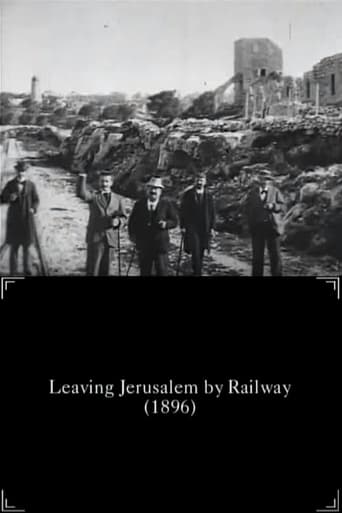
Leaving Jerusalem by Railway
1897
Une bataille dans le vieux Stockholm
1897
Danse au bivouac
1896
Constantinople, panorama des rives du Bosphore
1897
Children Digging for Clams
1896
New York. Arrival of a Train at Battery Place
1896
More about this film
About the production
Release dateOctober 1896
ProductionLumière Company
Filmed inBroadway and Union Square, New York City, New York, USA
Filmed by Alexandre Promio during his notable world tour for the Lumière Company, was shot using the Cinématographe, a revolutionary device that served as camera, projector, and developer. Promio had to transport this fragile equipment across the Atlantic and set up his camera in the busy New York streets, likely drawing curious crowds. The filming required careful positioning to capture the optimal view of traffic flow while maintaining stability of the hand-cranked camera. The entire sequence was captured in a single continuous take, typical of Lumière actuality films, with no editing or camera movement.
Themes
Urban LifeTransportationModernityTime and MemoryTechnology and Progress
Themes & topics
street sceneNew York Cityhorse-drawn carriagepedestriansurban life19th centuryactualitédocumentaryintersectiontransportation
Historical background
Urban actualities sold modernity to audiences nationwide; New York street films were especially popular.
Why this film matters
As one of the earliest motion pictures of New York City, represents a crucial milestone in both cinema history and American cultural documentation. It established the foundation for documentary filmmaking and the actuality genre that would dominate early cinema. The film demonstrates how the new medium of motion pictures could preserve moments of everyday life for future generations, creating a visual historical record unlike any that existed before. It also illustrates the international nature of early cinema - a French filmmaker capturing American scenes for global distribution. The footage has become invaluable to historians studying urban development, transportation evolution, and social customs of the late 19th century. and others like it helped establish cinema as a serious medium for documentation and art, rather than just a novelty. Its preservation allows modern viewers to witness the birth of both cinema and modern New York simultaneously.
Making of
Alexandre Promio embarked on his historic world tour in 1896 as the Lumière Company's chief cinematographer, tasked with bringing back footage from around the globe. When he arrived in New York, he was one of the first filmmakers to capture American cities on motion picture film. Setting up his Cinématographe at Broadway and Union Square presented unique challenges - the device was heavy and required careful hand-cranking at a consistent speed to maintain proper exposure. Promio had to work quickly as the curious crowds that gathered around the unfamiliar equipment could potentially block his shots. The filming location was carefully chosen for its high traffic flow and status in New York. The entire sequence was captured in a single take, as editing technology did not yet exist. Promio's technical expertise allowed him to achieve remarkable clarity and stability considering the primitive equipment and busy urban environment.
What critics said
Valued as historical record of architecture and traffic; minimal artistic claim.
Did you know?
- Alexandre Promio was the first filmmaker to use the moving camera technique, known as 'panning,' which he discovered while filming in Venice shortly before this New York footage
- is part of Promio's extensive world tour (1896-1897) where he visited over 20 countries, creating the first international film footage
- The Lumière Company considered these actuality films more valuable than their staged scenes because they captured authentic moments of everyday life
- Promio was originally hired as a mechanic for the Lumière Company but quickly became their most important cameraman due to his technical skill and artistic eye
- The film was likely screened at the first public film exhibitions in New York, which were held at Keith's Union Square Theatre
- Only a few prints of this early film survive today, making it an extremely rare artifact of cinema history
- The intersection shown was one of New York's busiest in 1896, serving as a major transportation hub
- Contemporary newspapers reported that New Yorkers were initially skeptical of the 'living photographs' but quickly became fascinated with the technology
- predates Edison's more famous New York footage by several months
- The horse-drawn streetcars visible in the film would be replaced by electric trolleys within just a few years
Visual style
The cinematography represents the state-of-the-art for 1896, shot on 35mm film using the Lumière Cinématographe at approximately 16 frames per second. The camera was positioned at a fixed eye-level angle, providing a natural perspective of the street scene that makes viewers feel as though they are standing on the corner themselves. The composition demonstrates Promio's keen eye for capturing dynamic movement within the frame, with multiple layers of action from foreground to background. The lighting is entirely natural, utilizing available daylight which creates authentic shadows and highlights. Despite the limitations of the equipment, the image quality is remarkably clear, allowing viewers to discern details of clothing, vehicles, and architecture. The wide angle captures the breadth of the intersection while maintaining enough detail to observe individual actions. This straightforward, observational style would influence documentary filmmaking for decades to come.
Innovations
represents several important technical achievements for its time. It demonstrates the portability and reliability of the Lumière Cinématographe, which was significantly lighter and more practical than competing devices like Edison's Kinetoscope. The successful capture of a busy street scene showed the camera's ability to handle rapid motion and varying light conditions. The film stock used had sufficient sensitivity to capture clear images in outdoor daylight, a significant improvement over earlier photographic processes. The consistent frame rate achieved through careful hand-cranking resulted in smooth motion playback. Perhaps most importantly, proved that motion picture technology could be successfully transported and operated internationally, paving the way for global cinema distribution.
Music
was produced during the silent era and originally had no synchronized soundtrack. During initial exhibitions, it would have been accompanied by live music, typically a pianist or small orchestra playing popular tunes of the day or classical pieces that matched the rhythm of the on-screen action. The choice of music was left to individual exhibitors, and could range from lively ragtime pieces to match the bustling street scene to more formal classical selections. Modern screenings and restorations sometimes add period-appropriate music or sound effects to enhance the viewing experience, though purists prefer to present it as originally intended - as a purely visual document.
Famous quotes
The cinema is an invention without a future - Louis Lumière (ironic given the film's historical importance)
Every film that is made is a little bit of history captured - Alexandre Promio
Memorable scenes
- The continuous flow of horse-drawn streetcars and carriages crossing the frame, creating a mesmerizing pattern of 19th-century urban traffic that perfectly captures the rhythm of Gilded Age New York
What audiences thought
Audiences in 1896 were absolutely mesmerized by these early actuality films, with reports of crowds gasping and applauding at the sight of moving images of familiar places. New York audiences particularly enjoyed seeing their own city captured on film, creating a sense of wonder and local pride. The film was typically screened as part of a program of short Lumière films, with each actuality lasting less than a minute. Viewers would often return multiple times to see the same footage, so captivated were they by the novelty of the technology. The realism of the street scenes sometimes caused audiences to duck or move aside when vehicles appeared to be coming toward the screen. Modern audiences viewing today experience a different kind of wonder - the thrill of seeing historical New York brought to life and the opportunity to observe everyday life from over 125 years ago.
Film connections
Influenced by
- Lumière brothers' actuality films
- Early photography of urban scenes
- Eadweard Muybridge's motion studies
- Étienne-Jules Marey's chronophotography
This film influenced
- Edison's 'New York City 'Ghetto' Fish Market' (1903)
- Billy Bitzer's 'Interior of New York Subway' (1905)
- Robert J. Flaherty's 'Manhattan' (1921)
- Dziga Vertov's 'Man with a Movie Camera' (1929)
Film restoration
Preserved in the archives of the Lumière Institute in Lyon, France, with additional copies held by the Museum of Modern Art in New York and the Library of Congress. The film has been digitally restored and is considered to be in good condition for its age, though some deterioration is visible. It remains one of the better-preserved examples of Lumière actuality films from 1896.
Where to watch
- Available on the Lumière Institute's official website
- Included in the Criterion Collection's 'The Lumière Brothers' First Films' DVD/Blu-ray
- Streaming on various educational film archives and museum websites
- Accessible through the Library of Congress's digital collections
- Featured in several documentary series about early cinema history