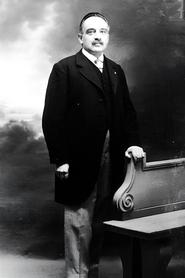
Leaving Jerusalem by Railway
"Lasting for roughly 50 seconds."
Keys: Space play/pause · ←/→ 10s · F fullscreen · M mute · </> speed
About this film
Lasting for roughly 50 seconds, it shows the goodbyes of many passersby - first Europeans, then Palestinian Arabs, then Palestinian Jews - as a train leaves Jerusalem.
Cast & crew
More films like this
More Documentary films
View all →


More from Alexandre Promio
View all →
New York, Brooklyn Bridge
1899
Panorama of the Grand Canal Taken from a Boat
1896
Une bataille dans le vieux Stockholm
1897
Danse au bivouac
1896
Constantinople, panorama des rives du Bosphore
1897
Children Digging for Clams
1896
New York: Broadway at Union Square
1896
New York. Arrival of a Train at Battery Place
1896
More about this film
About the production
Release date1897
BudgetNot documented for early Lumière films
Box officeNot tracked in this era of cinema
ProductionSociété Lumière
Filmed inJerusalem railway station, Ottoman Empire (now Israel)
Filmed by Alexandre Promio during his extensive travels for the Lumière company, this required transporting heavy camera equipment to the Ottoman Empire. The film was part of the Lumière brothers' strategy to capture 'views' from around the world for their growing film catalog. The train featured was likely part of the Jaffa-Jerusalem railway, which had opened in 1892 and represented modernization in the region.
Themes
Cultural diversity and coexistenceModernization and traditionTravel and departureHuman connection across culturesThe intersection of technology and daily life
Themes & topics
JerusalemTrain stationDepartureFarewellRailwayOttoman EmpireDocumentarySilent filmCultural diversityMiddle EastTravelTransportation19th centuryLumière company
Historical background
Production circa 1897 meant fixed cameras, intertitles or early sound rigs, and studio economies that shaped every scene in Leaving Jerusalem by Railway.
Why this film matters
Historians treat Leaving Jerusalem by Railway as evidence of what typical 1897 audiences could see in a program slot.
Making of
Alexandre Promio was dispatched by the Lumière brothers to travel the world and capture scenes that would appeal to European audiences' curiosity about foreign lands. His journey to Jerusalem was part of this broader mission to expand the Lumière film catalog with exotic and educational content. The filming required transporting heavy and cumbersome camera equipment to the Ottoman Empire, a significant logistical challenge for the time. Promio had to set up his camera at the Jerusalem railway station, carefully composing the shot to capture both the departing train and the diverse crowd of well-wishers. The filming itself was technically demanding, requiring the hand-cranking of the camera at a consistent speed while managing the limited film capacity of early cameras. This simple scene of a train departure was chosen because it represented both modern technology (the railway) and traditional human interaction (farewells), making it an ideal subject for early cinema audiences.
What critics said
Specialist critics today emphasize preservation when a viewable copy of Leaving Jerusalem by Railway survives.
Did you know?
- This is one of the earliest films ever shot in the Middle East and the first known film of Jerusalem
- Alexandre Promio was a pioneering Lumière company cameraman who traveled extensively to capture global scenes between 1896-1897
- The film represents one of the first cinematic documents of daily life in Jerusalem during Ottoman rule
- It showcases the multicultural nature of Jerusalem, showing Europeans, Arabs, and Jews coexisting in the city
- The Lumière brothers sent Promio to capture exotic locations that would appeal to European audiences' curiosity
- This film was part of the Lumière company's innovative strategy to show 'views' from around the world
- The train featured was part of the historic Jaffa-Jerusalem railway, the first railway in the Middle East
- Early audiences were fascinated by seeing real people from distant lands on screen for the first time
- The film demonstrates the Lumière company's documentary approach to cinema over staged entertainment
- Promio is credited with developing the moving camera technique, though this particular film uses a static shot
- The film's survival for over 125 years is remarkable given the fragility of early film stock
Visual style
The cinematography in 'Leaving Jerusalem by Railway' represents the technical limitations and aesthetic choices of early cinema. The film uses a static camera position, which was standard for Lumière productions of this period. The composition carefully frames both the departing train and the platform full of people, creating a balanced image that tells a complete story within a single shot. The lighting is natural, utilizing available daylight, which creates authentic shadows and highlights that enhance the three-dimensional quality of the scene. The depth of field captures multiple planes of action - the foreground with the well-wishers, the middle ground with the train, and the background with the station architecture.
Innovations
While 'Leaving Jerusalem by Railway' may appear simple by modern standards, it represents several important technical achievements for its time. The very act of filming in Jerusalem in 1897 was a significant accomplishment, requiring the transport of delicate and heavy camera equipment to a remote location. The film demonstrates the portability of the Lumière Cinématographe, which was more compact than other early film cameras. The successful capture of a moving train and multiple human subjects in a single shot shows the technical proficiency of the cinematographer in managing exposure and focus. The film's survival to the present day is itself a technical achievement, given the fragility of early film stock.
Music
This film was created during the silent era of cinema, and no original soundtrack was composed or recorded for it. In early film exhibitions, musical accompaniment was typically provided live by pianists, organists, or small ensembles who would improvise or play appropriate music to match the mood of the film. For a scene like 'Leaving Jerusalem by Railway,' the accompaniment might have included popular travel-themed music or light classical pieces. Some exhibitors might have used music with Middle Eastern or exotic themes to enhance the sense of place.
Memorable scenes
- The entire 50-second film consists of a single memorable scene: the departure of a train from Jerusalem station with diverse groups of people waving farewell. The composition captures Europeans in formal attire, Palestinian Arabs in traditional dress, and Palestinian Jews in distinctive clothing, all gathered on the platform. As the train gradually moves away from the station, people continue to wave and gesture their goodbyes, creating a poignant moment of human connection.
What audiences thought
Early cinema audiences in the 1890s were captivated by the simple magic of moving images, and films showing exotic locations were particularly popular. 'Leaving Jerusalem by Railway' would have been received with wonder and curiosity by European audiences who had little opportunity to see real images of the Holy Land. The film's depiction of diverse peoples would have been educational for viewers unfamiliar with the multicultural nature of Jerusalem. The familiar scene of train departures, combined with the exotic setting, made the film both relatable and fascinating. Audiences likely appreciated the authenticity of the scene, which was typical of Lumière productions that favored real-life scenes over staged narratives.
Film connections
Influenced by
- Lumière brothers' philosophy of capturing real life on film
- 19th-century travel literature and photography traditions
- European interest in the Holy Land during the late 19th century
- 19th-century fascination with technological progress and transportation
This film influenced
- Early travelogue films of the 1900s
- Ethnographic cinema developments
- Documentary tradition in filmmaking
- Train films that became staples of early cinema
- Lumière company's continued production of global 'views'
Film restoration
The film has survived to the present day and is preserved in film archives, including the Lumière Institute in Lyon, France. The film exists as part of the extensive Lumière company collection that has been carefully preserved and restored over the decades. The survival of this 1897 film is remarkable given the fragility of early film stock and the passage of more than 125 years. The film has been digitized as part of various preservation efforts to ensure its continued accessibility for researchers and the public.
Where to watch
- The Lumière Institute's website and museum in Lyon, France
- Various online archives dedicated to early cinema
- YouTube and other video platforms where public domain early films are shared
- Educational film collections and university archives
- Museum exhibitions on early cinema or the history of Jerusalem
- Documentary compilations about the birth of cinema
- Specialized streaming services focusing on classic and historical films
- Film festival retrospectives on early cinema or documentary films