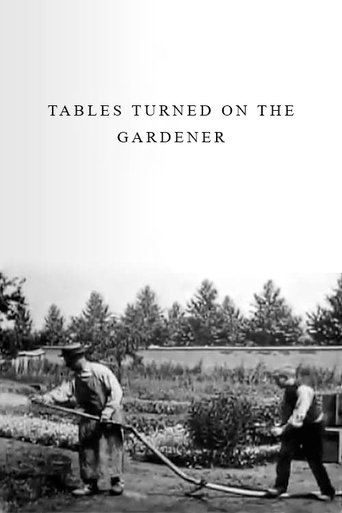
Jumping the Blanket
"One jump too many"
Keys: Space play/pause · ←/→ 10s · F fullscreen · M mute · </> speed
About this film
Four men stand holding what appears to be a blanket, while one wearing a hat stands watching. A sixth man then runs towards them and attempts to jump into the blanket.
Cast & crew
More films like this
More Documentary films
View all →
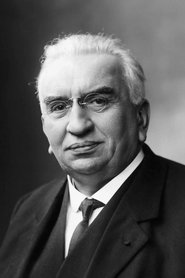
More from Louis Lumière
View all →

More about this film
About the production
Release date1895
ProductionSociété Lumière
Filmed inLa Ciotat, France
This film was likely shot using the Lumière Cinématographe, which served as both camera and projector. Like many Lumière films, it was probably filmed in a single take with no editing. The scene appears to be staged rather than spontaneous, reflecting the Lumière brothers' practice of creating controlled scenarios that appeared naturalistic. The outdoor setting and natural lighting were characteristic of their early productions.
Themes
Physical comedyGroup cooperationPlay and recreationHuman movementEarly experimentation with narrative
Themes & topics
Historical background
Fairground exhibitors screened Jumping the Blanket around 1895, when projected images still traveled as curiosity entertainment.
Why this film matters
Jumping the Blanket belongs to early staged screen fiction, when producers tested camera placement and trick cuts.
Making of
The making of 'Jumping the Blanket' exemplifies the spontaneous yet controlled approach of early Lumière productions. The film was likely shot by either Louis Lumière himself or one of his trained operators using the revolutionary Cinématographe device. The participants were probably local workers or acquaintances from La Ciotat, where many Lumière films were made. The staging required careful coordination to ensure the jump would be visible within the limited frame of the camera and that the blanket-holders would be properly positioned. Like many early films, there was no script or rehearsal - the action was simply set up and captured in one take. The outdoor setting provided natural lighting, which was necessary given the limited sensitivity of early film stock.
What critics said
Press notices for Jumping the Blanket (1895) are sparse in digitized sources; interest today rests on preserved prints and comparison with related titles.
Did you know?
- is one of approximately 1,422 films produced by the Lumière brothers between 1895 and 1905
- The film represents an early example of physical comedy in cinema, predating Chaplin and Keaton by decades
- Like most Lumière films, it was likely shown as part of a program of 10-12 short films during their first public screenings
- The blanket-jumping stunt may have been inspired by circus or vaudeville acts popular in late 19th century France
- The film demonstrates the Lumière philosophy of capturing 'actualités' - scenes of everyday life and simple entertainments
- This type of group activity film was common in early cinema as it showcased multiple people moving within the frame
- The film was shot on 35mm film at approximately 16 frames per second, the standard for early cinema
- It was likely hand-cranked during filming, resulting in slight variations in playback speed
- The men's clothing and hats are typical of French working-class attire of the 1890s
- The film survives today and is part of various film archives and collections
Visual style
The cinematography of 'Jumping the Blanket' is characteristic of early Lumière films: a single, static camera position capturing the action in a wide shot. The camera is placed at a medium distance, allowing all six participants to be visible within the frame. The composition follows the Lumière aesthetic of clarity and simplicity, with the action arranged horizontally across the frame. The outdoor setting provides natural, even lighting that was necessary for the slow film stock of the era. There are no camera movements or cuts - the entire scene unfolds in one continuous take. The framing demonstrates early understanding of spatial relationships and how to stage action for the camera's perspective. The black and white imagery shows good contrast for the period, with the participants' forms clearly defined against the background.
Memorable scenes
- The climactic moment when the running man leaps into the blanket, causing the four holders to struggle with his weight, creating a perfect example of early physical comedy that demonstrates both the limitations and possibilities of the new medium of cinema.
What audiences thought
Early audiences in 1895-1896 were reportedly astonished by all Lumière films, including simple scenes like 'Jumping the Blanket.' Contemporary accounts describe viewers reacting with wonder, laughter, and sometimes fear to these moving images. The physical comedy of the blanket-jumping scene would have elicited immediate laughter from audiences unused to seeing such realistic motion on screen. The film was likely part of the traveling Lumière exhibitions that toured Europe and America, exposing thousands to cinema for the first time. Unlike the more dramatic 'Arrival of a Train at La Ciotat' which supposedly caused audiences to panic, this lighthearted scene provided pure entertainment and demonstrated the potential of film to capture and recreate moments of joy and amusement.
Film connections
Influenced by
- Vaudeville theater traditions
- Circus acrobatic performances
- Photographic composition
- Stage comedy traditions
This film influenced
- Later slapstick comedies by Mack Sennett
- Charlie Chaplin's physical comedy shorts
- Buster Keaton's stunt films
- The Three Stooges routines
- Modern physical comedy in film and television
Film restoration
The film survives and has been preserved by various film archives including the Cinémathèque Française and the Lumière Institute. It has been digitally restored and is available in several collections of early cinema. The 35mm original negative is believed to be preserved in the Lumière family archives.
Where to watch
- YouTube (various early cinema channels)
- The Criterion Collection (as part of early cinema compilations)
- Kino Lorber DVD releases of Lumière films
- British Film Institute streaming service
- Museum of Modern Art film collection screenings
- Various university film archives and libraries