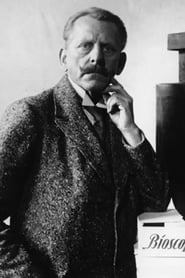
Kamarinskaja
"Boots, fur hats, stepping rhythm"
Keys: Space play/pause · ←/→ 10s · F fullscreen · M mute · </> speed
About this film
Three dancers do a Russian folkloric step dance, facing the camera, in traditional clothes, fur hats and leather boots. Exhibitors circulated the 1895 print in short programs.
Cast & crew
More films like this
More Documentary films
View all →




More from Max Skladanowsky
View all →

More about this film
About the production
Release dateNovember 1, 1895
ProductionBioscop
Filmed inBerlin, Germany
Filmed using the Skladanowsky brothers' Bioscop camera, which used a parallel format with two 54mm films running simultaneously. The performers were likely Russian expatriates or professional dancers in Berlin. The film was shot outdoors or in a studio setting with minimal lighting requirements due to the camera's limitations. The dance was probably repeated multiple times to ensure adequate footage, as early cameras could only capture very short sequences.
Themes
Cultural preservationFolk traditionTechnological innovationPerformance documentationEthnographic representation
Themes & topics
folk danceRussian culturetraditional costumedance performanceearly cinemasilent filmethnographic film
Historical background
Kamarinskaja reached screens around 1895, produced in its country of origin. Programs then mixed actualities, dances, and staged scenes in single-reel slots.
Why this film matters
Researchers cite Kamarinskaja when tracing screen culture of its decade. Its brevity makes it useful for teaching how early narratives were staged.
Making of
The film was created by Max Skladanowsky and his brother Emil as part of their pioneering work in motion pictures. They developed their own camera and projection system called the Bioscop, which used a unique mechanism with two separate film strips running in parallel. The brothers, who had been working as magic lantern show operators, spent years developing their motion picture technology. The filming process required bright daylight or powerful artificial lighting due to the low sensitivity of the film stock. The performers had to hold their positions and movements carefully within the frame of the camera, which was mounted on a heavy tripod and couldn't move during filming. The entire sequence was likely filmed in one continuous take, as editing capabilities were virtually non-existent in 1895.
What critics said
Reviewers in 1895 weighed Kamarinskaja on clarity, pacing, and audience response rather than prestige status. No single canonical review dominates later reference works for the title.
Did you know?
- This is one of the earliest surviving films in cinema history, predating the Lumière brothers' first public screening by nearly two months
- The film was part of the Skladanowsky brothers' first public film program presented at the Wintergarten theatre in Berlin
- The Bioscop projector used to show this film could project at 16 frames per second, faster than the Lumière brothers' 12 fps
- Tscherpanoff, the credited performer, was likely a professional dancer from the Russian community in Berlin
- The film was shot on 54mm film stock, much wider than the eventually standardized 35mm
- This was one of eight films shown in the historic first public film screening on November 1, 1895
- The Skladanowsky brothers were originally glass slide show operators before inventing their motion picture system
- The dance 'Kamarinskaja' is named after a Russian folk song that became popular in the 19th century
- The film was likely shot in the summer of 1895 when the Skladanowsky brothers were perfecting their technology
- Unlike many early films that were later destroyed, this film survives because the Skladanowsky family preserved their work
Visual style
The cinematography represents the most basic form of early film technique. The camera was stationary, positioned to capture the full bodies of the three dancers within the frame. The composition is straightforward, with the performers centered and facing the camera directly. The lighting was natural or basic artificial illumination, necessary due to the low sensitivity of early film stock. The camera operated at approximately 16 frames per second, creating slightly jerky movement by modern standards. The image quality would have been grainy and low-contrast compared to later films. The entire sequence was filmed in a single continuous take with no camera movement or changes in perspective.
Innovations
The film represents a major technical achievement as one of the first motion pictures ever created. It was shot using the Skladanowsky brothers' Bioscop camera, which employed an innovative dual-film strip system. The camera used a Geneva drive mechanism for intermittent film movement, a crucial development in motion picture technology. The film stock was 54mm wide, significantly larger than the eventually standardized 35mm format. The projection system could display images at 16 frames per second, providing relatively smooth motion for the time. The preservation of this film demonstrates the durability of early celluloid and the importance of the Skladanowsky brothers' contribution to cinema technology.
Music
The original film was silent, as synchronized sound technology would not be developed for decades. During its initial exhibition at the Wintergarten, the film would have been accompanied by live music, likely a piano or small orchestra playing appropriate music. The venue may have featured actual Russian folk music or generic musical accompaniment typical of variety theatre presentations. Modern screenings of the film are sometimes accompanied by traditional Russian folk music or period-appropriate piano compositions to enhance the viewing experience and provide historical context.
Memorable scenes
- The opening sequence where all three dancers begin their synchronized folk dance movements, their traditional Russian costumes and fur hats creating a striking visual against the simple background, representing one of the first captures of cultural performance on film
What audiences thought
Audiences at the Wintergarten screening in November 1895 were reportedly astonished by the moving images, with Kamarinskaja being one of eight short films shown. The novelty of seeing people move on screen was the primary attraction, regardless of the content. The Russian folk dance would have been particularly exotic and interesting to German audiences of the time. Early cinema audiences had no frame of reference for evaluating films, so their reactions were based on the magical quality of the technology rather than artistic considerations. The film was likely received as a curiosity rather than as entertainment in the modern sense.
Film connections
Influenced by
- Magic lantern shows
- Stage performances
- Ethnographic photography
- Chronophotography
- Theatrical variety shows
This film influenced
- Other early ethnographic films
- Dance documentation films
- Cultural preservation documentaries
Film restoration
The film survives and has been preserved by film archives. It is part of the collection at the Bundesarchiv in Germany and has been restored for historical study and public exhibition. The preservation of this film is remarkable given its 1895 date, making it one of the earliest surviving motion pictures in existence.
Where to watch
- Available on various early cinema compilation DVDs
- Featured in online film archives and museum collections
- Sometimes screened at film festivals specializing in silent or early cinema
- Available through academic film libraries and cinema history collections