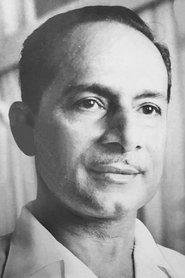
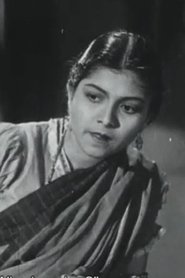

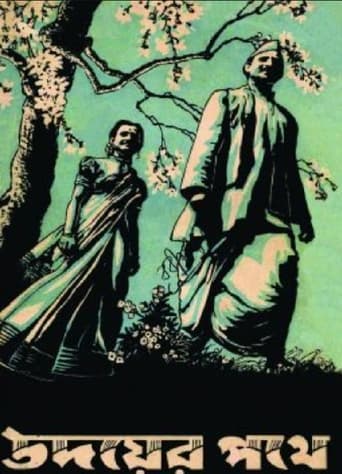
Kashinath
"Shiromoni."
Keys: Space play/pause · ←/→ 10s · F fullscreen · M mute · </> speed
About this film
Shiromoni, a village priest sends his son on an errand to the house of Mr. Mukherjee. On his return Kashinath discovers his father is no more.
Cast & crew
More films like this
More Drama films
View all →







More from Nitin Bose
View all →
More about this film
About the production
Release date1943
BudgetNot documented for films of this era
Box officeBox office records from 1943 Bengal are not systematically preserved
ProductionNew Theatres Limited
Filmed inCalcutta (now Kolkata), Bengal Presidency, British India
This film was produced during the height of World War II, which created significant challenges for the Indian film industry including rationing of film stock, restrictions on movement, and economic difficulties. New Theatres Limited, one of Bengal's most prestigious production houses, was experiencing financial difficulties during this period but continued to produce quality films. The production likely faced wartime constraints but maintained the high technical standards associated with New Theatres productions.
Themes
Orphanhood and displacementSocial class and mobilityRomantic love across social boundariesRural Bengali societyThe zamindari system
Themes & topics
orphanvillage priestzamindarromancesocial classrural Bengalfamily dramacoming of agelossnew beginnings
Historical background
Viewers in 1943 encountered Kashinath alongside competing releases that were collectively teaching new cinematic grammar.
Why this film matters
Reference works on 1943 cinema cite Kashinath when tracing genre and regional production patterns.
Making of
The making of 'Kashinath' occurred during among the leading tumultuous periods in Indian history. Director Nitin Bose, known for his meticulous approach to filmmaking and technical innovations, would have had to navigate numerous wartime challenges including film shortages, power cuts, and restricted movement. The film was produced at New Theatres' studio in Tollygunge, Calcutta, which was then the epicenter of Bengali cinema. Bose, who had earlier directed the acclaimed 'Dhoop Chhaon' (1935), India's first film with playback singing, brought his technical expertise to this project. The casting of Asit Baran in the title role was significant, as he was one of the bankable stars of the era. The film's exploration of rural Bengali society and the zamindari system would have required careful attention to period detail and social customs. The production team would have worked under the constraints of wartime censorship while trying to tell a story that resonated with contemporary audiences facing uncertainty and change.
What critics said
Modern retrospectives screen Kashinath to illustrate 1943 pacing and camera norms.
Did you know?
- Director Nitin Bose was a pioneering figure in Indian cinema, known for his technical innovations and was one of the first directors to successfully implement playback singing in Indian films
- New Theatres Limited, the production company, was considered the pinnacle of Bengali cinema in the 1930s and early 1940s, producing many classics that shaped Indian film history
- The film was released during the Bengal Famine of 1943, one of the worst humanitarian disasters in Indian history, which would have influenced both the film's reception and the context in which audiences viewed it
- 1943 was a significant year for Bengali cinema, with several important films being produced despite the hardships of World War II
- Asit Baran, who played the title role, was especially popular actors in Bengali cinema during the 1940s and was particularly known for his romantic roles
- The film's themes of orphanhood and finding one's place in society resonated strongly with audiences during a period of great social and political upheaval in India
- Nitin Bose was the brother of Debaki Bose, another director of Indian cinema, and came from a family deeply involved in the arts
- The zamindari system portrayed in the film was a central feature of rural Bengal's social structure and would be abolished shortly after India's independence
Visual style
The cinematography of 'Kashinath' would have reflected the high technical standards associated with New Theatres Limited productions. Nitin Bose was known for his visual sophistication and innovative camera techniques. The film likely employed the deep focus and careful composition that characterized quality Bengali cinema of the era. Black and white cinematography in 1943 had reached a high level of artistry in Indian cinema, with skilled use of lighting to create mood and emphasize emotional moments. The rural settings would have been carefully lit to create authentic atmosphere, while interior scenes would demonstrate the polished lighting techniques New Theatres was famous for. Camera movement would have been more restrained than in later decades but purposeful, with careful tracking shots and well-composed static shots serving the narrative. The cinematography would have aimed for a realistic yet poetic representation of rural Bengal, capturing both the beauty and hardship of village life.
Innovations
While specific technical innovations in 'Kashinath' are not extensively documented, the film benefited from the advanced technical infrastructure of New Theatres Limited. Nitin Bose was a pioneer in Indian cinema who had introduced playback singing and developed sophisticated sound recording techniques. The film would have utilized the best available camera and sound equipment of the era. The lighting techniques employed would have been advanced for the time, creating depth and mood in the black and white cinematography. The editing style would have followed the classical continuity system that had been established in Indian cinema by the 1940s. The film's production values would have reflected New Theatres' commitment to technical excellence, even during the resource constraints of wartime. The studio's facilities in Tollygunge were among the best in Asia at the time, allowing for high-quality production values despite the challenges of the period.
Music
The soundtrack of 'Kashinath' would have been composed in the tradition of New Theatres' musical excellence, likely featuring a blend of classical Bengali music and lighter romantic songs. The music director for this film is not well-documented, but New Theatres typically employed top composers of the era. Playback singing, pioneered in Indian cinema by Nitin Bose himself, would have been used, with professional singers providing the vocals for the actors. The songs would have been integrated into the narrative to advance the plot and express emotions, following the conventions of Indian cinema of the period. The musical style would have reflected the cultural context of rural Bengal, possibly incorporating folk elements alongside classical compositions. The sound recording technology of 1943, while primitive by modern standards, was sophisticated for its time, and New Theatres was known for its high audio quality. The film's music would have been an important element in its appeal to contemporary audiences.
Famous quotes
No documented famous quotes are available from this film due to limited preservation of dialogue from 1943 Bengali cinema
Memorable scenes
- The emotional scene where Kashinath returns to find his father has passed away, marking his transition to orphanhood
- The moment when Kashinath expresses his reluctance to leave the Mukherjee household, revealing his attachment to Bindu
- The confrontation between Kashinath and the zamindar Pitambar Chakraborty, representing the clash between different social classes
What audiences thought
Audience reception in 1943 would have been influenced by the extraordinary circumstances of the time. Despite the Bengal Famine and wartime hardships, cinema remained a popular form of entertainment and escape for those who could afford it. Films dealing with emotional themes and family dramas like 'Kashinath' typically resonated well with Bengali audiences, who appreciated nuanced storytelling and strong performances. The presence of popular actors like Asit Baran would have drawn audiences to theaters. The film's themes of loss and finding new connections would have struck a chord with viewers experiencing the real losses and displacements of the famine and war. However, the severe economic conditions meant that theater attendance was likely affected, with many people unable to afford the luxury of movie tickets. The film's reception would have been primarily concentrated in urban centers like Calcutta, where theaters were still operating regularly despite wartime constraints.
Film connections
Influenced by
- Bengali literary traditions
- Social realist cinema
- Classical Indian storytelling
- Theatrical performance traditions of Bengal
This film influenced
- Subsequent Bengali social dramas
- Films exploring rural-urban themes
- Works dealing with social class in Indian cinema
Film restoration
Like many films from 1940s India, the preservation status of 'Kashinath' is uncertain. Many films from this period have been lost due to the unstable nature of early film stock and inadequate archival facilities. The National Film Archive of India may hold copies, but access is often limited. Some footage or stills might exist in private collections or film archives, but a complete, restored version is unlikely to be widely available.
Where to watch
- This film is extremely rare and likely not available on any modern streaming platforms or home video formats. Potential viewing options would include: National Film Archive of India (Pune), Bengal Film Archive (Kolkata), or special screenings at film festivals and retrospectives focusing on classic Bengali cinema. Academic institutions with film studies programs might have access to archival copies for research purposes.