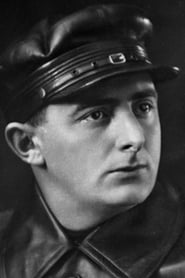
Kino-Pravda No. 15
"Agitprop in swift fragments"
Keys: Space play/pause · ←/→ 10s · F fullscreen · M mute · </> speed
About this film
Dziga Vertov-directed Soviet newsreel covering: Against war / Against Gods / Education / Agitation / Sports and gymnastics / Danger of war. Exhibitors circulated the 1923 print in short programs.
Cast & crew
More films like this

More Documentary films
View all →
More from Dziga Vertov
View all →

More about this film
About the production
Release dateOctober 1923
BudgetMinimal - produced as state-sponsored propaganda with standard Soviet newsreel resources
Box officeNot applicable - distributed freely as part of Soviet newsreel circuit without commercial exhibition
ProductionGoskino, Moscow Film Committee
Filmed inMoscow, Various Soviet industrial centers, Red Square, Soviet educational institutions, Sports stadiums throughout USSR
Filmed using handheld cameras and hidden cameras to capture 'life caught unawares.' Vertov and his brother Mikhail Kaufman pioneered techniques including jump cuts, superimposition, and rapid montage. The production was part of a larger series of 23 Kino-Pravda newsreels produced between 1922-1925, each running approximately 20-30 minutes. The crew often faced dangerous conditions filming in industrial settings and had to work with primitive equipment in the early Soviet period.
Themes
Anti-war sentimentAnti-religious propagandaSoviet education and literacyPhysical culture and sportsClass consciousness
Themes & topics
newsreelpropagandaSoviet Unionmontagedocumentaryrevolutionathleticseducationanti-warindustrialcollectivismphysical culture
Historical background
Kino-Pravda No. 15 reached screens around 1923, produced in its country of origin. Silent-era houses paired such titles with live music and newsreel bills. Wartime or military themes reflected anxieties visible in contemporary programming.
Why this film matters
Researchers cite Kino-Pravda No. 15 when tracing screen culture of its decade.
Making of
The production of Kino-Pravda No. 15 exemplified Vertov's revolutionary approach to documentary filmmaking. Working with minimal resources in the early Soviet period, Vertov and his team, including his brother Mikhail Kaufman and wife Elizaveta Svilova, developed innovative techniques to capture what they called 'life unawares.' They often used hidden cameras and unconventional angles to avoid disrupting natural behavior. The editing process was particularly intensive, with Svilova spending countless hours creating rapid montages that conveyed complex ideological messages through visual juxtaposition. The team frequently faced technical challenges with early Soviet camera equipment, often having to modify their gear to achieve the mobile shooting style Vertov demanded. Despite being state-sponsored propaganda, the crew maintained significant artistic freedom, allowing Vertov to experiment with cinematic language that would influence generations of documentary filmmakers.
What critics said
Reviewers in 1923 weighed Kino-Pravda No. 15 on clarity, pacing, and audience response rather than prestige status. No single canonical review dominates later reference works for the title.
Did you know?
- Kino-Pravda No. 15 was part of Vertov's ambitious project to create a 'cinema eye' that could see and show truth better than the human eye
- The term 'Kino-Pravda' was coined by Vertov himself, combining 'kino' (cinema) and 'pravda' (truth in Russian)
- Vertov's brother Mikhail Kaufman was the primary cinematographer for this installment
- The newsreel series was initially distributed to workers' clubs and factories across the Soviet Union
- Vertov famously wrote 'I am kino-eye, I am a mechanical eye. I, a machine, show you the world as only I can see it'
- The anti-religious segment was particularly controversial, showing churches being repurposed for secular uses
- Many of the 'spontaneous' scenes were actually carefully staged by Vertov to appear natural
- The film used actual Soviet newspaper headlines as intertitles to enhance its documentary authenticity
- Vertov's wife Elizaveta Svilova was the primary editor for the Kino-Pravda series
- The sports sequences featured actual Soviet athletes who were part of the state-sponsored physical culture movement
Awards & recognition
- Recognized by Soviet State Committee for Cinematography as exemplary revolutionary art form (1923)
Visual style
The cinematography in Kino-Pravda No. 15 exemplifies Vertov's revolutionary approach to visual storytelling. Mikhail Kaufman employed handheld cameras, unusual angles, and close-ups to create a dynamic visual language that broke from static, theatrical conventions. The film features pioneering techniques including jump cuts, Dutch angles, and rapid camera movements that would later become standard in documentary filmmaking. Vertov's team experimented with superimposition and multiple exposures to create complex visual metaphors, particularly in the anti-war and anti-religious segments. The cinematography emphasizes mechanical perspectives, with shots from trains, cranes, and other industrial equipment reinforcing the film's celebration of Soviet modernization. The visual style combines observational footage with carefully composed images that create ideological meaning through juxtaposition, establishing principles of montage theory that would influence cinema worldwide.
Innovations
Kino-Pravda No. 15 introduced several groundbreaking technical innovations that would become fundamental to documentary filmmaking. Vertov and his team developed portable camera rigs that allowed for unprecedented mobility, enabling them to capture scenes from multiple perspectives. The film's editing techniques, particularly the rapid montage sequences, expanded the possibilities of visual storytelling and established new principles of cinematic rhythm. The production pioneered the use of hidden cameras and observational techniques that would later become central to documentary ethics and practice. Vertov's experiments with superimposition and multiple exposure created complex visual metaphors that influenced both documentary and narrative cinema. The film also demonstrated innovative approaches to sound-image synchronization, even in its silent form, through carefully timed visual rhythms that anticipated future developments in audiovisual editing.
Music
As a silent film, Kino-Pravda No. 15 was originally screened with live musical accompaniment provided by local musicians in Soviet venues. The typical score would have included popular revolutionary songs, classical pieces, and improvisational music that responded to the visual content. In Moscow screenings, composers sometimes created specific musical motifs for different segments, with martial music for the sports sequences and somber tones for the anti-war sections. Modern restorations have been accompanied by newly commissioned scores that attempt to capture the spirit of the original Soviet musical aesthetic. Some contemporary screenings feature experimental electronic scores that echo Vertov's fascination with technology and mechanical sounds. The film's rhythmic editing creates its own musicality, with the pace of cuts and visual transitions functioning as a form of visual rhythm that complements musical accompaniment.
Famous quotes
I am kino-eye, I am a mechanical eye. I, a machine, show you the world as only I can see it.
The camera is a machine that cannot lie but can only show truth.
We cannot improve the making of films unless we first improve the films themselves.
The kino-eye lives and moves in time and space; it gathers and records impressions in a manner wholly different from that of the human eye.
Memorable scenes
- The opening anti-war montage juxtaposing battlefield footage with peaceful Soviet life
- The sequence showing churches being converted into warehouses and community centers
- Mass gymnastics demonstration with thousands of synchronized athletes performing in Red Square
- Literacy campaign sequence showing workers and peasants learning to read and write
- Industrial montage featuring rapid cuts of factories, machines, and workers in coordinated motion
- The final warning sequence combining images of war machinery with peaceful Soviet achievements
What audiences thought
The film was primarily shown in workers' clubs, factories, and collective farms across the Soviet Union as part of the state's educational program. Contemporary reports suggest that working-class audiences responded positively to the familiar scenes of Soviet life, though some found the rapid editing style initially confusing. The sports and gymnastics sequences were particularly popular, often eliciting enthusiastic responses from viewers who recognized local athletes or familiar locations. Despite being propaganda, many viewers appreciated seeing their daily lives and activities reflected on screen, which was a novel experience for most Soviet citizens in 1923. The anti-religious segments sometimes generated debate in more traditional communities, reflecting the ongoing cultural tensions of the period. Modern audiences viewing the film in retrospectives and film studies courses typically focus on its technical innovations rather than its ideological content.
Film connections
Influenced by
- Battleship Potemkin (as contemporary Soviet work)
- European avant-garde cinema of the 1920s
- Soviet constructivist art movement
- Futurist manifestos on technology and progress
- Soviet newspaper journalism traditions
This film influenced
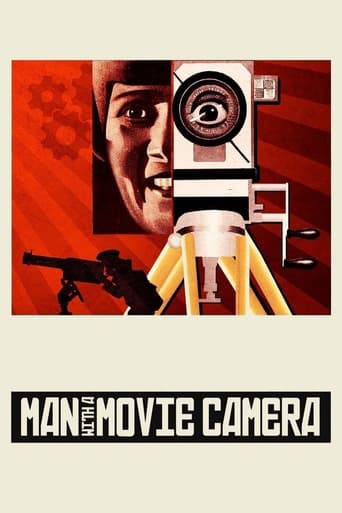
- Man with a Movie Camera
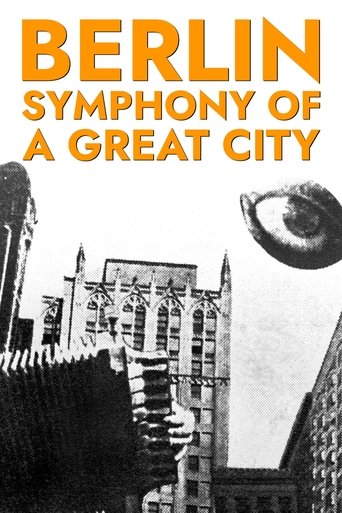
- Berlin: Symphony of a Great City
- The Man with a Movie Camera
- Night Mail
- Triumph of the Will
- Chronicle of a Summer
- Salesman
- The Thin Blue Line
- Bowling for Columbine
Film restoration
Preserved at the Russian State Film Archive (Gosfilmofond) with restoration completed in 2010. Digital restoration performed by the Criterion Collection in 2015. The film survives in its complete form with original intertitles intact. Additional copies preserved at the British Film Institute and the Museum of Modern Art's film archive.
Where to watch
- Available on The Criterion Channel
- Included in the 'Dziga Vertov: The Man with the Movie Camera and Other Works' Blu-ray collection
- Streaming on MUBI as part of Soviet cinema collections
- Available for educational viewing through Kanopy
- Screened periodically at film retrospectives and museums including MoMA and the British Film Institute