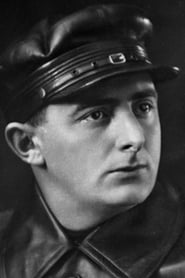

Kino-Pravda No. 22: Lenin Is Alive in the Heart of the Peasant. A Film Story
"Vertov marks Lenin's death and peasant mourning"
Keys: Space play/pause · ←/→ 10s · F fullscreen · M mute · </> speed
About this film
Dziga Vertov-directed Soviet newsreel covering: First anniversary of Lenin's death / Smycka of the city and the village: group of peasants visit Moscow / Lenin's effect on peasants and oppressed nations
Cast & crew
More films like this

More Documentary films
View all →




More from Dziga Vertov
View all →


More about this film
About the production
Release dateJanuary 1925
ProductionGoskino
Filmed inMoscow, Soviet Union, Various rural locations in Soviet Union
This film was part of Vertov's ongoing Kino-Pravda series, which he began in 1922 as a revolutionary approach to newsreel cinema. The production involved mobile camera teams traveling with the peasant delegation to capture authentic moments of their journey. Vertov and his brother Mikhail Kaufman (the primary cinematographer) employed portable cameras to achieve unprecedented mobility and intimacy in their documentary footage. The film was shot on 35mm film and processed at Goskino facilities in Moscow. Vertov's production philosophy rejected traditional narrative structure in favor of what he called 'intervals' - the rhythmic organization of visual material through montage to create new meanings and emotional responses.
Themes
Lenin's legacy and myth-makingPeasant-city alliance (smychka)Soviet modernization and progressRevolutionary consciousnessClass solidarity
Themes & topics
LeninpeasantsMoscowanniversarydeathcommemorationrural lifeurban lifeSoviet Unionrevolutiondocumentarynewsreelpropagandajourneydelegation
Historical background
Made during the studio era of 1925, Kino-Pravda No. 22: Lenin Is Alive in the Heart of the Peasant. A Film Story reached audiences through theatrical programs, fairground booths, or specialized distribution channels typical of its generation. Dziga Vertov-directed Soviet newsreel covering: First anniversary of Lenin's death / Smycka of the city and the. Historians now read such works for what they reveal about production methods, national taste, and the expanding vocabulary of screen narrative.
Why this film matters
Archivists and programmers still screen Kino-Pravda No. 22: Lenin Is Alive in the Heart of the Peasant. A Film Story when tracing how popular entertainment evolved. Its subject—dziga vertov-directed soviet newsreel covering: first anniversary of lenin's death / smycka of the—gives later viewers tangible evidence of what drew crowds in the silent period. Home video, restorations, and festival sidebars keep the title circulating among students of film history.
Making of
The production of Kino-Pravda No. 22 involved Vertov's innovative mobile filming techniques, which were revolutionary for the time. Vertov and his team, including his brother Mikhail Kaufman as cinematographer, used portable cameras that could be easily moved to capture spontaneous moments of the peasant delegation's journey. The filming process was highly experimental, with Vertov encouraging his camera operators to seek out unusual angles and perspectives that would reveal the 'truth' of Soviet life. The editing process, overseen by Vertov's wife Elizaveta Svilova, was equally innovative, employing rapid montage and rhythmic editing techniques to create emotional and political impact. The production team faced significant logistical challenges in coordinating with the peasant delegation and capturing both their rural origins and urban experiences. Vertov was known for his demanding working methods and his insistence on capturing authentic, unstaged moments, which often put him at odds with Soviet authorities who preferred more controlled propaganda. The film's creation coincided with a period of intense debate within Soviet cinema about the role and methods of revolutionary filmmaking, with Vertov's documentary approach competing against more conventional narrative films.
What critics said
Original trade coverage treated Kino-Pravda No. 22: Lenin Is Alive in the Heart of the Peasant. A Film Story as routine program filler rather than a landmark production—typical of steady studio output. Later criticism emphasizes preservation, stylistic comparison with contemporaries, and whatever cast or crew names later gained prominence. Contemporary writing is mostly historical: assessing completeness, influence, and place in a director's or studio's catalog.
Did you know?
- This was the 22nd installment in Vertov's Kino-Pravda series, which ran from 1922 to 1925 and comprised approximately 23 issues
- The title 'Kino-Pravda' translates to 'Cinema Truth' or 'Film Truth', reflecting Vertov's documentary philosophy
- Vertov believed that the camera, with its mechanical eye, could perceive truth more accurately than the human eye
- The film was released just one year after Lenin's death on January 21, 1924, during a period of intense Soviet myth-making around the revolutionary leader
- Dziga Vertov's birth name was David Abelevich Kaufman; 'Dziga Vertov' was a pseudonym meaning 'spinning top' in Ukrainian
- The Kino-Pravda series was originally conceived as a weekly newsreel but production irregularities made the schedule inconsistent
- Vertov's wife Elizaveta Svilova was the editor for most of the Kino-Pravda series, including this installment
- The film exemplifies Vertov's theory of 'intervals' - the rhythmic organization of shots through editing to create new meanings
- Many of the peasants featured in the film were likely experiencing their first visit to Moscow, providing authentic reactions to urban Soviet life
- The Kino-Pravda series influenced documentary filmmakers worldwide, including the British Documentary Movement and cinéma vérité practitioners
Visual style
The cinematography in Kino-Pravda No. 22 exemplifies Vertov's revolutionary approach to documentary filmmaking, employing innovative techniques that were groundbreaking for the mid-1920s. Mikhail Kaufman, Vertov's brother and primary cinematographer, used portable cameras to achieve unprecedented mobility, allowing for intimate coverage of the peasant delegation's journey from rural areas to Moscow. The film features a variety of camera techniques including low angles, high angles, and dynamic movement that create visual interest and convey specific ideological meanings. Vertov and Kaufman experimented with extreme close-ups, rapid camera movements, and unusual perspectives to reveal what they called the 'invisible world' of reality. The cinematography emphasizes contrasts between rural and urban life, traditional and modern ways of living, and individual and collective experiences. The visual style is characterized by its raw, unpolished quality that Vertov considered essential to capturing truth, rejecting the artificiality of conventional narrative cinema. The camera work often focuses on machines, industry, and the physical labor of both peasants and workers, reflecting the Soviet celebration of industrial progress and the dignity of labor.
Innovations
Kino-Pravda No. 22 showcases several technical innovations that were groundbreaking for mid-1920s cinema. Vertov and his team developed and refined portable camera equipment that allowed for unprecedented mobility in documentary filming, enabling them to capture spontaneous moments in various locations from rural villages to urban Moscow. The film exemplifies Vertov's pioneering use of rapid montage editing, creating rhythmic patterns and intellectual associations between shots that went beyond simple narrative continuity. The production team experimented with multiple camera angles and perspectives, including low angles that emphasized the dignity of workers and peasants and dynamic camera movements that captured the energy of Soviet life. The film's editing techniques, particularly what Vertov called 'intervals' - the precise calculation of the duration between shots - represented a significant advancement in film language and montage theory. The technical approach emphasized authenticity over polish, with Vertov deliberately avoiding studio lighting and artificial setups in favor of natural conditions that he believed revealed truth more effectively. These technical innovations influenced not just documentary filmmaking but also narrative cinema, with directors like Eisenstein adapting and developing Vertov's montage theories for their own purposes.
Music
As a silent film from 1925, Kino-Pravda No. 22 was originally exhibited without synchronized sound, which was not yet available in commercial cinema. During its initial Soviet screenings, the film would have been accompanied by live musical performance, typically a pianist or small ensemble playing appropriate music to enhance the emotional and narrative impact. The choice of music would have been left to individual theater musicians, though Soviet guidelines likely suggested revolutionary or folk themes that complemented the film's content. In some cases, the film might have been shown with narration from a lecturer who would explain the images and reinforce the ideological messages. Modern screenings and releases of the film typically feature newly composed scores or period-appropriate classical music that reflects the film's Soviet context. The absence of original synchronized sound means that contemporary viewers experience the film as a purely visual work, which aligns with Vertov's emphasis on the power of images and his belief that cinema should be a universal language that transcends spoken words.
Famous quotes
'I am the cine-eye. I am a mechanical eye. I, a machine, show you the world as only I can see it.' - Dziga Vertov's manifesto
'The Cine-Eye is a cinema truth, a cinema that is more perfect than the human eye.' - Dziga Vertov
'Lenin lives in the heart of the peasant' - Film's thematic statement
'The kino-eye is a microscope and telescope of time.' - Dziga Vertov
Memorable scenes
- The departure of the peasant delegation from their rural village, showing traditional life giving way to revolutionary purpose
- The peasants' first arrival in Moscow, capturing their wonder and awe at the Soviet capital
- Scenes of collective mourning at Lenin's memorial, emphasizing the emotional connection between peasants and the revolutionary leader
- Contrasting shots of rural agricultural work and Moscow's industrial development
- The peasants' participation in anniversary ceremonies, showing their integration into Soviet political life
What audiences thought
Contemporary Soviet audience reception of Kino-Pravda No. 22 was mixed, reflecting the experimental nature of Vertov's approach. While some viewers appreciated the film's innovative techniques and its celebration of Soviet achievements, others found Vertov's rapid montage style and lack of conventional narrative structure confusing. The film's focus on peasants visiting Moscow likely resonated with rural audiences who could identify with the delegates' experiences, while urban viewers gained insight into the lives of their rural compatriots. The subject matter of Lenin's legacy and the peasant-city alliance aligned with official Soviet ideology, making the content acceptable to authorities even as Vertov's methods were sometimes controversial. In subsequent decades, the film has primarily been viewed by film scholars, students, and cinema enthusiasts rather than general audiences, with most modern viewers encountering it in academic or archival contexts. The film's historical significance and innovative techniques are now more appreciated than its immediate entertainment value, as it serves primarily as an important document in the history of cinema.
Film connections
Influenced by
- Soviet revolutionary ideology
- Lenin's writings on cinema
- Futurist art movement
- Constructivist design principles
- Marxist-Leninist theory
- Soviet newspaper journalism
- Vertov's earlier Kino-Pravda installments
This film influenced
- Man with a Movie Camera (1929)
- The Man with a Movie Camera
- Three Songs About Lenin (1934)
- British Documentary Movement films
- Cinema vérité documentaries of the 1960s
- Direct Cinema documentaries
- Modern reality television formats
Film restoration
The film is preserved in several archives including the Russian State Film Archive (Gosfilmofond) and international film institutions. While some deterioration has occurred over the decades, the film remains largely intact and accessible for scholarly study and screening. Digital restorations have been undertaken by various film archives, helping to preserve this important work of early Soviet cinema. The film is part of the larger effort to preserve Vertov's Kino-Pravda series, which represents a crucial chapter in documentary film history. Some original nitrate prints may still exist in specialized archives, though viewing copies are typically made on safer film stock or digital formats for preservation and access purposes.
Where to watch
- The film is available through various film archives and educational institutions
- Some specialized streaming services focusing on classic and avant-garde cinema
- DVD collections of Dziga Vertov's works
- Museum screenings and film festival retrospectives
- Academic film libraries and media studies departments
- Online platforms specializing in public domain and classic films