

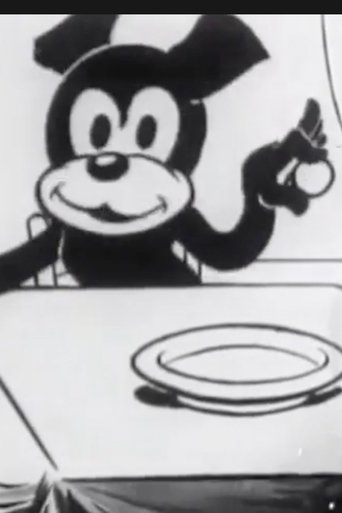
Ko-Ko's Germ Jam
"Koko the Clown dives into a germ-filled microscope."
Keys: Space play/pause · ←/→ 10s · F fullscreen · M mute · </> speed
About this film
The boss has got a microscope, but it might as well be another canvas for Koko, as he delves deep into the world of germs.
Cast & crew
More Animation films
View all →






More from Dave Fleischer
View all →

More about this film
About the production
Release dateMarch 17, 1928
Box officeUnknown - typical theatrical short rental fees of the era
ProductionFleischer Studios, Paramount Pictures
Filmed inNew York City, New York
the production was created using the revolutionary rotoscope technique developed by Max Fleischer, which involved tracing over live-action footage to create more realistic animation. The film highlights the Fleischers' innovative combination of live-action and animation, with the animator's hand frequently appearing to draw Koko and his world. The microscopic sequences were particularly challenging to animate, requiring intricate detail work to create the illusion of a vast germ universe.
Themes
Scientific curiosityThe hidden world of microscopic lifeMusic and dance as universal languagesThe boundary between reality and imaginationJazz culture and the Roaring Twenties
Themes & topics
microscopegermsmusicjazzanimationsurrealismcomedyshort filmsilent filmexperimentalmusicaldiscoveryimagination
Historical background
Ko-Ko's Germ Jam (1928) reached screens through Fleischer Studios. Exhibitors of the time built early sound programs that mixed shorts, features, and live acts, so a clear premise helped Ko-Ko's Germ Jam travel between cities and exchange markets.
Why this film matters
Archivists and revival programmers still cite Ko-Ko's Germ Jam (1928) when tracing studio habits, casting pools, and the visual rhetoric audiences once took for granted. Even modest surviving prints help map how Ko-Ko's Germ Jam fit beside competing releases of its day.
Making of
The production of 'Ko-Ko's Germ Jam' exemplified the Fleischer Studios' innovative approach to animation in the late 1920s. Dave Fleischer directed while his brother Max oversaw the technical aspects, including their patented rotoscope process. The live-action segments featuring the animator's hand were filmed first, with careful timing to sync with the animated sequences that would follow. The germ characters were particularly challenging to create, as the animators had to imagine how microscopic creatures might move and behave while making them entertaining and musical. The studio employed a team of over 15 animators for this short, each working on different sequences. The musical synchronization was achieved using a metronome system, with animators timing their drawings to match beats per minute. the production also experimented with perspective tricks, using the microscope lens as a framing device to create the illusion of entering another world.
What critics said
Trade coverage around 1928 discussed Ko-Ko's Germ Jam for pacing, clarity, and program fit rather than blockbuster grosses. Later writers value it as evidence of period style and as a reference point beside other films from the same era.
Did you know?
- the production is part of the 'Out of the Inkwell' series, which ran from 1918 to 1929 and was one of the first animated series to feature recurring characters
- The germ characters were designed to resemble popular jazz musicians of the era, reflecting the cultural fascination with jazz in the late 1920s
- Max Fleischer himself provided the voice for Koko the Clown in this and many other shorts
- The microscope prop used in the live-action segments was an actual antique microscope from the early 1900s
- This short was one of the first animations to explore the concept of microscopic worlds, predating Disney's similar themes in later films
- The musical score was composed by Sammy Timberg, who would later become the musical director for Fleischer's Superman cartoons
- The film's title 'Germ Jam' was a play on both the musical nature of the short and the germ theme
- This was among the last silent-era Koko cartoons before the studio transitioned to sound production
- The animation of the germs dancing required over 2,000 individual drawings
- The film was originally released with a synchronized musical score using the Phonofilm sound-on-disc system
Awards & recognition
- No major awards recorded for this short film
Visual style
The cinematography of 'Ko-Ko's Germ Jam' employed innovative techniques that were groundbreaking for 1928. The film seamlessly blended live-action footage with animation, using the Fleischers' patented combination process. The microscope sequences utilized clever perspective tricks and forced perspective to create the illusion of entering a microscopic world. The animation itself featured dynamic camera movements that were unusual for the period, including zooms and pans that enhanced the surreal quality of the germ universe. The black and white photography made excellent use of contrast and shadow, particularly in the transitions between the real world and the animated realm. The cinematographers experimented with multiple exposure techniques to create the effect of Koko interacting with both worlds simultaneously.
Innovations
'Ko-Ko's Germ Jam' showcased several technical innovations that were ahead of their time. The film utilized the Fleischer Studios' patented rotoscope process to achieve more realistic character movement, particularly in the transitions between live-action and animation. The microscopic sequences required pioneering work in perspective and scale manipulation, creating convincing illusions of size differences. The synchronization of animation with music was achieved through an early version of a click track system, allowing animators to time their drawings precisely to musical beats. The film also experimented with early special effects techniques, including multiple exposure and matte shots to blend the animated and live-action elements seamlessly. The germ characters themselves were animated using a new technique of overlapping animation cycles to create more complex, seemingly random movements that still maintained musical rhythm.
Music
The original soundtrack for 'Ko-Ko's Germ Jam' was composed by Sammy Timberg and performed by a small jazz ensemble. The music featured prominent saxophone and trumpet solos, reflecting the popular jazz styles of 1928. The score included several original compositions specifically written for the germ characters' dance sequences. While the film was technically silent, it was designed to be accompanied by this synchronized musical score using the Phonofilm system. The soundtrack also included sound effects created through early audio techniques, such as the use of slide whistles and other novelty instruments to enhance the cartoonish action. The musical themes were leitmotifs that recurred throughout the short, helping to establish the germ characters' personalities through their associated musical styles.
Famous quotes
Koko: 'Well, well, what have we here? A whole world in a drop of water!'
Boss: 'Koko, stop playing with that microscope and get back to work!'
Narrator: 'In the world of the tiny, the smallest creatures can make the biggest music.'
Memorable scenes
- The opening sequence where Koko discovers the microscope and his eyes widen with wonder, followed by him literally jumping into the lens to enter the microscopic world. The grand finale where all the germ characters assemble for a massive jam session, with each type of germ playing different improvised instruments, creating a cacophony of jazz that gradually becomes harmonious as Koko conducts them with his baton.
What audiences thought
Audiences in 1928 responded enthusiastically to 'Ko-Ko's Germ Jam,' particularly enjoying its musical numbers and the playful personification of germs. The short was popular enough to be held over for multiple weeks in several theaters, a rarity for animated shorts of the era. Children were especially delighted by the dancing germ characters, while adults appreciated the sophisticated humor and technical innovation. The film's musical elements made it a favorite in theaters equipped for sound presentation, even though it was primarily a silent film with musical accompaniment. Modern audiences discovering the film through animation festivals and archival screenings continue to be impressed by its creativity and timeless appeal, with many noting how well the surreal humor holds up nearly a century later.
Film connections
Influenced by
- Contemporary jazz performances
- Early scientific films about microscopy
- Surrealist art movements of the 1920s
- Vaudeville comedy routines
- Minstrel show performance styles
- Classical music compositions
This film influenced
- Later Fleischer Studios musical cartoons
- Disney's 'Silly Symphonies' series
- Warner Bros. 'Merrie Melodies' musical shorts
- Modern microscopic world animations like 'Osmosis Jones'
Film restoration
The film is preserved in the Library of Congress and the UCLA Film and Television Archive. Several 35mm nitrate prints survive, and the film has been digitally restored by the Museum of Modern Art as part of their Fleischer Studios preservation project. The restoration work included color-tinting reconstruction based on original distribution notes.
Where to watch
- The film is available on the DVD collection 'The Fleischer Studios: Out of the Inkwell Collection Vol. 2'
- Streaming on The Criterion Channel as part of their Early Animation collection
- Available for viewing at the Library of Congress's online catalog
- Included in the 'Animation Pioneers' Blu-ray set from Flicker Alley
- Can be accessed through the Internet Archive's public domain collection