
Keys: Space play/pause · ←/→ 10s · F fullscreen · M mute · </> speed
Plot
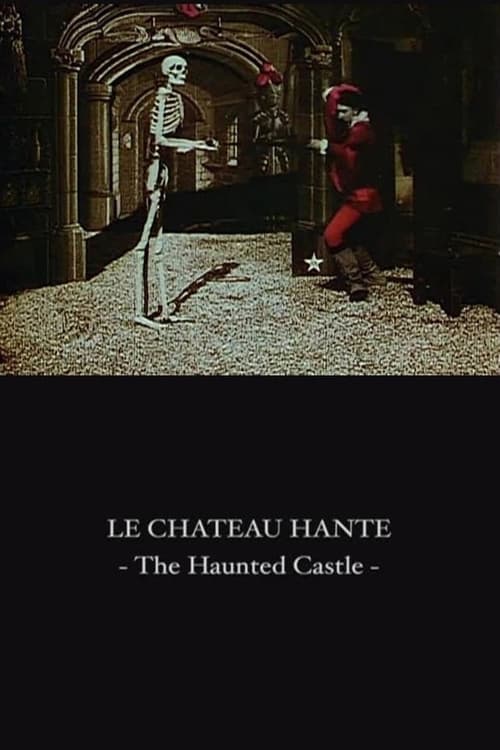
In this early horror short film, a man enters a mysterious castle where he encounters a series of supernatural events. The protagonist is confronted by various spooky apparitions that appear and disappear through magical means, including ghosts and other spectral beings. The castle is revealed to be owned by the Devil himself, who orchestrates these terrifying manifestations. Through Méliès' pioneering special effects, the man witnesses impossible transformations and vanishing acts that defy natural laws. The film culminates with the protagonist's desperate attempts to escape the haunted domain and its demonic owner.
Director
 Georges Méliès
About the Production
Release Date 1897
Box Office Unknown
Production Star Film Company
Filmed In Méliès Studio, Montreuil-sous-Bois, France
This film was created using Méliès' signature substitution splices and multiple exposure techniques. The entire production was staged on painted theatrical backdrops in Méliès' glass-walled studio, which allowed for natural lighting. Méliès, a former magician, applied his theatrical knowledge to create the illusionary effects that would become his trademark.

Themes & Topics
haunted castleghostsdevilapparitionsmagictransformationssupernaturalhorrorfantasyshort film
Historical Background
This film was created just two years after the Lumière brothers' first public screening in 1895, making it part of the very first generation of motion pictures. The late 1890s saw the birth of cinema as a medium, with pioneers like the Lumières focusing on documentary-style actualités while Méliès pioneered narrative fiction and special effects. This period marked the transition from cinema as a technological curiosity to cinema as an art form capable of storytelling. France was the center of early film production, with Paris serving as the hub of cinematic innovation. The film predates the establishment of permanent movie theaters, when films were typically shown as part of variety shows, fairs, or magic lantern presentations.
Why This Film Matters
Le château hanté represents an important milestone in the development of horror cinema and visual effects. Along with Méliès' other supernatural-themed works, it helped establish many tropes that would become standard in horror films for decades to come. The film demonstrated that cinema could create impossible realities and supernatural phenomena that theater could not, paving the way for fantasy and horror genres. Méliès' techniques influenced countless filmmakers and his work is considered foundational to the language of cinema special effects. The film also represents the early emergence of narrative cinema, moving beyond simple actualities to tell stories with clear beginnings, middles, and endings.
Making Of
Georges Méliès created this film during his most prolific period, when he was producing dozens of short films annually. Working in his custom-built studio in Montreuil-sous-Bois, Méliès served as director, writer, producer, and often actor in his films. The special effects were achieved through in-camera techniques including multiple exposures, substitution splices, and dissolves. Méliès would often paint his own backdrops and design his own costumes. The film was created during a time when cinema was still considered a novelty rather than an art form, and Méliès was one of the first filmmakers to recognize its narrative potential.
What Critics Said
Contemporary reception of Méliès' films was generally positive, with audiences marveling at the magical effects and impossible transformations. Critics of the time praised the ingenuity and theatrical quality of his work. In modern times, film historians and scholars recognize Le château hanté as an important early example of horror cinema and technical innovation. The film is studied for its pioneering use of special effects and its role in establishing narrative conventions in cinema. While not as well-known as some of Méliès' other works like A Trip to the Moon (1902), it is appreciated by cinephiles and historians as an example of early cinematic imagination.
Did You Know?
- This is one of approximately 500 films Georges Méliès created during his career, most of which are now lost.
- Méliès was a professional magician before becoming a filmmaker, which heavily influenced his cinematic style and focus on visual trickery.
- The film was shot on 35mm film using a camera Méliès modified from a projector.
- Like many of Méliès' films, this was hand-colored frame by frame for special screenings, though most surviving copies are black and white.
- The Devil character was a recurring figure in Méliès' work, appearing in numerous films as both antagonist and protagonist.
- This film was distributed internationally by Méliès' Star Film Company, which had offices in London and New York.
- The substitution splice technique used in this film was discovered accidentally when Méliès' camera jammed and then restarted.
- Méliès' films were typically shown as part of magic lantern shows or theatrical performances rather than in dedicated cinemas.
- The film was cataloged as Star Film #97 in Méliès' production catalog.
- Many of Méliès' films, including this one, were melted down by the French military during World War I to extract silver from the film stock.
More film details Visual style, music, quotes, restoration, and more
Visual Style
The cinematography reflects the theatrical origins of Méliès' work, with a fixed camera position capturing the action as if from a theater seat. The film features painted backdrops and stage-like sets that create a fantastical atmosphere. Méliès used the camera as a tool for magic rather than for realistic representation, employing techniques like jump cuts, multiple exposures, and substitution splices to create his supernatural effects. The visual style is deliberately artificial and theatrical, embracing the unreality of the medium rather than attempting to conceal it.
Innovations
This film showcases several of Méliès' pioneering technical innovations, including the substitution splice (jump cut) for making objects and people appear and disappear, multiple exposure techniques for creating ghostly apparitions, and careful blocking and timing to execute precise visual effects. These techniques were revolutionary for their time and established many of the basic principles of film special effects that would be used throughout cinema history. Méliès' work demonstrated that the camera could create magic impossible in live theater, fundamentally expanding the possibilities of visual storytelling.
Music
Like all films of this era, Le château hanté was created as a silent film without synchronized soundtrack. During original screenings, the film would have been accompanied by live music, typically a pianist or small orchestra playing appropriate mood music. The musical accompaniment would have been improvised or selected from existing classical pieces to match the spooky and mysterious atmosphere of the film. Some theaters might have also used sound effects created backstage to enhance the supernatural elements.
Memorable Scenes
- The sequence where multiple ghosts appear and disappear through substitution splices, demonstrating Méliès' mastery of early special effects techniques.
What Audiences Thought
Late 19th-century audiences were reportedly astonished and delighted by Méliès' magical films. The ghostly apparitions and supernatural effects in Le château hanté would have been particularly impressive to viewers who had never seen such visual trickery on screen before. The film was popular in both France and internationally, as Méliès had established distribution networks across Europe and America. Modern audiences viewing the film today often express fascination with its primitive charm and technical ingenuity, though the effects that once terrified now appear quaint and charming to contemporary viewers.
Film Connections
Influenced By
- Stage magic and theatrical illusion
- Gothic literature
- Phantasmagoria shows
- Magic lantern presentations
- Victorian ghost stories
This Film Influenced
- Le Manoir du diable (1896)
- The Haunted Castle (1921)
- The Cabinet of Dr. Caligari (1920)
- Nosferatu (1922)
- Universal horror films of the 1930s
Film Restoration
Like many of Méliès' films, preservation status is uncertain. A significant portion of Méliès' work was lost, with estimates suggesting only about 200 of his approximately 500 films survive. Some copies may exist in film archives such as the Cinémathèque Française, but the film is considered rare and not widely available. Surviving copies are typically black and white, though some Méliès films were originally hand-colored for special presentations.
Where to Watch
- YouTube (various archives)
- Internet Archive
- Criterion Channel (Méliès collections)
- Film museum screenings
- Educational film archives