Keys: Space play/pause · ←/→ 10s · F fullscreen · M mute · </> speed
Plot
In this brief documentary, a blacksmith works diligently at his forge while his assistant continuously operates the bellows to maintain the fire's heat. The farrier carefully prepares a horse's hoof, trimming and shaping it before fitting it with a new horseshoe. The entire process is captured in a single continuous shot, showcasing the traditional craft of horseshoeing. The film demonstrates the skilled labor and tools involved in this essential 19th-century trade. The blacksmith heats the horseshoe in the forge before hammering it into shape and finally nailing it to the horse's hoof.
Director
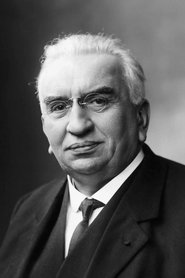 Louis Lumière
About the Production
Release Date 1896
Production Lumière Company
Filmed In La Ciotat, France
Filmed using the Lumière Cinématographe, which served as both camera and projector. The film was shot in a single take with a fixed camera position, typical of early Lumière productions. The blacksmith and his assistant were actual workers filmed during their daily routine, not actors. The location was likely a real blacksmith's workshop in La Ciotat, where the Lumière brothers filmed many of their early works.
More Documentary Films
View all →

More from Louis Lumière
View all →

Themes & Topics
Historical Background
1896 was a pivotal year in cinema history, occurring just one year after the Lumière brothers' first public film screening. The Industrial Revolution was transforming society, but traditional crafts like blacksmithing remained essential. Horse-drawn transportation was still dominant, making the farrier's work crucial to daily life. The film emerged during a period of technological innovation, with the Lumière brothers competing with Thomas Edison and other pioneers. This was also the year cinema began spreading internationally, with Lumière cameramen sent to document life around the world. The film captures a moment just before the automobile would begin to replace horses, preserving a craft that would soon become less common.
Why This Film Matters
Le maréchal-ferrant represents a fundamental shift in how human activity could be documented and preserved. As one of the first films to show labor and craftsmanship, it established documentary cinema as a genre. The film exemplifies the Lumière brothers' philosophy of capturing reality rather than creating theatrical illusions, influencing generations of documentary filmmakers. It also serves as an invaluable historical document of 19th-century working life and traditional crafts. The film helped establish cinema as a medium for both entertainment and education, demonstrating its potential to preserve cultural practices for future generations.
Making Of
The film was shot using the revolutionary Cinématographe device invented by the Lumière brothers. Unlike Edison's Kinetoscope which was bulky and required electricity, the Cinématographe was portable and hand-cranked, allowing it to be taken to actual locations. The camera was positioned to capture the entire workspace, showing both the blacksmith at his anvil and his assistant at the bellows. The lighting was natural, coming from the forge itself and any available daylight. The subjects were not directed or staged; they were filmed continuing their normal work routine, which was the Lumière brothers' preferred approach to filmmaking.
What Critics Said
Contemporary audiences and critics were fascinated by the film's ability to capture motion and reality. Early reviews in French newspapers marveled at the lifelike quality of the moving images, with many commenting on the unprecedented realism. The film was praised for its documentary value and its ability to preserve everyday activities. Modern film historians consider it a landmark work that established the documentary tradition in cinema. Critics today appreciate it as both a technical achievement and a valuable historical document that preserves a glimpse of 19th-century working life.
Did You Know?
- One of the earliest documentary films ever made, showcasing real labor in progress
- Part of the Lumière brothers' first public film screening on December 28, 1895, at the Grand Café in Paris
- The film demonstrates the Lumière philosophy of capturing 'actualités' - real scenes from everyday life
- Unlike Edison's films which were often staged, this was authentic documentation of work in progress
- The Cinématographe camera used could only film about 50 seconds of footage, explaining the film's brief duration
- This film was distributed worldwide as part of the Lumière catalog, helping spread cinema globally
- The blacksmith profession was still essential in 1896, before automobiles replaced horses as primary transportation
- The film was shot on 35mm film with a frame rate of approximately 16 frames per second
- It represents one of the first instances of occupational documentation in cinema history
- The film was hand-cranked, meaning the actual speed varied depending on the operator's consistency
More film details Visual style, music, quotes, restoration, and more
Visual Style
The film employs a single, static wide shot that captures the entire workspace of the blacksmith. The composition is straightforward and functional, designed to clearly show the work process rather than create artistic effects. The lighting comes primarily from the forge itself, creating natural contrast and highlighting the industrial nature of the work. The camera position allows viewers to see both the blacksmith's work at the anvil and the assistant's operation of the bellows, creating a complete picture of the collaborative effort. The fixed camera and single take approach were typical of early Lumière productions, emphasizing authenticity over cinematic technique.
Innovations
The film represents a significant technical achievement as one of the first successful applications of the Cinématographe system. The ability to capture clear, stable moving images of real-world activity was groundbreaking. The film demonstrated the portability and practicality of the Lumière camera compared to Edison's bulkier equipment. The successful documentation of work in progress proved that cinema could be used for more than staged entertainment, establishing its documentary potential. The film's preservation of motion and detail in 1896 set new standards for what was technically possible in the emerging medium of cinema.
Memorable Scenes
- The entire single-take sequence showing the blacksmith heating the horseshoe in the forge and then hammering it into shape while his assistant continuously works the bellows, creating a rhythmic display of traditional craftsmanship.
What Audiences Thought
The film was received with wonder and excitement by 1890s audiences who had never before seen moving images. Viewers were particularly impressed by the clarity and realism of the motion, with some reports of audience members ducking or reacting to the on-screen action. The film's depiction of familiar work made it particularly relatable and accessible to contemporary viewers. As part of the Lumière brothers' first public screenings, it contributed to the immediate success and popularization of cinema as a new form of entertainment and documentation.
Film Connections
Influenced By
- The Lumière brothers' philosophy of capturing actualités
- Early documentary traditions
- Industrial age documentation
This Film Influenced
- Other Lumière actualités
- Early documentary films
- Occupational documentaries
- Industrial films
Film Restoration
The film is preserved and archived by the Lumière Institute in Lyon, France. Multiple copies exist in various film archives worldwide, including the Cinémathèque Française. The film has been digitally restored and is part of the Lumière brothers' collected works that have been preserved for historical and educational purposes. Due to its early date and historical importance, it is considered a protected cultural heritage item.
Where to Watch
- Available on various streaming platforms specializing in classic cinema
- YouTube through official archives
- The Lumière Institute's digital collections
- Film museum screenings
- Educational film collections
- Criterion Channel special collections
- Mubi's classic cinema section