Keys: Space play/pause · ←/→ 10s · F fullscreen · M mute · </> speed
Plot
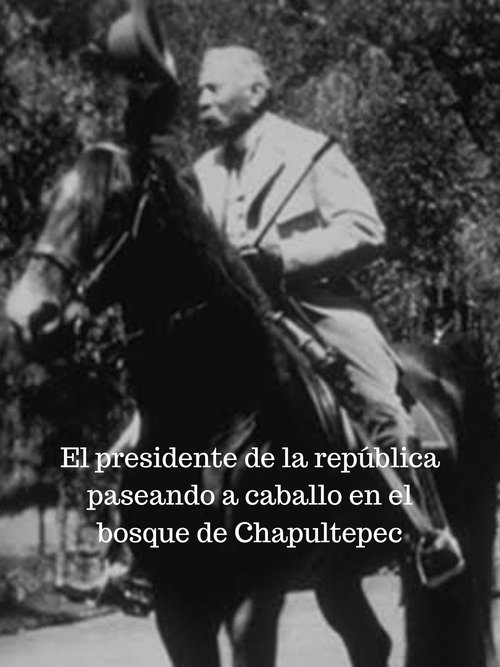
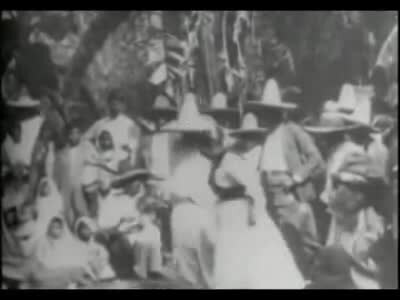
This historic short film captures Mexican President Porfirio Díaz mounted on horseback as he poses for the camera during a leisurely ride. The president, dressed in his military uniform and accompanied by his entourage, appears dignified and composed as he gazes directly at the camera. The film shows Díaz controlling his horse with practiced ease, demonstrating both his equestrian skills and presidential authority. The brief but significant moment represents one of the earliest cinematic recordings of a sitting head of state. The entire sequence serves as both a political statement and a technological demonstration of the new medium of motion pictures.
Director
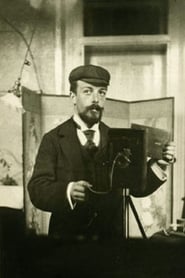 Gabriel Veyre
Cast
About the Production
Release Date 1896
Box Office Not applicable - exhibition films of this period were not commercially tracked
Production Lumière Company
Filmed In Mexico City, Mexico
Filmed by Gabriel Veyre during his extensive travels through Mexico as a Lumière cameraman. The production was arranged through diplomatic channels to secure presidential access. Veyre had to transport the heavy cinématographe equipment to Mexico and set up the outdoor shoot with proper lighting conditions. The filming required coordination with presidential security and scheduling around Díaz's official duties. This was part of Veyre's larger project to document Mexican life and culture for European audiences.

Themes & Topics
Historical Background
This film was created during the height of the Porfiriato, the period of Porfirio Díaz's long rule over Mexico (1876-1911). 1896 was a pivotal year in world cinema history, occurring just one year after the Lumière brothers' first public film screening in Paris. Mexico at this time was undergoing rapid modernization under Díaz's regime, with significant foreign investment and technological advancement. The very act of filming the president represented the intersection of Mexican political power with cutting-edge European technology. This period also saw the beginning of cinema's global expansion, as filmmakers like Veyre traveled the world to capture images for audiences back in Europe. The film serves as a time capsule of both early cinema technology and the political atmosphere of turn-of-the-century Mexico.
Why This Film Matters
This film represents a landmark moment in both Mexican and world cinema history. It is among the first motion pictures ever made in Mexico and possibly the first cinematic documentation of a Mexican president. The film established a precedent for the relationship between cinema and political power that would continue throughout film history. It also marked the beginning of Mexico's long and rich cinematic tradition that would eventually produce one of the world's most important film industries. The preservation of this image of Díaz provides invaluable historical documentation of one of Mexico's most controversial and influential leaders. The film demonstrates how early cinema immediately gravitated toward documenting authority figures, establishing a pattern of political representation in media that continues today.
Making Of
Gabriel Veyre, a French photographer and filmmaker working for the Lumière brothers, traveled extensively through Mexico in 1896 with the revolutionary cinématographe device. Securing permission to film President Porfirio Díaz required significant diplomatic effort and demonstrated the perceived importance of the new medium. The filming session was carefully orchestrated to present the president in the most favorable light, showing him as a strong, capable leader in control of both his horse and his nation. Veyre had to work with the challenging outdoor conditions of Mexico City, managing the heavy equipment and ensuring proper exposure in the bright sunlight. The resulting film was part of a broader effort by the Lumière Company to create a global catalog of actualities that would showcase the capabilities of their invention while documenting important world figures and events.
What Critics Said
Contemporary critical reception of this film is largely undocumented, as film criticism was not yet established as a practice in 1896. However, the film was likely received with fascination by audiences who had never before seen moving images of their president or any political figure. Modern film historians and archivists recognize the film as a crucial document of early cinema and Mexican political history. Scholars value it as an example of the Lumière Company's actuality films and as rare visual documentation of Porfirio Díaz. The film is frequently cited in academic works about the origins of cinema in Mexico and the early relationship between film and politics.
Did You Know?
- This is believed to be one of the first films ever made featuring a sitting head of state
- Gabriel Veyre was sent by the Lumière brothers to document Mexico and other countries to showcase their invention globally
- Porfirio Díaz was one of the longest-serving rulers in Mexican history, dominating Mexican politics for over 30 years
- The film was part of a series of Mexican actualities that Veyre shot during his time in the country
- The cinématographe camera used to film this weighed about 5 kilograms and required hand-cranking
- This film predates the establishment of Mexico's first film studio by several years
- Veyre's Mexican films were among the first motion pictures ever seen by Mexican audiences
- The preservation of this film provides rare moving image documentation of Díaz's appearance and mannerisms
- The film demonstrates early cinema's fascination with documenting political figures and power
- This actuality was likely screened in Lumière's first public film exhibition in Mexico City in 1896
More film details Visual style, music, quotes, restoration, and more
Visual Style
The cinematography follows the characteristic Lumière style of static, composed shots with the camera positioned at eye level. Veyre used the cinématographe to capture a single, continuous take of the president on horseback. The framing places Díaz centrally in the composition, emphasizing his importance and authority. The natural outdoor lighting creates a high-contrast image typical of early film stocks. The camera remains stationary throughout, allowing the subject to move within the frame rather than following him with camera movement. This approach reflects the technical limitations and aesthetic preferences of earliest cinema, where the novelty of capturing motion itself was the primary attraction.
Innovations
The film represents a significant technical achievement as one of the earliest motion pictures made outside Europe. The successful capture of a moving subject on horseback demonstrated the capabilities of the cinématographe in challenging outdoor conditions. The transportation and operation of the equipment in Mexico City in 1896 was itself a considerable technical accomplishment. The film showcases the early use of cinema for documentary purposes, establishing a precedent for newsreel and actuality filmmaking. The preservation of this early film stock for over 125 years also represents an achievement in film conservation and archival science.
Music
This is a silent film, as all films were in 1896 before the development of synchronized sound technology. Original exhibitions would have been accompanied by live music, typically a pianist or small ensemble performing appropriate pieces. The musical accompaniment would have been chosen to match the dignified nature of the subject, likely featuring patriotic or classical pieces. Modern screenings of the film are typically accompanied by period-appropriate music or contemporary scores composed specifically for silent film presentations.
Memorable Scenes
- The entire film consists of a single memorable scene: President Porfirio Díaz mounted on his horse, posing regally for the camera while demonstrating his equestrian skills and presidential dignity, creating a powerful image of political authority captured by the new medium of cinema.
What Audiences Thought
Original audience reception would have been one of wonder and amazement, as most viewers had never before seen moving images. The sight of their president moving and breathing on screen would have been particularly striking for Mexican audiences. For European viewers, the film offered an exotic glimpse of Mexican political power and culture. The film's brevity and simple composition were typical of the era and would have been perfectly suited to the attention spans and expectations of early cinema audiences. Modern audiences viewing the film in archives or retrospectives appreciate it primarily for its historical value rather than entertainment content.
Film Connections
Influenced By
- Lumière Company actuality films
- Early documentary tradition
- Political portraiture in photography
This Film Influenced
- Subsequent Mexican political documentaries
- Newsreel films of world leaders
- Presidential campaign films
Film Restoration
The film is preserved in various film archives, including the Lumière Institute in France and likely in Mexican film archives. As an early Lumière production, it has been carefully preserved and restored. The film exists in the standard 35mm format and has been digitized for archival and educational purposes. While some early films from this period have been lost, this particular film survives as part of the well-documented Lumière collection.
Where to Watch
- Available through various film archives and academic institutions
- May be viewed in curated collections of early cinema
- Accessible through some online film history platforms and educational resources
- Screened occasionally in film museum retrospectives and silent film festivals
- Available in some DVD collections of early cinema or Lumière films