
Life and Death of Pushkin
"Pushkin's life and duel flash by in five compressed scenes."
Keys: Space play/pause · ←/→ 10s · F fullscreen · M mute · </> speed
About this film
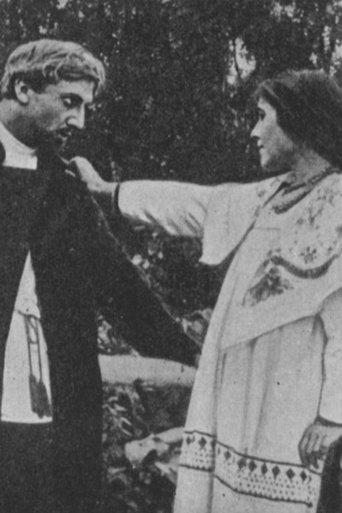
Alexander Pushkin's life and death unfold in a five-minute succession of roughly half a dozen scenes, told through Russian intertitles in Vasily Goncharov's compressed silent biography.
Cast & crew
More films like this
More Drama films
View all →







More from Vasiliy Goncharov
View all →


More about this film
About the production
Release dateSeptember 3, 1910 (August 21, 1910 Old Style)
ProductionGaumont (Moscow Branch)
Filmed inMoscow, Russian Empire
Produced by the Moscow branch of the French Gaumont company, the film was part of a broader movement by early Russian filmmakers to adapt national literary classics to the screen. Director Vasiliy Goncharov, a pioneer of Russian cinema, utilized a 'tableau' style where each scene functioned as a living illustration of a historical event. The production faced the challenge of condensing a complex life into a short runtime, resulting in a series of static but emotionally charged scenes designed for an audience already deeply familiar with Pushkin's biography.
Themes
The tragedy of the artistNational identityThe conflict between genius and societyFate and mortalityThe influence of folklore
Themes & topics
Historical background
Made in 1910, in Russian Empire, under Vasily Goncharov, Life and Death of Pushkin belongs to silent filmmaking amid the silent era's rapid stylistic experiments. Vasily Mikhailovich Goncharov was a Russian film director and screenwriter, one of the pioneers of the film industry in the Russian Empire, who directed an early Russian feature film Defence of Sevastopol.
Why this film matters
Within silent history, Vasily Goncharov's name attaches to the work; surviving prints help researchers study silent-era craft; 1910 film by Vasily Goncharov.
Making of
Vasiliy Goncharov, who had previously worked on the first Russian feature 'The Defence of Sevastopol,' approached this project as a series of 'living pictures.' The production was rapid, typical of the era, focusing on iconic visual cues—such as the nanny's headscarf or the Lyceum uniform—to signal historical context to the viewer. Casting Vladimir Krivtsov as Pushkin was a strategic choice based on his physical resemblance to the poet's famous portraits. The film was shot primarily in a studio setting with painted backdrops, which was standard for the Gaumont Moscow branch at the time.
What critics said
Contemporary reviews of Life and Death of Pushkin are sparse in open sources; later catalog entries chiefly summarize plot and credits.
Did you know?
- It is the first biographical film ever made about Alexander Pushkin.
- The film is the only early 'Pushkin series' silent film that has been preserved with its original Russian intertitles intact.
- Despite being a Russian production, it was produced by the Moscow branch of the French company Gaumont.
- Contemporary critics in 1910 were largely negative, calling the acting 'primitive' and the staging 'crude,' yet the film remained popular with audiences for a long time.
- The film features a recreation of the famous 1815 Lyceum exam where Pushkin recited poetry for Gavrila Derzhavin.
- The actress playing Natalya Goncharova, Aleksandra Goncharova, shared the same surname as Pushkin's real-life wife, though she was not a direct descendant.
- The film was released during a period of 'Pushkin-mania' in Russia, where the poet's life was being canonized as a national myth.
- The cinematography was handled by Alphonse Winkler, a French cameraman who worked extensively in early Russian cinema.
Visual style
The cinematography by Alphonse Winkler is characterized by a static camera and deep-focus staging. The film uses 'tableau' compositions, where the action unfolds within a single wide shot for each scene, mimicking the experience of looking at a historical painting or a stage play. Lighting is flat and naturalistic, typical of early studio work.
Innovations
The film is notable for its use of authentic-looking costumes and its attempt to recreate specific historical events with visual accuracy based on 19th-century iconography. It was one of the earliest Russian films to use intertitles not just for dialogue, but to provide historical framing for the 'chapters' of the poet's life.
Music
As a silent film, it had no synchronized soundtrack. In 1910, it would have been accompanied by a live pianist (taper) or a small orchestra playing classical Russian pieces, likely by Tchaikovsky or Glinka, to enhance the emotional weight of the scenes.
Famous quotes
Intertitle: 'Pushkin at the Lyceum - the awakening of talent.'
Intertitle: 'The fatal duel on the Black River.'
Memorable scenes
- The scene where the young Pushkin listens to his nanny, Arina Rodionovna, which visually establishes the roots of his creative inspiration.
- The Lyceum examination scene where the elderly poet Derzhavin rises in excitement to embrace the young prodigy.
- The final duel scene, staged with dramatic tension despite the short runtime, showing the poet falling in the snow.
What audiences thought
The film was a commercial success, staying in theaters much longer than other shorts of the period. Audiences in 1910, many of whom were semi-literate, found the visual representation of the national poet's life deeply moving, as it allowed them to 'see' the stories they had only heard or read in fragments.
Film connections
Influenced by
- The paintings of Ilya Repin
- Pushkin's own autobiographical writings
- 19th-century theater traditions
This film influenced
- The Poet and the Tsar (1927)
- The Poet's Youth (1937)
- Pushkin: The Last Duel (2006)
Film restoration
Preserved. The film is held in the Russian State Film Fund (Gosfilmofond) and is available in various archival collections.
Where to watch
- YouTube (Archival uploads)
- Internet Archive
- Russian Film Hub