
Aleksandra Goncharova
Actor
Born: 1888 in Moscow, Russian Empire Active: 1909-1912 Birth Name: Aleksandra Ivanovna Goncharova
Films
11 films

About Aleksandra Goncharova
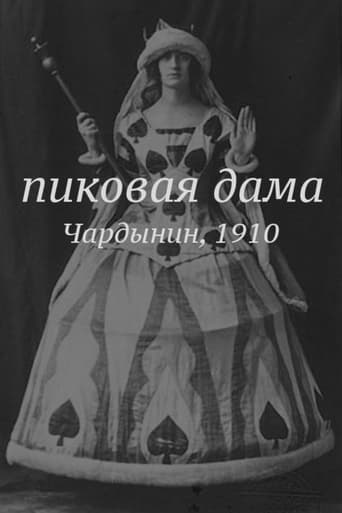
Aleksandra Goncharova was one of Russia's film actresses during the earliest days of Russian cinema, working primarily with director Vasily Goncharov at the Khanzhonkov film company. She emerged as a professional actress just as Russian cinema was transitioning from short actualities to narrative feature films in 1909. Goncharova appeared in several of Russia's first significant feature films, many based on works by Alexander Pushkin, helping establish the foundation of Russian cinematic art. Her performances in films like 'Mazeppa' and 'The Queen of Spades' demonstrated the emerging dramatic potential of the new medium. Though her career was brief, spanning roughly 1909-1912, she was instrumental in proving that literary adaptations could successfully transition to the screen. She worked alongside other early Russian cinema pioneers including Andrey Gromov and Pyotr Chardynin. Her disappearance from film records after 1912 coincides with the early struggles of the Russian film industry before its golden age in the 1910s.
The Craft
On Screen
Goncharova's acting style reflected the theatrical traditions of the time, with exaggerated gestures and dramatic expressions necessary for silent film communication. She employed the melodramatic techniques common in early Russian theater, emphasizing emotional intensity through facial expressions and body language. Her performances in literary adaptations showed a particular talent for conveying the complex emotions of classic Russian literary characters. As one of the first professional film actresses in Russia, she helped develop the transition from stage acting to screen acting techniques.
Milestones
- Starred in Russia's first feature films (1909)
- work in Russian literary adaptations
- Collaboration with director Vasily Goncharov
- Key performer at Khanzhonkov film company
- Appeared in multiple Pushkin adaptations
Best Known For
Iconic Roles
Must-See Films
Accolades
Special Recognition
- Recognized as one of Russia's first professional film actresses
Working Relationships
Worked Often With
Studios
Why They Matter
Impact on Culture
Aleksandra Goncharova played a significant role in establishing Russian cinema's artistic legitimacy by successfully embodying characters from Russia's literary canon. Her work in Pushkin adaptations helped demonstrate that Russian literature could be successfully adapted to the new medium of film, influencing the direction of Russian cinema for decades. As one of the first professional film actresses in Russia, she helped pave the way for later Russian film stars like Vera Kholodnaya and Olga Preobrazhenskaya. Her performances contributed to the early development of Russian film's reputation for literary sophistication and dramatic depth.
Lasting Legacy
Goncharova's legacy lies in her role as one of Russia's first professional film actresses during the crucial formative years of 1909-1912. She represents the important transition from theatrical to cinematic performance in Russian culture. Though her name is not widely known today, film historians recognize her contribution to establishing the foundation of Russian cinema's tradition of literary adaptation. Her work with director Vasily Goncharov helped establish the Khanzhonkov company as Russia's leading film studio in the early 1910s.
Who They Inspired
While direct influence on later actors is difficult to trace due to limited documentation, Goncharova's work in literary adaptations established patterns that would influence Russian cinema for decades. Her performances helped prove that complex literary characters could be successfully portrayed on screen, encouraging more sophisticated adaptations of Russian literature. She was part of the first generation of Russian film actors who developed techniques specific to cinema rather than theater.
Off Screen
Very little is documented about Aleksandra Goncharova's personal life, which was common for early Russian film actors whose biographical details were often poorly recorded. She worked during a period when acting was not considered a respectable profession for women in Russian society. Her brief career coincided with the formative years of Russian cinema, before the industry established more comprehensive record-keeping practices.
Education
Likely theatrical training, though specific details are not documented in available sources
Did You Know?
- One of the first professional film actresses in Russia
- Worked during the very birth of Russian narrative cinema
- Appeared in multiple adaptations of Alexander Pushkin's works
- Her surname coincidentally matched that of her frequent collaborator, director Vasily Goncharov, though they were not related
- All her known films were produced by the Khanzhonkov company, Russia's first major film studio
- Her career ended before Russian cinema's golden age of the 1910s
- Like many early Russian film actors, much of her biographical information has been lost to history
- She helped establish the tradition of literary adaptations in Russian cinema
- Her films were among the first Russian features to be exported internationally
- She worked during a period when most Russian films were still under 10 minutes long
Frequently Asked Questions
Who was Aleksandra Goncharova?
Aleksandra Goncharova was one of Russia's film actresses during the earliest days of Russian cinema (1909-1912). She worked primarily with director Vasily Goncharov at the Khanzhonkov film company and appeared in several of Russia's first feature films, many based on works by Alexander Pushkin.
What films is Aleksandra Goncharova best known for?
Titles linked here include Mazeppa (1909), The Queen of Spades (1910).
When was Aleksandra Goncharova born and when did she die?
Born 1888; died death date not listed.
What awards did Aleksandra Goncharova win?
No formal awards were documented for Aleksandra Goncharova, as this was during the very earliest days of Russian cinema before award systems were established. She is recognized by film historians as one of Russia's first professional film actresses.
What was Aleksandra Goncharova's acting style?
Her acting style reflected the theatrical traditions of the time, with exaggerated gestures and dramatic expressions necessary for silent film communication. She employed melodramatic techniques common in early Russian theater, emphasizing emotional intensity through facial expressions and body language.