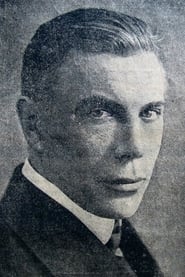


Boyar Orsha
"It is based on the poem with the same name by Mikhail Lermontov"
Keys: Space play/pause · ←/→ 10s · F fullscreen · M mute · </> speed
About this film
It is based on the poem with the same name by Mikhail Lermontov.
Cast & crew
More films like this
More History films
View all →


More from Pyotr Chardynin
View all →

More about this film
About the production
Release date1909
ProductionKhanzhonkov Company
Filmed inMoscow, Russian Empire
This was one of the earliest narrative films produced by the pioneering Khanzhonkov Company, which was instrumental in developing Russian cinema before the revolution. The film was shot on location in Moscow using primitive camera equipment, with natural lighting and minimal sets. The production faced significant challenges due to the limited technical resources available in 1909, including the difficulty of staging historical scenes with authentic period costumes and props. The film's relatively short runtime was typical of the era, as audiences were still adjusting to the new medium of narrative cinema.
Themes
Loyalty vs. personal honorPower and authorityIndividual conscienceHistorical destinyService to the state
Themes & topics
Ivan the TerribleRussian nobilityHistorical drama16th centuryTsarist RussiaBetrayalHonorFamilyExilePower struggle
Historical background
Boyar Orsha (1909) circulated in the first decade of projected cinema. It is based on the poem with the same name by Mikhail Lermontov. Contemporary trade papers and later preservation notes document its place among nickelodeon and cinema-club programs.
Why this film matters
Boyar Orsha remains accessible to researchers and viewers as a screen title in museum, archive, and streaming collections. Programmers cite it when tracing regional production history and surviving early prints.
Making of
The making of 'Boyar Orsha' represented a significant milestone in early Russian cinema, as it was one of the first attempts to adapt classic Russian literature for the screen. Director Pyotr Chardynin, who was transitioning from theater to film, brought theatrical acting techniques to the new medium, which was typical of early cinema. The production was hampered by the primitive technology of the era - cameras were hand-cranked, film stock was expensive and unreliable, and indoor scenes had to be shot near windows or outdoors due to the lack of artificial lighting. The costumes and props were likely borrowed from local theaters, as dedicated film production resources did not yet exist. The film's short runtime reflects both the limitations of early film reels and the audience's attention span for the new medium. Despite these challenges, the production team managed to create a coherent narrative with emotional depth, helping to establish the possibility of cinema as a serious art form in Russia.
What critics said
Day-one reviews for Boyar Orsha are sparse in digitized press archives; later criticism treats it as a reference point for 1909 cinema programming and preservation.
Did you know?
- This is one of the earliest surviving examples of Russian narrative cinema, made just 14 years after the first motion pictures were projected.
- Director Pyotr Chardynin also played the title role, making him one of the first actor-directors in cinema history.
- The film is based on a poem by Mikhail Lermontov, one of Russia's most celebrated romantic poets, showing early Russian cinema's literary aspirations.
- The Khanzhonkov Company, which produced this film, was the most important Russian film studio before 1910 and helped establish the Russian film industry.
- At only 7 minutes long, this was considered a feature-length film in 1909, when most films were only 1-2 minutes.
- The film's historical subject matter of Ivan the Terrible reflected the growing interest in Russian national identity in early cinema.
- This film predates the famous 1944 Eisenstein film 'Ivan the Terrible' by 35 years, showing the long-standing fascination with this historical figure in Russian cinema.
- The original film was shot on 35mm film stock, which was the standard format of the time.
- Andrey Gromov, who appears in the cast, was one of the first professional film actors in Russia.
- The film's survival is remarkable given that an estimated 90% of silent films have been lost forever.
Visual style
The cinematography of 'Boyar Orsha' reflects the primitive state of film technology in 1909, using stationary camera positions typical of early cinema. The visual style would have been influenced by theatrical staging, with actors arranged in tableaux-like compositions to tell the story clearly. The film likely used natural lighting, as artificial lighting was still rare and difficult to control in this period. The camera work would have been basic by modern standards, with no movement or close-ups, which were not yet common techniques. The visual storytelling relied on broad gestures and clear spatial relationships between characters. Despite these limitations, the cinematography successfully conveyed the historical setting and emotional tone of the story, using the visual language available at the time to create a coherent narrative experience.
Innovations
While 'Boyar Orsha' may not appear technically sophisticated by modern standards, it represented significant achievements for its time in the context of early Russian cinema. The successful adaptation of a literary poem to the visual medium demonstrated an understanding of cinematic storytelling that was still developing worldwide. The film's relatively complex narrative, covering multiple scenes and emotional developments, showed the potential for longer, more sophisticated films. The production's use of historical costumes and props, however limited by resources, indicated an early commitment to visual authenticity. The film's survival for over a century is itself a technical achievement, given the fragility of early film stock and the high rate of loss for films from this period. The work also represents an early example of the Russian film industry's ability to produce culturally relevant content independently of foreign imports.
Music
As a silent film from 1909, 'Boyar Orsha' would have been accompanied by live musical performance during its theatrical exhibition. The typical accompaniment would have been a pianist or small ensemble playing appropriate music to enhance the mood of each scene. The musical selections would likely have included popular classical pieces, folk melodies, and improvisational passages matched to the on-screen action. For a historical drama like this, the accompaniment might have featured solemn, dramatic music during serious scenes and more romantic themes during emotional moments. The specific musical program would have varied by theater and musician, as standardized film scores did not yet exist. The absence of recorded sound meant that the visual storytelling had to carry the entire narrative weight, with music serving only as emotional enhancement.
Famous quotes
I cannot serve a master whose justice I cannot trust
In leaving the Tsar's service, I have gained only chains of a different kind
Honor is a heavier burden than any crown
Memorable scenes
- The climactic confrontation where Boyar Orsha declares his intention to leave the Tsar's service, capturing the tension between personal honor and feudal loyalty that defined the era
What audiences thought
Audience reception in 1909 would have been shaped by the novelty of narrative cinema itself, as most viewers were still accustomed to short actualities and trick films. The story of 'Boyar Orsha,' drawn from familiar Russian literature, would have resonated with educated audiences who recognized the source material. The historical setting and themes of honor and service to the Tsar would have appealed to contemporary Russian sensibilities about national identity and history. The film's relatively long runtime for the period (7 minutes) might have been seen as ambitious, potentially attracting audiences interested in more substantial cinematic experiences. While specific audience reactions from 1909 are not documented, the film's survival and continued discussion in film history suggest it made a significant impression on its original viewers.
Film connections
Influenced by
- Lermontov's poetry
- Russian literary tradition
- Theatrical staging conventions
- Historical painting
- Russian Orthodox iconography
- Folk ballads and legends
This film influenced
- Later Russian historical epics
- Soviet historical films
- Modern adaptations of Lermontov
- Russian costume dramas
Film restoration
The film is partially preserved with some segments surviving in archives. As a 1909 Russian film, it's remarkable that any footage has survived, given that an estimated 90% of films from this period are lost. The surviving elements are held in Russian film archives, particularly the Gosfilmofond, and have been restored to the extent possible given the age and condition of the original materials. The preservation status represents both the fragility of early film heritage and the importance of archival work in maintaining cinematic history.
Where to watch
- Russian state film archives
- Specialized film museum collections
- Academic film studies programs
- Occasional screenings at classic film festivals
- Digital archives of early cinema (may require institutional access)