

Mermaid
"The Water Nymph The film is based on the play The Water Nymph by Alexander Pushkin"
Keys: Space play/pause · ←/→ 10s · F fullscreen · M mute · </> speed
About this film
The Water Nymph (1910) The film is based on the play The Water Nymph by Alexander Pushkin. ^ В Тамбове торжественно открыли Год российского кино.
Cast & crew
More films like this
More Fantasy films
View all →


More from Vasiliy Goncharov
View all →

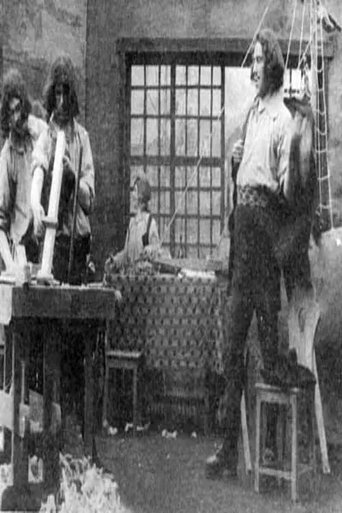

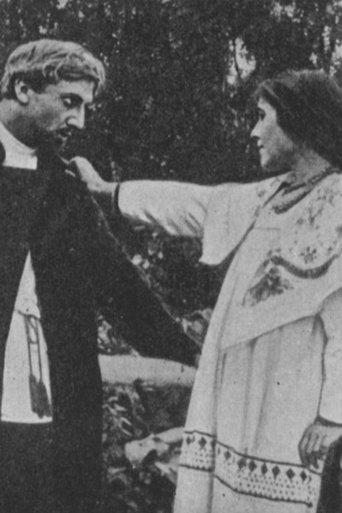
More about this film
About the production
Release date1910
ProductionKhanzhonkov Film Company
Filmed inMoscow, Russia
This was one of the earliest Russian feature films, produced during the pioneering era of Russian cinema. The film utilized special effects techniques common for the period, including multiple exposures and dissolves to create the supernatural appearances of the mermaid. The production was part of Alexander Khanzhonkov's efforts to establish a serious Russian film industry that could compete with European cinema.
Themes
Tragic romanceSupernatural interventionSocial class differencesGuilt and redemptionFolklore and mythology
Themes & topics
Historical background
Mermaid (1910) emerged during the silent-film era. The Water Nymph (1910) The film is based on the play The Water Nymph by Alexander Pushkin. Archival records and catalog entries help place the work within film-history surveys of the period.
Why this film matters
Preserved under Wikidata ID Q4400241, Mermaid is valued as a screen drama within catalog and archive collections. Wikipedia's "The Water Nymph (1910 film)" entry connect it to broader histories of cinema exhibition and restoration.
Making of
The production of 'Mermaid' took place during the formative years of Russian cinema, when filmmakers were still experimenting with the medium's possibilities. Director Vasiliy Goncharov worked with the Khanzhonkov Film Company, which was at the forefront of Russian film production. The cast included Vasili Stepanov as the prince, Aleksandra Goncharova as the miller's daughter/mermaid, and Andrey Gromov in a supporting role. The filming techniques were rudimentary by modern standards but innovative for 1910, utilizing available lighting and early special effects to create the supernatural elements. The production team faced significant technical challenges in creating the ghostly appearances of the mermaid, relying on multiple exposure techniques that were cutting-edge for the period. The film was shot on location in Moscow, taking advantage of the city's architecture and natural surroundings to create the appropriate atmosphere for this dark romantic tale.
What critics said
Trade and archival sources offer limited day-one review coverage for Mermaid. Modern reception rests on its availability in collections, repertory screenings, and reference works that document 1910 cinema.
Did you know?
- This is one of the earliest surviving Russian feature films and represents a crucial milestone in Russian cinematic history
- The film is based on Alexander Pushkin's unfinished 1832 play 'Rusalka' and Alexander Dargomizhsky's 1856 opera of the same name
- Director Vasiliy Goncharov was one of Russia's first professional film directors and a pioneer of the Russian film industry
- The film was produced by Alexander Khanzhonkov, who is considered the father of Russian cinema
- At only 15 minutes runtime, it was considered a feature-length film in 1910, when most films were much shorter
- The film used innovative special effects for its time, including early forms of double exposure to create ghostly apparitions
- Aleksandra Goncharova, who played the mermaid, was the director's wife and a prominent actress in early Russian cinema
- The film was part of a trend in early Russian cinema to adapt literary classics, lending artistic legitimacy to the new medium
- This film predates the Soviet era and represents the artistic sensibilities of Imperial Russian cinema
- The story of Rusalka (water spirit) is deeply rooted in Slavic folklore, making this film culturally significant beyond its cinematic achievements
Visual style
The cinematography of 'Mermaid' reflects the technical limitations and artistic conventions of 1910 filmmaking. The film was shot in black and white using hand-cranked cameras, resulting in the characteristic flickering motion of early cinema. The visual style emphasized dramatic composition and theatrical staging, reflecting the influence of stage production on early film. Lighting was naturalistic where possible but supplemented with artificial lighting to create the appropriate mood for supernatural scenes. The cinematographer employed innovative techniques for the period, including multiple exposures to create ghostly effects and dissolve transitions between scenes. The camera work was relatively static, with most shots composed as if capturing a theatrical performance. Despite these technical limitations, the film's visual storytelling was effective for its time, using composition and lighting to convey emotion and atmosphere. The cinematography successfully created the otherworldly atmosphere necessary for the supernatural elements of the story.
Innovations
For its time, 'Mermaid' showcased several technical achievements that were innovative in early Russian cinema. The film's use of multiple exposure techniques to create ghostly apparitions was cutting-edge for 1910, allowing the supernatural elements to appear convincingly on screen. The production employed dissolve transitions between scenes, which was still a relatively new technique in 1910. The film's special effects, while simple by modern standards, required careful planning and execution in an era before sophisticated optical printing equipment. The lighting design for the supernatural scenes demonstrated an understanding of how illumination could create mood and atmosphere. The film also demonstrated early Russian cinema's ability to tell a complete narrative story within the constraints of very short runtime, requiring efficient storytelling techniques. These technical achievements, while modest compared to later developments, were significant for the Russian film industry of 1910 and helped establish technical standards for future productions.
Music
As a silent film, 'Mermaid' did not have a recorded soundtrack but would have been accompanied by live musical performance during its original theatrical run. The typical accompaniment would have been provided by a pianist or small orchestra performing appropriate classical pieces or improvised music that matched the on-screen action. Given the film's basis in Russian opera and its dramatic themes, the musical accompaniment likely drew from Russian classical composers and romantic music traditions. The score would have emphasized the supernatural elements with eerie, mysterious passages during the mermaid's appearances and dramatic, emotional music during the romantic and tragic scenes. The choice of music would have been crucial in establishing the film's atmosphere and helping audiences understand the emotional content of the story without dialogue. Modern screenings of the film often feature newly composed scores or period-appropriate classical music to recreate the intended viewing experience.
Famous quotes
The water claims what love has lost
Even in death, love's memory haunts the living
Royal duty cannot drown the heart's true calling
Memorable scenes
- The miller's daughter's attempted drowning in the river, captured with early special effects to create a haunting atmosphere
- The prince's wedding feast being interrupted by supernatural visions of his former lover
- The final confrontation where the prince returns to seek redemption and closure
What audiences thought
Audiences in 1910 reportedly responded positively to 'Mermaid,' finding its supernatural themes and romantic drama compelling. The film's adaptation of a familiar Pushkin story resonated with Russian viewers who were well-acquainted with the source material. The visual effects, though primitive by modern standards, were impressive to contemporary audiences and contributed to the film's popularity. The tragic romance and supernatural elements appealed to the sensibilities of early 20th-century Russian theater-goers who were transitioning to cinema as a new form of entertainment. The film's success helped demonstrate to Russian producers that there was an audience for serious, literary adaptations, encouraging more ambitious productions in the following years. Modern audiences who have had the opportunity to see this rare film often approach it with historical interest, appreciating its place in the development of Russian cinema rather than judging it by contemporary standards.
Film connections
Influenced by
- Alexander Pushkin's 'Rusalka'
- Alexander Dargomizhsky's opera 'Rusalka'
- Slavic folklore traditions
- Russian theatrical traditions
- European romantic literature
This film influenced
- Later Russian adaptations of Pushkin's works
- Soviet era films dealing with folklore and supernatural themes
- Modern Russian films exploring similar romantic and supernatural themes
Film restoration
The film is partially preserved with some scenes missing or damaged, which is common for films of this era. It exists in film archives and has been restored to varying degrees. Some portions may only survive in fragments or lower-quality copies. The preservation status reflects the challenges of maintaining films from the very early period of Russian cinema, particularly those from before the Soviet era.
Where to watch
- Russian State Film Archive
- Specialized film museum screenings
- Academic film collections
- Occasional film festival retrospectives on early Russian cinema