

The Robber Brothers
"By the Volga, a thief recounts his brutal childhood."
Keys: Space play/pause · ←/→ 10s · F fullscreen · M mute · </> speed
About this film
A thief and his gang are at their camp next to the Volga River. He tells them of how his father died in a river, and how his brother and he were thrown out of the house as children by their step-mother…
Cast & crew
More films like this
More Drama films
View all →







More from Vasiliy Goncharov
View all →

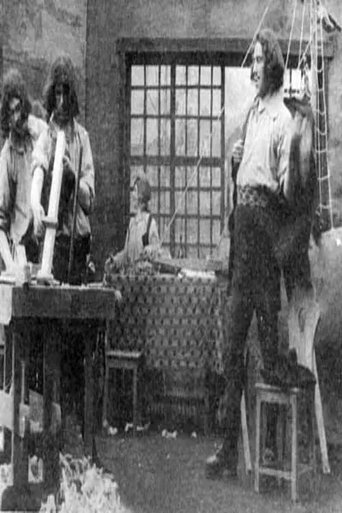

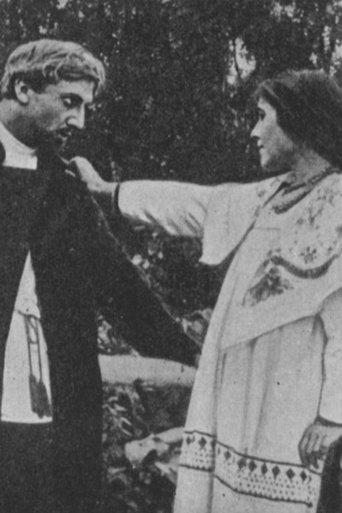
More about this film
About the production
Release date1912
Box officeUnknown - box office tracking was not standardized in Russia during this early cinema period
ProductionKhanzhonkov Film Company
Filmed inMoscow region, Russia
This was one of the earliest adaptations of Pushkin's work for the screen, produced during the golden age of pre-revolutionary Russian cinema. The film was shot on location near the Volga River to capture authentic settings matching Pushkin's descriptions. Director Vasiliy Goncharov, a pioneer of Russian cinema, utilized natural lighting and outdoor shooting techniques that were innovative for the time. The production faced challenges typical of the era, including primitive camera equipment and the need to shoot in sequence due to limited film stock. The film's intertitles were particularly important as they carried Pushkin's poetic language to the audience.
Themes
Brotherhood and family loyaltySocial injustice and class struggleThe moral consequences of crimeSurvival in harsh circumstancesThe conflict between individual morality and societal laws
Themes & topics
Historical background
Viewers around 1912 encountered The Robber Brothers in a market learning how screen stories could carry social themes as well as spectacle.
Why this film matters
Reference works on 1912 cinema cite The Robber Brothers when tracing genre habits and studio economics.
Making of
The production of 'The Robber Brothers' took place during a transformative period in Russian cinema, when the industry was transitioning from simple actualities to complex narrative films. Director Vasiliy Goncharov, who had extensive theater experience, brought a theatrical sensibility to the film's staging and performances. The cast, particularly Ivan Mosjoukine, were drawn from Moscow's theater world, which was common practice in early Russian cinema. The filming process was grueling by modern standards, with actors required to perform in heavy period costumes regardless of weather conditions. The crew used hand-cranked cameras that could only film for short periods before needing to be reloaded, requiring careful planning of each shot. The film's intertitles, crucial for conveying Pushkin's poetic dialogue, were created using elaborate calligraphy that reflected the artistic nature of the source material. Post-production involved hand-tinting of certain scenes to enhance the emotional impact, a labor-intensive process that required artists to carefully apply color to each film frame by hand.
What critics said
Specialist writers today emphasize preservation and access when a viewable copy of The Robber Brothers survives.
Did you know?
- This film represents one of the earliest cinematic adaptations of Alexander Pushkin's work, helping establish the tradition of Russian literary adaptations that would become central to Soviet and Russian cinema
- Ivan Mosjoukine, who appears in this early role, would later become widely praised silent film stars in Europe, particularly famous for his work in France
- Director Vasiliy Goncharov was among the first professional filmmakers in Russia, having previously worked as a theater director before transitioning to cinema
- The Khanzhonkov Film Company, which produced this film, was Russia's first major film studio and played a crucial role in developing the country's film industry before the revolution
- The film's use of actual Volga River locations was unusual for the time, as most early films were shot on studio sets or very close to production facilities
- Like many films from this period, 'The Robber Brothers' was likely tinted by hand, with different colors used to indicate time of day or emotional tone
- The original Pushkin poem, while not as famous as some of his other works, was particularly popular for adaptation due to its dramatic potential and clear moral narrative
- This film was released during a peak period for Russian cinema, when domestic productions actually outperformed foreign films at the Russian box office
- The film's survival status makes it extremely rare, as an estimated 90% of Russian silent films from before 1918 have been lost
- The production utilized the relatively new technology of electric lighting for some scenes, representing the transition from purely natural lighting methods
Visual style
The cinematography of 'The Robber Brothers' reflects the transitional state of film technique in 1912. The film utilized both studio sets and location shooting along the Volga River, demonstrating the growing sophistication of Russian film production. The camera work was likely static, as was typical of the era, but may have included some limited movement using dollies or tracking shots. Natural lighting was probably used for the outdoor scenes, while artificial lighting illuminated the interior sequences. The film may have employed multiple camera setups for the same scene, a technique that was becoming more common by 1912. The visual composition would have been influenced by theatrical staging and the pictorial traditions of Russian art. Hand-tinting was likely applied to enhance emotional impact and differentiate between scenes. The cinematographer would have worked with primitive equipment by modern standards, but the results represented the cutting edge of Russian film technique at the time.
Innovations
For its time, 'The Robber Brothers' demonstrated several technical innovations that were advancing the art of cinema. The use of actual location shooting along the Volga River represented a significant step beyond the studio-bound productions common in earlier Russian cinema. The film likely employed multiple camera setups and more sophisticated editing techniques than earlier films, helping to create a more dynamic narrative flow. The production may have utilized electric lighting equipment for certain scenes, representing the transition from purely natural lighting methods. The hand-tinting process, while labor-intensive, added visual richness and emotional nuance to the black and white footage. The film's adaptation of complex literary material demonstrated the growing narrative capabilities of cinema as a storytelling medium. These technical achievements, while modest by modern standards, contributed to the overall sophistication of Russian cinema and helped establish its reputation for quality production values.
Music
As a silent film, 'The Robber Brothers' would have been accompanied by live musical performance during its original theatrical run. The typical practice in Russian theaters of 1912 involved either a pianist or small orchestra providing musical accompaniment. The music would have been selected to match the emotional tone of each scene, likely drawing on popular Russian folk songs and classical pieces that audiences would recognize. For a literary adaptation based on Pushkin, the musical selections might have included works by Russian composers like Tchaikovsky or Mussorgsky to enhance the cultural atmosphere. The rhythm and tempo of the accompaniment would have been synchronized with the film's dramatic moments, intensifying emotional impact during key scenes. Unfortunately, no specific musical scores or cue sheets for this particular film have survived, so the exact nature of its original musical accompaniment remains unknown.
Famous quotes
The river that took our father now provides our refuge - such is the irony of fate
Brothers in blood, brothers in crime, brothers in sorrow
Cast out by woman's spite, we found our family among the outcasts
In this world, the honest man starves while the thief eats
The stepmother's cruelty forged our bond in fire
Memorable scenes
- The opening scene at the thieves' camp along the Volga River, where the brothers gather around a fire, establishing the atmospheric setting and introducing the group of outlaws
- The flashback sequence showing the brothers' childhood trauma, including their father's death in the river and their expulsion from home by the stepmother
- The emotional confession scene where the elder brother recounts their story to the gang, demonstrating the film's use of intertitles to convey Pushkin's poetic language
- The climactic confrontation scene that tests the brothers' loyalty to each other, likely featuring dramatic gestures and facial expressions characteristic of silent film acting
- The final scene along the riverbank, bringing the story full circle to the waters that both took and gave life
What audiences thought
Audience reception in 1912 Russia was generally positive for literary adaptations, particularly those based on beloved authors like Pushkin. Russian audiences of this era were highly literate and appreciated films that connected to their cultural heritage. The Khanzhonkov Company had built a reputation for quality productions that appealed to educated urban audiences, and 'The Robber Brothers' likely benefited from this reputation. The film's themes of brotherhood, injustice, and survival would have resonated with Russian audiences familiar with Pushkin's work. The outdoor locations and authentic settings would have been impressive to viewers accustomed to studio-bound productions. However, as with most films from this era, detailed audience records and reviews are scarce, making comprehensive assessment of popular reception challenging. The film's rarity today also limits our understanding of its initial impact on Russian moviegoers.
Film connections
Influenced by
- Alexander Pushkin's narrative poetry
- Russian literary tradition
- Theatrical staging conventions of early 20th century Russia
- European literary adaptation films of the 1910s
- Russian folk tales about outlaws and bandits
- The social realist tradition in Russian literature
This film influenced
- Later Russian adaptations of Pushkin's works
- Soviet films about outlaws and social justice
- The tradition of literary adaptations in Russian cinema
- Films exploring brotherhood and loyalty themes
- Early Soviet historical dramas
Film restoration
The preservation status of 'The Robber Brothers' (1912) is extremely precarious. Like approximately 90% of Russian silent films produced before 1918, this film is considered lost or exists only in fragmentary form. The Russian Revolution of 1917 and the subsequent civil war resulted in the destruction of many film archives and private collections. The film may exist in partial form in the Gosfilmofond archive in Moscow or in various European film archives, but a complete, restored version is not known to be available to the public. Some film historians suggest that fragments or still photographs from the production may survive in private collections or academic archives, but these have not been widely cataloged or made accessible. The extreme rarity of this film makes it a subject of ongoing research for cinema archivists and historians specializing in early Russian cinema.
Where to watch
- Due to its lost/partially lost status, 'The Robber Brothers' is not currently available through commercial streaming services or home video releases
- Film archives and specialized cinema research institutions may hold fragments or prints for academic study
- The Gosfilmofond State Film Archive in Russia may have materials related to this film available for scholarly research
- Occasional screenings at specialized film festivals or museum retrospectives focusing on early Russian cinema
- Academic film history courses focusing on pre-revolutionary Russian cinema may include clips or references to this film