
The Peasants' Lot
"Caught between russia and marry"
Keys: Space play/pause · ←/→ 10s · F fullscreen · M mute · </> speed
About this film
Two peasants in feudal Russia wish to marry but tragedy strikes. A grim if familiar depiction of the precarious condition of the rural life.
Cast & crew
More films like this
More Drama films
View all →







More from Vasiliy Goncharov
View all →


More about this film
About the production
Release date1912
ProductionKhanzhonkov Film Company
Filmed inMoscow, Russia
The film was produced during the golden age of early Russian cinema, when the Khanzhonkov studio was one of the leading film production companies in Imperial Russia. Director Vasiliy Goncharov was a pioneer of Russian cinema who helped establish many of the narrative techniques used in early Russian films. The production likely faced the technical limitations of the era, including primitive camera equipment, natural lighting challenges, and the need for elaborate period costumes and sets to recreate feudal Russia.
Themes
Social oppressionClass struggleLove against adversityFeudalismPeasant life
Themes & topics
Historical background
Contemporary records classify The Peasants' Lot (1912) as 1912 film by vasily goncharov, placing it within the silent era before feature-length dominance.
Why this film matters
The Peasants' Lot (1912) helps trace genre evolution, performer careers, and the material conditions of silent exhibition.
Making of
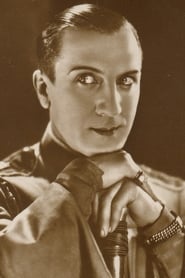
The production of 'The Peasants' Lot' took place during a formative period in Russian cinema history. Director Vasiliy Goncharov was instrumental in developing narrative filmmaking techniques in Russia, moving away from the simple tableaux-style films that dominated early cinema. The casting of Ivan Mosjoukine, who was just beginning his career, suggests the film was considered significant by its producers. The Khanzhonkov studio, where this was likely filmed, was known for its relatively high production values and commitment to creating distinctly Russian cinema rather than merely imitating foreign films. The film's focus on peasant life reflected both the reality of Russian society and the growing interest in social themes among Russian intellectuals and artists of the period.
What critics said
Retrospective notes on The Peasants' Lot emphasize its value as a silent-era document rather than blockbuster reception.
Did you know?
- Director Vasiliy Goncharov was one of the first professional film directors in Russia and helped establish the Russian film industry
- Ivan Mosjoukine, who appears in this film, would become widely praised actors of Russian silent cinema before emigrating to the West
- The film was produced by the Khanzhonkov Company, which was the largest and most important film studio in pre-revolutionary Russia
- 1912 was a pivotal year for Russian cinema, with domestic productions beginning to compete with imported foreign films
- The theme of peasant struggles was common in early Russian cinema, reflecting the social realities and concerns of the time
- Like many films from this era, it was likely shot on 35mm film with hand-cranked cameras
- The film would have been accompanied by live musical accompaniment during theatrical screenings
- Pyotr Chardynin, who appears in the cast, would later become a prominent director himself
- The film represents an early example of social realism in Russian cinema
- Silent films from this period often used exaggerated gestures and facial expressions to convey emotion to the audience
Visual style
The cinematography of 'The Peasants' Lot' would have employed the techniques common to Russian cinema of 1912, including static camera positions with occasional pans, and the use of natural light supplemented by artificial lighting when necessary. The visual style likely emphasized the contrast between the natural beauty of the Russian landscape and the harshness of peasant life. Period costumes and set design would have been carefully chosen to authentically represent feudal Russia. The film would have been shot in black and white, with visual storytelling relying heavily on composition, staging, and the expressive performances of the actors.
Innovations
While 'The Peasants' Lot' was not groundbreaking in technical terms, it represents the refinement of narrative filmmaking techniques that were still evolving in 1912. The film would have utilized the standard 35mm film format and the basic editing techniques of the era, including continuity editing to maintain narrative flow. The production likely benefited from the relatively sophisticated facilities of the Khanzhonkov studio, which was known for maintaining high technical standards for Russian films of the period. The film's achievement lies more in its thematic ambition and contribution to developing a distinctly Russian cinematic language than in technical innovation.
Music
As a silent film, 'The Peasants' Lot' would have been accompanied by live musical performances during its theatrical runs. The musical accompaniment would typically have been provided by a pianist in smaller theaters or a small orchestra in more prestigious venues. The music would have been selected to enhance the emotional impact of each scene, with romantic themes for the love story, dramatic music for moments of conflict, and somber melodies for the tragic elements. The specific musical selections would have varied by theater and performance, as was common practice in the silent era.
Memorable scenes
- The tragic climax where the peasants' hopes for marriage are destroyed by the oppressive feudal system, representing the broader social injustice of the era
What audiences thought
The film likely found an appreciative audience among the urban cinema-goers of Moscow and St. Petersburg, who were increasingly interested in films that reflected Russian themes and social realities. The subject matter of peasant struggles would have resonated with audiences who were aware of the social tensions brewing in the empire. As with many early dramatic films, emotional storytelling and the performances of popular actors like Mosjoukine would have been key attractions for contemporary audiences. The film's tragic elements were typical of the melodramatic style that appealed to early cinema audiences.
Film connections
Influenced by
- Russian literary tradition
- Social realist literature
- Early European cinema
- Russian theater
This film influenced
- Later Russian social realist films
- Soviet cinema dealing with peasant themes
Film restoration
The preservation status of 'The Peasants' Lot' is uncertain, which is common for films from this early period of Russian cinema. Many films from the 1910s were lost due to the neglect of archives during the revolutionary period, the fragility of early film stock, and the destruction caused during World War II. If any copies survive, they would likely be incomplete or in poor condition. The film may exist only in fragments or be considered lost entirely, as is the case with approximately 70-80% of films from this era.
Where to watch
- Due to the age and uncertain preservation status of this film, it is unlikely to be commercially available. If any copies exist, they may be held in film archives such as Gosfilmofond in Russia or specialized silent film collections. Interested viewers might check with film archives, museums specializing in early cinema, or academic institutions with extensive film collections for access to any surviving materials.