

The Queen of Spades
"Three cards and a ghostly secret"
Keys: Space play/pause · ←/→ 10s · F fullscreen · M mute · </> speed
About this film
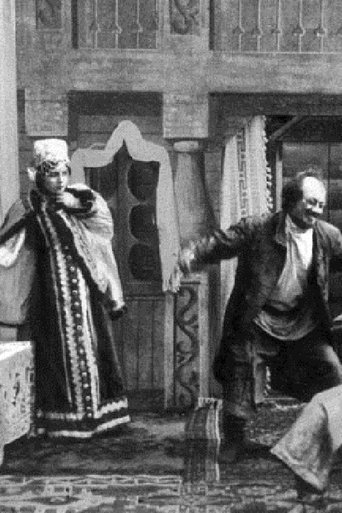
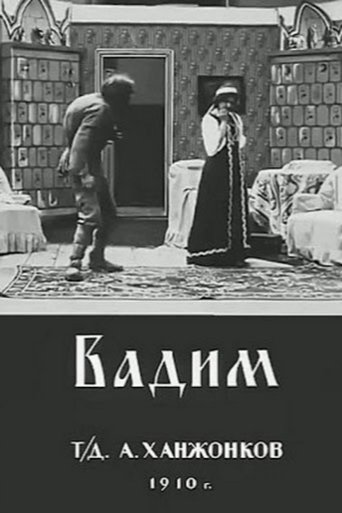
In Pyotr Chardynin's 1910 Russian short after Pushkin, officer Germann obsesses over a countess rumored to know a winning faro secret. His pursuit leads to madness and ruin in one of the earliest narrative adaptations of The Queen of Spades.
Cast & crew
More films like this
More Horror films
View all →


More from Pyotr Chardynin
View all →

More about this film
About the production
Release dateDecember 1910
Box officeUnknown - box office tracking was not standardized in the Russian Empire during this early cinema period
ProductionAleksandr Drankov Production Company
Filmed inMoscow, Russian Empire
was produced by Aleksandr Drankov, one of Russia's earliest film pioneers, who established the first Russian film studio in 1907. The production faced significant technical challenges due to the primitive nature of film equipment in 1910, requiring massive arc lights for interior scenes and limiting camera movement. The supernatural elements were created using early special effects techniques including double exposure and matte photography, which were considered innovative for Russian cinema at the time. The film was shot on 35mm black and white film stock, with each scene requiring multiple takes due to the unreliability of early cameras and the difficulty actors faced in performing for the silent medium without the benefit of synchronized sound.
Themes
Obsession and addictionSupernatural intervention in human affairsThe corrupting influence of greedThe price of forbidden knowledgeManipulation and betrayal
Themes & topics
Historical background
Pre-revolutionary Russian cinema frequently drew on Pushkin. This one-reel version appeared when multi-shot narrative was still consolidating in Russian studios.
Why this film matters
As one of the earliest Russian horror films, 'The Queen of Spades' holds significant importance in the development of the genre in Russian cinema. The film represents an early attempt to translate the psychological horror and supernatural elements of Pushkin's literature to the screen, paving the way for later Russian horror and fantasy films. Its adaptation of a classic Russian literary work helped establish the practice of drawing from national literature for cinematic material, a tradition that would continue throughout Soviet and post-Soviet cinema. The film's exploration of themes like gambling addiction, obsession, and supernatural intervention reflected broader anxieties in Russian society about modernization and the erosion of traditional values. As a product of the Drankov studio, it contributed to the establishment of a distinctly Russian film industry that would later influence world cinema through the works of directors like Eisenstein and Vertov. The film's technical innovations in creating supernatural effects would influence subsequent Russian fantasy and horror productions.
Making of
The production of 'The Queen of Spades' took place during a pivotal moment in Russian cinema history, when the industry was transitioning from simple actuality films to more complex narrative storytelling. Director Pyotr Chardynin, who had previously worked as an actor, brought his theatrical experience to this adaptation, emphasizing dramatic gestures and facial expressions to convey emotion in the silent medium. The cast, drawn primarily from Moscow's theatrical world, had to adapt their acting styles for the camera, which required a more subtle approach than stage performance. The supernatural elements presented particular challenges, as the crew had to invent techniques for creating ghostly effects using the limited technology available in 1910. The film was shot in Drankov's Moscow studio using natural light supplemented by dangerous carbon arc lamps, which produced intense heat and posed safety risks for the cast and crew. The production schedule was tight, with most scenes requiring multiple takes due to technical difficulties with the primitive cameras and film stock of the era.
What critics said
Surviving prints are studied primarily as early Pushkin screen adaptation rather than for individual acting names. Archivists value it within Russian silent literary cinema.
Did you know?
- This is one of the earliest film adaptations of Alexander Pushkin's 1834 short story, predating the more famous 1916 version by Yakov Protazanov
- The film was produced by Aleksandr Drankov, who is often called the 'father of Russian cinema' for establishing the first permanent film studio in Russia
- At only 12 minutes long, this represents an early example of feature-length storytelling in Russian cinema, which was still dominated by short actuality films
- The role of the Countess was played by Antonina Pozharskaya, who was one of the first trained stage actors to transition to film in Russia
- The film's supernatural elements were particularly innovative for Russian cinema, which had previously focused more on historical epics and literary adaptations
- Only fragments of are known to survive today, making it one of the many lost treasures of early Russian cinema
- The gambling scenes featured authentic faro layouts, as the game was still popular in Russia during the early 20th century
- was part of a wave of literary adaptations that dominated Russian cinema before the 1917 revolution
- The production used natural lighting for exterior shots, a common practice before the development of more sophisticated lighting equipment
- The film's intertitles were hand-lettered, as mechanical titling processes were not yet widely available in Russian film production
Visual style
The cinematography of 'The Queen of Spades' reflects the technical limitations and artistic conventions of early Russian cinema. The film was shot using stationary cameras, as mobile camera technology was not yet available, resulting in a theatrical presentation style with compositions reminiscent of stage productions. The cinematographer employed basic lighting techniques, using natural light for exterior scenes and carbon arc lamps for interior shots, creating dramatic high-contrast effects that enhanced the film's Gothic atmosphere. The visual style emphasized chiaroscuro lighting to create shadows and mystery, particularly effective in the supernatural sequences. Close-ups were used sparingly but effectively, especially for the Countess's appearances, creating a sense of intimacy and psychological intensity. The film's visual vocabulary drew heavily from theatrical traditions, with carefully composed tableaux that told the story through gesture and expression rather than movement. The surviving fragments suggest a painterly approach to composition, with attention to period details in costumes and sets that helped establish the story's 19th-century setting.
Innovations
For its time, 'The Queen of Spades' featured several technical innovations that were significant for early Russian cinema. The film employed early special effects techniques to create its supernatural elements, including double exposure to show ghostly apparitions and matte photography to combine different visual elements. The production team developed innovative methods for creating the Countess's spectral appearances, using techniques that were considered advanced for Russian film studios in 1910. The film's lighting design was particularly noteworthy, using multiple light sources to create depth and atmosphere in interior scenes, a technique that was still relatively new in Russian cinema. The makeup effects for the aging Countess demonstrated sophisticated understanding of visual character transformation for the screen. The film also featured relatively elaborate set designs that created convincing period environments, representing a step forward in production design for Russian films. While these technical achievements might seem basic by modern standards, they represented significant progress in the craft of Russian filmmaking and helped establish techniques that would be refined in subsequent productions.
Music
As a silent film, 'The Queen of Spades' would have been accompanied by live musical performance during its original theatrical run. The typical practice in Russian cinemas of 1910 involved either a pianist or small ensemble providing musical accompaniment that enhanced the film's emotional and narrative content. For a horror film like this, the musical score would likely have included dramatic classical pieces, particularly works by Russian composers like Mussorgsky or Tchaikovsky, whose music was well-suited to the story's Gothic atmosphere. The accompaniment would have been semi-improvised, with musicians following cue sheets provided by the distributor or creating their own interpretations based on the film's visual content. During supernatural sequences, the music would have become more dissonant and dramatic, using diminished chords and rapid tempos to create tension and fear. The musical accompaniment played a crucial role in establishing the film's mood and helping audiences understand the emotional content of the story, particularly during moments when the actors' expressions alone might not have conveyed the full psychological complexity of the narrative.
Famous quotes
The secret of the three cards... three, seven, ace!
I have made my pact with the devil!
The dead sometimes return to claim what was promised
Fortune favors the bold, but destroys the greedy
Some secrets are better left buried with the dead
Memorable scenes
- The terrifying confrontation between Germann and the elderly Countess as he demands to know her secret
- The ghostly appearance of the Countess at Germann's bedside to reveal the three cards
- The climactic gambling scene where Germann's obsession leads to his downfall
- Liza's realization that Germann's love was merely a pretense to access her grandmother
- The supernatural revelation of the Countess's spectral form in the darkened room
What audiences thought
Audience reception in 1910 was reportedly positive, with the film attracting viewers who were familiar with Pushkin's story and curious to see it adapted to the new medium of cinema. The horror elements and supernatural themes were particularly appealing to urban audiences in Moscow and St. Petersburg, who were developing a taste for sensational entertainment. The film's short running time made it suitable for the variety-style programs that dominated early cinema exhibition, where it would have been shown alongside newsreels, comedies, and other short subjects. Contemporary accounts suggest that audiences were impressed by the film's special effects, particularly the ghost sequences, which were created using innovative techniques for the time. The film's success helped demonstrate that Russian audiences would support domestically produced films based on national literature, encouraging further investment in similar productions. However, like most films from this era, it was quickly forgotten as newer, more sophisticated productions emerged in the rapidly developing Russian film market.
Film connections
Influenced by
- Alexander Pushkin's 1834 short story 'The Queen of Spades'
- Gothic literature tradition
- Russian theatrical melodrama
- Contemporary German Expressionist cinema (early influences)
- 19th-century Russian literary tradition
This film influenced
- Pikovaya dama (1916) by Yakov Protazanov
- La Dame de pique (1949) by Thorold Dickinson
- Pikovaya dama (1960) by Roman Tikhomirov
- Queen of Spades (1982) TV movie
- Later Russian horror and fantasy films
Film restoration
The film is considered partially lost, with only fragments surviving in various film archives. Some footage is preserved at the Gosfilmofond in Moscow, while additional fragments may exist in other European archives. The incomplete nature of the surviving material makes it difficult to appreciate the film's full artistic vision, though the remaining scenes provide valuable insight into early Russian horror cinema. Efforts have been made to restore and preserve the surviving footage, but the film's complete reconstruction remains impossible. The partial survival status is typical for Russian films from this period, as many early films were lost due to the ravages of time, war, and the neglect of archival practices in the early Soviet period.
Where to watch
- Due to its fragmentary preservation status, the film is not commercially available. Surviving fragments may occasionally be screened at specialized film archives, cinematheques, or academic institutions focusing on early cinema. Some portions might be accessible through the Gosfilmofond archive in Moscow for research purposes. Film historians and scholars studying early Russian cinema may request access to the surviving materials through academic channels. The film's rarity and incomplete status make it unlikely to appear on streaming platforms or home video releases.