

Vadim
"Agrees help Vadim landowner."
Keys: Space play/pause · ←/→ 10s · F fullscreen · M mute · </> speed
About this film
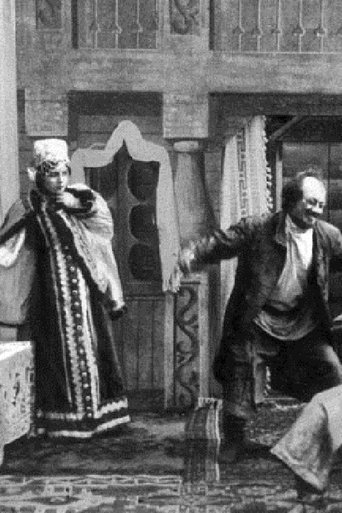
The girl agrees to help Vadim. The landowner Palitsyn (Chardynin) long and successfully sues the neighbor. The young man vows to take revenge on the offender and leaves this region.
Cast & crew
More films like this
More Drama films
View all →







More from Pyotr Chardynin
View all →

More about this film
About the production
Release date1910 (specific date unknown)
Box officeUnknown - box office records not maintained for this period
ProductionKhanzhonkov Company
Filmed inMoscow, Russian Empire
This was one of the early dramatic features produced by Alexander Khanzhonkov's studio, which was pioneering Russian narrative cinema. The film was shot on location in Moscow and surrounding areas, utilizing natural lighting and primitive studio sets. The production faced challenges common to the era, including limited film stock and basic camera equipment. Director Pyotr Chardynin also starred in the film, which was typical for early Russian cinema where directors often took on multiple roles.
Themes
Themes & topics
Revenge plotLandownerOrphansPugachev RebellionFamily secretsClass struggleRussian historyMelodramaSocial injustice
Historical background
Production circa 1910 placed Vadim within the technical habits of its era—intertitles, studio sets, and regional distribution networks.
Why this film matters
Reference works on 1910 cinema cite Vadim when tracing genre habits and studio economics.
Making of
The production of 'Vadim' took place during the formative years of Russian cinema when the industry was still developing its artistic language. Director Pyotr Chardynin, who also played the antagonist Palitsyn, was a key figure in establishing narrative filmmaking in Russia. The film was shot using hand-cranked cameras and natural lighting, with actors performing in the exaggerated style typical of silent film acting. The production team faced numerous technical challenges including the limited sensitivity of film stock, which required bright lighting conditions for adequate exposure. The Khanzhonkov Company, while pioneering in Russia, operated with limited resources compared to Western studios, forcing creative solutions to production problems. The film's costumes and sets were designed to evoke the 18th-century setting of the Pugachev Rebellion, though historical accuracy was often secondary to dramatic effect in this period of filmmaking.
What critics said
Specialist writers today emphasize preservation and access when a viewable copy of Vadim survives.
Did you know?
- This film is based on a story by Russian writer Ivan Lazhechnikov, adapting early 19th-century Russian literature to the new medium of cinema
- Director Pyotr Chardynin was especially prolific filmmakers of early Russian cinema, directing over 100 films between 1908 and 1920
- The film's themes of social injustice and revenge were common in early Russian cinema, reflecting the social tensions of pre-revolutionary Russia
- The character of Vadim joining the Pugachev rebellion connects the personal story to the historical Pugachev Rebellion of 1773-1775
- This film was produced during the golden age of Russian silent cinema, which lasted from roughly 1908 to 1919
- The Khanzhonkov Company was the first major Russian film studio and this was among their early dramatic productions
- Early Russian films like this were often adaptations of classic Russian literature, making cinema a vehicle for cultural education
- The film's use of a hunchback protagonist reflects the melodramatic conventions popular in early 20th century cinema
- This was one of the earliest films to deal with themes of class struggle and social justice in Russian cinema
Visual style
The cinematography of 'Vadim' would have employed the techniques and technology available in 1910, including stationary camera positions, long takes, and basic composition. The film was likely shot on black and white film stock with limited tonal range. Lighting would have been primarily natural light supplemented by basic studio lighting equipment. Camera movement would have been minimal, with most scenes composed as theatrical tableaux. The visual style would have emphasized clarity of narrative over artistic experimentation, which was typical for dramatic films of this period. The cinematographer would have focused on ensuring the actors' performances were clearly visible, as facial expressions and gestures were crucial for conveying emotion in silent cinema.
Innovations
While 'Vadim' does not appear to have introduced major technical innovations, it represents the application of contemporary filmmaking techniques to a Russian dramatic narrative. The film would have utilized the standard technology of 1910, including hand-cranked cameras, basic editing techniques, and intertitle cards for dialogue and exposition. The production's achievement lies more in its narrative ambition and cultural significance than in technical innovation. The film's multi-year timeline and complex revenge plot required sophisticated storytelling techniques for the era, demonstrating the growing narrative capabilities of early cinema.
Music
As a silent film, 'Vadim' would have been accompanied by live musical performance during theatrical screenings. The specific musical score is not documented, but theaters of this era typically employed pianists or small ensembles to provide musical accompaniment. The music would have been selected to match the dramatic tone of each scene, with popular classical pieces or original improvisations used to enhance the emotional impact of the narrative. The musical accompaniment would have been particularly important during scenes of high drama, such as the revelation of family secrets or the climactic revenge sequences.
Famous quotes
No specific quotes are documented from this silent film, as dialogue was conveyed through intertitles and performance
Memorable scenes
- The revelation scene where Vadim uncovers the truth about Olga's parentage
- The confrontation between Vadim and Olga when she refuses to help with revenge
- Vadim's decision to join the Pugachev rebellion
- The initial courtroom scenes showing Palitsyn's legal persecution of his neighbor
What audiences thought
Early Russian audiences were reportedly enthusiastic about domestic productions like 'Vadim' that featured familiar stories and themes from Russian literature and history. The film's melodramatic plot and clear moral conflicts would have appealed to popular tastes of the era. The revenge narrative and romantic elements were popular genres in early cinema, and the connection to the Pugachev Rebellion would have resonated with Russian audiences familiar with this historical event. However, specific box office records or detailed audience reactions from 1910 are not available, making it difficult to assess the film's precise reception at the time of its release.
Film connections
Influenced by
- Russian literary tradition
- Works of Ivan Lazhechnikov
- Melodramatic theater conventions
- Historical Russian narratives
This film influenced
- Later Russian historical dramas
- Social realist films of the 1920s
- Russian films about class conflict
Film restoration
The preservation status of 'Vadim' is uncertain, and the film is likely lost or exists only in fragmentary form. Many Russian films from this period were lost during the political upheavals of the 1917 revolution and subsequent civil war. Film archives in Russia and internationally may hold fragments or documentation, but a complete copy of the film is not known to exist in accessible collections. This loss is typical for films of this era, with estimates suggesting that over 90% of silent films are lost.
Where to watch
- Currently not available for viewing - likely lost film
- Film archives may hold fragments (Gosfilmofond Russia, Russian State Archive of Film and Photo Documents)
- Academic institutions with Russian film collections may have documentation or fragments