Loading a Boiler
"Boiler chained to deck"
Keys: Space play/pause · ←/→ 10s · F fullscreen · M mute · </> speed
About this film
1896 actuality watches workers secure a large boiler on a ship deck at leisurely pace. A stationary camera placed amidships looks toward the round end of a 10- or 12-foot boiler that's been loaded onto the open deck. Three men climb down from atop the boiler and then remove their ladder.
Cast & crew
More films like this
More Documentary films
View all →

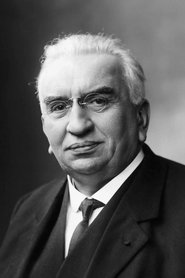
More from Louis Lumière
View all →


More about this film
About the production
Release date1896
BudgetNot recorded - early Lumière films were made with minimal costs using the company's standard equipment
Box officeNot recorded in modern terms - films were sold as individual reels rather than earning box office revenue
ProductionSociété Lumière
Filmed inProbably filmed in Lyon, France or a nearby French port city
This film was shot using the Lumière Cinématographe, which served as both camera and projector. The single continuous take was typical of Lumière actuality films, which captured real events without staging or editing. The film demonstrates the Lumière brothers' interest in documenting industrial progress and everyday labor, a recurring theme in their early work.
Themes
Industrial progressHuman laborDocumentation of realityTechnological advancementWorking class life
Themes & topics
boilerloadingshipworkersharborindustriallabordocumentaryactualitésilent filmLumière19th centurymaritimeheavy industry
Historical background
1896 placed Loading a Boiler within France cinema as Société Lumière navigated wartime markets, immigration audiences, and the shift from intertitles to sound.
Why this film matters
Archivists revisit Loading a Boiler (1896) for Louis Lumière style, genre norms at Société Lumière, and the exhibition context of Approximately 45 seconds programming.
Making of
The filming of 'Loading a Boiler' exemplifies the Lumière brothers' documentary approach to early cinema. Louis Lumière likely operated the Cinématographe himself, as he personally shot many of the company's early films. The scene was captured in a single take without any rehearsal or direction of the workers, who continued their normal duties while being filmed. The choice to document industrial labor reflected the Lumière brothers' fascination with modern technology and progress. The camera was mounted on a tripod to ensure stability, a technical necessity for the slow film speeds of the era. The entire sequence was filmed during daylight, as artificial lighting was not yet practical for motion picture photography. This film was probably one of many shot during a single day at the port, demonstrating the efficiency of the Lumière production method.
What critics said
Retrospective writing on Loading a Boiler stresses craft by Louis Lumière, print survival, and repertory value rather than opening-week gross alone.
Did you know?
- This film is one of over 1,400 short films produced by the Lumière brothers between 1895 and 1905
- The Lumière brothers considered their films 'scientific curiosities' rather than entertainment, which is why they focused on documenting real-life scenes
- Early films like this were often shown in the same program multiple times, as audiences were fascinated by the novelty of moving images
- The workers in the film were actual laborers, not actors, performing their regular duties
- The film demonstrates the Lumière brothers' principle that 'cinema is an invention without a future' - they saw it as a scientific tool rather than an art form
- This type of industrial scene was particularly popular with early audiences who had never seen such work documented in motion
- The film was likely shot on 35mm film stock, the standard the Lumière brothers helped establish
- Unlike Edison's films, Lumière productions were not copyrighted in the United States, leading to widespread unauthorized distribution
- The stationary camera perspective was typical of early Lumière films, which treated the camera as a window onto reality rather than a narrative device
- This film was part of the first wave of cinema that showed audiences the world as they had never seen it before - in motion
Visual style
The cinematography of 'Loading a Boiler' exemplifies the Lumière brothers' straightforward, observational style. The fixed camera position creates a painterly composition with the cylindrical boiler as the central focal point, while the harbor background provides depth and context. The natural lighting creates authentic shadows and highlights that emphasize the three-dimensional quality of the scene. The wide-angle perspective allows for the inclusion of both the immediate action and the broader industrial environment, establishing the relationship between labor and its setting. The lack of camera movement or editing was typical of the period but also serves to emphasize the continuous, unmediated nature of the work being documented. The composition demonstrates an intuitive understanding of visual balance, with the workers distributed across the frame in a way that creates visual interest without appearing staged.
Innovations
While appearing simple by modern standards, 'Loading a Boiler' represented several significant technical achievements for its time. The film was shot using the Lumière Cinématographe, a revolutionary device that combined camera, printer, and projector in one portable unit. The ability to capture clear, stable images of outdoor scenes demonstrated improvements in film sensitivity and shutter mechanisms. The film's exposure and focus show the technical mastery achieved by the Lumière operation in just one year of commercial production. The preservation of motion detail in the workers' movements indicates successful handling of the hand-cranked camera, which required consistent speed to avoid flicker. The film stock used was perforated 35mm film, a format the Lumières helped standardize and which remains the industry standard to this day. The ability to capture this scene in a single continuous take without technical failure was itself a notable achievement in early cinematography.
Music
The film was created during the silent era and had no synchronized soundtrack. During original exhibitions, it would have been accompanied by live music, typically a pianist or small ensemble playing popular tunes of the period or improvised mood music. The choice of music was left to individual exhibitors, and there was no standardized score for Lumière films. In modern screenings, the film is often accompanied by period-appropriate music or left completely silent to emphasize its documentary nature. Some contemporary presentations use ambient industrial sounds or maritime audio to enhance the historical atmosphere, though this represents a modern interpretive choice rather than original practice.
Famous quotes
The cinema is an invention without a future - Louis Lumière (often quoted, though the exact wording is disputed)
It is my contention that the cinematographic art is at present in the same state as the prehistoric cave paintings - Louis Lumière
Memorable scenes
- The precise moment when the three workers carefully descend from atop the massive boiler, their movements deliberate and practiced, demonstrating both the danger and skill involved in industrial labor of the period
What audiences thought
Audiences in 1896 were captivated by films like 'Loading a Boiler' primarily due to the novelty of seeing moving images at all. The simple act of watching workers perform routine tasks was considered miraculous entertainment. Contemporary accounts describe audiences gasping, cheering, and sometimes even fleeing from the theater when confronted with these realistic depictions. The film's depiction of industrial labor would have been particularly fascinating to urban audiences who were witnessing rapid industrialization in their daily lives. Modern audiences viewing the film in museums or film archives typically approach it as a historical artifact, finding value in its window into the past rather than its entertainment value. The film continues to be shown in retrospectives of early cinema and is appreciated by cinephiles for its purity of form and historical significance.
Film connections
Influenced by
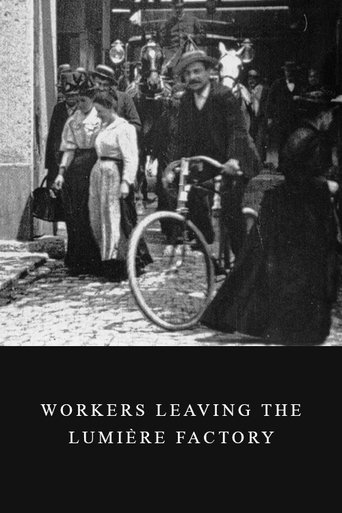
- Earlier Lumière actuality films such as 'Workers Leaving the Lumière Factory' (1895)
- The tradition of documentary photography and scientific observation
- Industrial photography of the late 19th century
- The Lumière brothers' background in photographic manufacturing
This film influenced
- Subsequent Lumière actuality films documenting industrial processes
- Early documentary films focusing on labor and industry
- Industrial films of the early 20th century
- Modern documentary works that find beauty in everyday labor
Film restoration
The film is preserved in the Lumière Institute archives in Lyon, France. As one of the early Lumière productions, it has been carefully maintained and restored using modern preservation techniques. Digital copies exist and are occasionally shown in film retrospectives and museum exhibitions. The film survives in good condition considering its age, thanks to the Lumière family's careful preservation of their early works.
Where to watch
- Available through the Lumière Institute's official website and digital archives
- Included in various collections of early cinema released on DVD and Blu-ray
- Sometimes screened at film museums specializing in early cinema
- Available on some streaming platforms specializing in classic and historical films
- Can be viewed at the Cinémathèque Française in Paris during special programs
- Included in educational collections about the history of cinema