


Love Laughs at Andy Hardy
"Andy Hardy home from war, love lost"
Keys: Space play/pause · ←/→ 10s · F fullscreen · M mute · </> speed
About this film
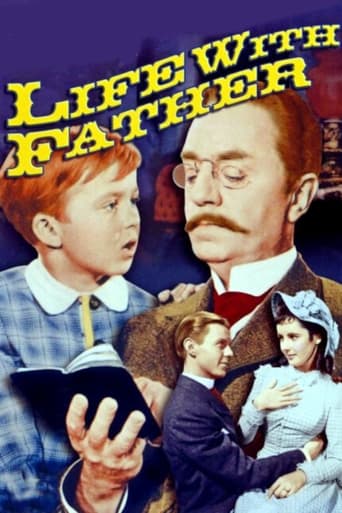
Andy Hardy returns from World War II to find college sweetheart Polly engaged to another man. The 1946 series entry mixes service comedy with romantic rivalry.
Cast & crew
More films like this
More Comedy films
View all →







More about this film
About the production
Release dateMarch 18, 1946
Box officeModerately successful - contributed to the continued profitability of the Andy Hardy series
ProductionMetro-Goldwyn-Mayer (MGM)
Filmed inMGM Studios, Culver City, California
This was the 14th film in the Andy Hardy series and marked the character's return to civilian life after WWII. The film was produced quickly as part of MGM's reliable franchise programming. The production faced challenges in transitioning Andy from a high school student to a college student while maintaining the series' wholesome appeal. The film incorporated contemporary post-war themes including veterans' readjustment and changing social dynamics.
Themes
Post-war adjustment and reintegrationComing of age and maturityFamily values and parental guidanceLove and heartbreakEducation and personal growth
Themes & topics
collegeveteranlove trianglefamilycoming of agepost-warromanceheartbreakeducationsmall townfather-son relationshipGI Bill
Historical background
Archival records place Love Laughs at Andy Hardy in 1946, a year when postwar cinema shaped what theaters booked.
Why this film matters
Retrospectives include Love Laughs at Andy Hardy when mapping craft and subject matter from postwar cinema.
Making of
The production of 'Love Laughs at Andy Hardy' represented MGM's effort to revitalize one of their most successful franchises for the post-war era. Director Willis Goldbeck, who had previously worked as a screenwriter on earlier Hardy films, took over directing duties from series creator George B. Seitz. The filming process was notably efficient, completing in just under three weeks as was typical for MGM's B-picture productions. Mickey Rooney, by this point a major star who had served in the Army during the war, brought real-life experience to his portrayal of a returning veteran. The cast reportedly maintained strong chemistry throughout production, with many having worked together for nearly a decade in the series. The screenplay incorporated contemporary issues facing returning GIs, including educational opportunities under the GI Bill and the challenges of reestablishing pre-war relationships. Studio executives carefully monitored the production to ensure the film maintained the wholesome values that had made the series popular while addressing more mature themes appropriate for Andy's college age.
What critics said
Critics revisiting Love Laughs at Andy Hardy emphasize performative and technical choices visible in surviving prints.
Did you know?
- This was the first Andy Hardy film made after World War II, reflecting the series' adaptation to post-war America
- Bonita Granville returned as Kay Wilson, having first played the role in 'Andy Hardy's Private Secretary' (1941)
- The film marked the return of several original cast members who had been absent during the war years
- Mickey Rooney was actually 25 years old during filming, though he continued playing teenage Andy Hardy
- This was one of the last Andy Hardy films to feature the complete original Hardy family unit
- The college scenes were filmed on MGM's backlot sets designed to resemble typical American campuses
- The film's title was a play on the common saying 'Love laughs at locksmiths,' adapted for the Hardy series
- Lewis Stone (Judge Hardy) was 68 years old during filming and had been playing the role since 1937
- The movie was released less than a year after WWII ended, tapping into national themes of returning veterans
- the release introduced new romantic interests for Andy, reflecting the series' evolution with its protagonist's age
Visual style
The cinematography, handled by MGM staff photographer Paul Vogel, followed the studio's polished visual style typical of their mid-1940s productions. The film employed classic three-point lighting to create the warm, inviting atmosphere characteristic of the Andy Hardy series. Camera work was straightforward and functional, prioritizing clear storytelling over artistic experimentation. The college campus scenes utilized wider shots to establish the new setting while maintaining intimacy in character moments. Interior scenes, particularly those in the Hardy family home, featured careful composition to emphasize family dynamics and relationships. The visual style contrasted the familiar comfort of the Hardy household with the new environments Andy encounters at college. Black and white photography enhanced the film's nostalgic, timeless quality. The cinematography supported the film's themes by visually distinguishing between Andy's past (high school, home life) and his future (college, new relationships). Technical aspects were professional and consistent with MGM's high production standards, though not particularly innovative for the period.
Innovations
As a standard MGM production of the mid-1940s, 'Love Laughs at Andy Hardy' did not feature major technical innovations but demonstrated solid craftsmanship typical of the studio system. The film utilized MGM's advanced sound recording equipment, ensuring clear dialogue reproduction throughout. The production benefited from MGM's extensive backlot facilities, allowing for efficient filming of both home and college environments. Makeup and costume departments successfully aged the characters appropriately while maintaining visual continuity with earlier films in the series. The film's editing followed classical Hollywood principles, maintaining smooth narrative flow and appropriate pacing for a comedy-drama. Set design effectively created the illusion of a college campus using studio resources, demonstrating MGM's technical capabilities in creating convincing environments. The production process itself showcased the efficiency of the studio system, completing the film on schedule and within budget. While not groundbreaking technically, the film demonstrated the high level of technical polish that characterized major studio productions of the golden age of Hollywood.
Music
The musical score was composed by David Snell, MGM's house composer who worked on numerous films in the Andy Hardy series. The music maintained the series' characteristic light, optimistic tone while incorporating slightly more sophisticated arrangements to reflect Andy's college age. The soundtrack featured popular songs of the mid-1940s that would have been familiar to contemporary audiences, enhancing the film's period authenticity. Background music emphasized emotional moments without overwhelming the dialogue-driven storytelling. The score included variations on musical themes established in earlier Hardy films, providing continuity for series fans. Musical numbers were integrated naturally into the college setting, reflecting campus life of the era. The sound design was typical of MGM productions of the period, with clear dialogue recording and balanced audio mixing. The soundtrack contributed significantly to the film's warm, family-friendly atmosphere while subtly supporting the narrative's emotional beats. Music played a role in establishing the post-war setting, incorporating contemporary musical styles that would have appealed to the film's target audience of families and young adults.
Famous quotes
Judge Hardy: 'Son, the hardest lesson in life is learning when to hold on and when to let go.'
Andy Hardy: 'I went away to war and came back to find the whole world changed - including my girl!'
Andy Hardy: 'College is going to be different, Dad. I'm not a kid anymore.'
Judge Hardy: 'A good education is something nobody can take away from you, Andy.'
Andy Hardy: 'Maybe what I thought was love was just... well, just being young and foolish.'
Memorable scenes
- Andy's emotional homecoming scene where he learns Kay is engaged to someone else, capturing the shock and heartbreak of returning veterans
- The father-son conversation between Andy and Judge Hardy where the judge offers wisdom about love and moving forward
- Andy's first day at college, showing his excitement and nervousness about this new chapter in life
- The climactic scene where Andy must choose between pursuing his old love or embracing new opportunities
- The Hardy family dinner scene that demonstrates the strong family bonds that define the series
What audiences thought
Audiences responded positively to 'Love Laughs at Andy Hardy,' with the film performing well at the box office and satisfying fans of the long-running series. The movie tapped into the public's affection for the Hardy family characters, who had become familiar figures in American popular culture over the previous decade. Returning veterans and their families particularly connected with the film's themes of post-war adjustment and the challenges of reestablishing pre-war relationships. The college setting resonated with the growing number of Americans pursuing higher education through the GI Bill. Younger audiences appreciated the continued relevance of Andy's coming-of-age struggles, now updated for the post-war generation. The film's success demonstrated the enduring appeal of the Andy Hardy franchise and its ability to adapt to changing times while maintaining its core values. Audience letters to MGM and fan magazines of the period expressed satisfaction with seeing Andy Hardy mature appropriately while still facing relatable problems. The film helped cement the Andy Hardy series as especially successful and long-running franchises in Hollywood history.
Film connections
Influenced by
- Earlier Andy Hardy films in the MGM series
- Classic Hollywood family dramas
- Post-war American cinema addressing veteran issues
- College campus films of the 1930s-40s
- MGM's family entertainment formula
This film influenced
- Later Andy Hardy films
- 1950s teen films
- Family sitcoms of the 1950s-60s
- College-themed films of the late 1940s
- Post-war coming-of-age stories
Film restoration
The film is preserved in the MGM/ Warner Bros. archive and has been made available through various home media releases. It was included in the Andy Hardy film collection DVD set released by Warner Home Video. The original nitrate negatives have been preserved and transferred to safety film. While not officially restored by major film preservation organizations, the film survives in good condition with complete audio and visual elements. It occasionally appears on classic movie channels and streaming services specializing in vintage Hollywood films.
Where to watch
- Warner Archive Collection DVD releases
- Classic movie streaming services like FilmStruck (historically)
- TCM (Turner Classic Movies) broadcasts
- Digital rental platforms offering classic MGM films
- Public domain streaming sites (though quality may vary)