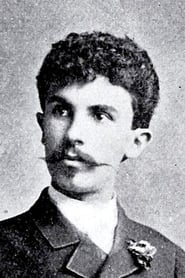
Luis Martinetti, Contortionist
"Thirty seconds of contortion"
Keys: Space play/pause · ←/→ 10s · F fullscreen · M mute · </> speed
About this film
William K.L. Dickson records contortionist Luis Martinetti on Edison flying rings for thirty seconds. Luis Martinetti, a contortionist suspended from acrobatic flying rings, contorts himself for about thirty seconds. This is one of the first films made for Edison's kinetoscopes.
Cast & crew
More films like this
More Documentary films
View all →


More from William K.L. Dickson
View all →

More about this film
About the production
Release dateNovember 1894
Box officeNot applicable - made for kinetoscope viewing, not theatrical distribution
ProductionEdison Manufacturing Company
Filmed inBlack Maria Studio, West Orange, New Jersey
Filmed in Edison's revolutionary Black Maria studio, which featured a retractable roof to allow natural sunlight for illumination. The studio was designed specifically for early motion picture production and could rotate to follow the sun throughout the day. This film was shot on 35mm film using Edison's Kinetograph camera, which was heavy and cumbersome, requiring careful positioning. The filming process was extremely primitive compared to modern standards, with the performer having to hold difficult positions while the hand-cranked camera captured the footage.
Themes
Physical achievementHuman flexibilityPerformance documentationTechnological innovationPopular entertainment
Themes & topics
contortionistacrobaticsflying ringsperformancephysical featearly cinemasilent filmdocumentaryactualité
Historical background
1894 placed Luis Martinetti, Contortionist within United States cinema as Edison Manufacturing Company navigated wartime markets, immigration audiences, and the shift from intertitles to sound.
Why this film matters
Archivists revisit Luis Martinetti, Contortionist (1894) for William K.L. Dickson style, genre norms at Edison Manufacturing Company, and the exhibition context of 0.5 programming.
Making of
The filming of 'Luis Martinetti, Contortionist' took place in Edison's innovative Black Maria studio, a crude but effective structure covered in black tar paper that could be rotated on a circular track to follow the sun's movement. The studio featured a retractable roof that opened to allow natural sunlight, as artificial lighting technology was not yet available for motion picture photography. Martinetti would have had to perform his contortionist routine while the heavy Kinetograph camera, mounted on a tripod, captured the footage. The camera was hand-cranked by an operator, requiring steady rotation at approximately 46 frames per second. The filming process was likely challenging for Martinetti, who had to maintain his difficult positions while the camera operator worked the cumbersome equipment. Edison's team was constantly experimenting with different subjects to showcase the new technology, and performers like Martinetti were paid small fees for their participation in these groundbreaking film experiments.
What critics said
Retrospective writing on Luis Martinetti, Contortionist stresses craft by William K.L. Dickson, print survival, and repertory value rather than opening-week gross alone.
Did you know?
- This film is one of the earliest surviving examples of a documentary or actualité film, capturing a real performance rather than a staged narrative
- Luis Martinetti was part of the famous Martinetti family of acrobats and contortionists who were well-known performers in the late 19th century
- The Black Maria studio where this was filmed was the world's first motion picture production studio, built specifically for Edison's film experiments
- The film was designed to be viewed individually through Edison's Kinetoscope, not projected for audiences, making it an intimate viewing experience
- This film was part of Edison's strategy to capture popular vaudeville and circus acts to attract viewers to his kinetoscope parlors
- The 35mm film format used in this production would become the industry standard for nearly a century
- William K.L. Dickson, Edison's chief engineer, was instrumental in developing both the Kinetograph camera and the Kinetoscope viewer
- The film's brevity was typical of early motion pictures, which were limited by the capacity of early film reels and the novelty of the medium
- Martinetti's performance represents one of the first times extreme physical contortion was captured on motion picture film
- The preservation of this film provides modern viewers with a direct window into popular entertainment of the 1890s
Visual style
The cinematography of 'Luis Martinetti, Contortionist' is extremely basic by modern standards but was revolutionary for its time. The film was shot using a single stationary camera positioned to capture Martinetti's full performance on the flying rings. The camera was Edison's Kinetograph, which used 35mm film with four perforations per frame - a format that would become the industry standard. The camera was hand-cranked, requiring an operator to maintain a consistent speed to ensure smooth motion. The lighting came entirely from natural sunlight through the retractable roof of the Black Maria studio, creating harsh shadows and high contrast typical of early films. The composition is straightforward and functional, with Martinetti centered in the frame to ensure his entire performance was visible. There are no camera movements or changes in angle throughout the film's brief duration, reflecting the technical limitations and experimental nature of early motion picture photography.
Innovations
This film represents several significant technical achievements in the history of cinema. It was shot using Edison's Kinetograph camera, one of the first practical motion picture cameras, which used a continuous feed of film with intermittent movement to capture individual frames. The 35mm film format established by Edison would become the international standard for nearly a century. The film demonstrates early solutions to the challenge of capturing moving images, including the development of sprocket holes to ensure smooth film transport. The Black Maria studio itself was an innovation, designed specifically for motion picture production with features like the rotating base and retractable roof to optimize lighting conditions. The ability to capture and preserve a live performance on film was groundbreaking, representing a fundamental shift in how human movement and performance could be documented and shared. The film also showcases early understanding of frame rate and motion capture, though the technology was still in its infancy.
Music
The film was originally silent, as synchronized sound technology would not be developed for another three decades. When viewed through the Kinetoscope, there was no musical accompaniment. However, when early films were later projected for audiences, they were often accompanied by live music, typically a pianist or small orchestra. The type of music would have varied depending on the venue and the musicians available, but might have included popular songs of the 1890s or classical pieces that matched the mood of the performance. Modern restorations and presentations of the film may include period-appropriate music to enhance the viewing experience, but the original viewing experience would have been completely silent except for the mechanical noise of the Kinetoscope machine itself.
Memorable scenes
- The entire film consists of a single memorable scene: Luis Martinetti suspended from flying rings, demonstrating extraordinary flexibility by twisting his body into various contorted positions while swinging through the air, captured in one continuous take that preserves this remarkable physical performance for posterity.
What audiences thought
Audiences in 1894 viewed this film through Edison's Kinetoscope machines, which allowed one person at a time to look through a peephole and watch the moving images. The experience was novel and magical for viewers who had never seen moving images before. Reports from the period suggest that audiences were fascinated by the ability to see recorded motion, regardless of the subject matter. Martinetti's contortionist act would have been particularly impressive to viewers, many of whom might never have seen such extreme physical flexibility even in live performance. The film was part of the early catalog of Kinetoscope films that were shown in Edison's parlors in major cities, where viewers paid a small fee to watch several short films. While specific audience reactions to this particular film are not recorded, the general public reception to early motion pictures was one of wonder and excitement at the new technology.
Film connections
Influenced by
- Edison's earlier motion picture experiments
- Eadweard Muybridge's motion studies
- Étienne-Jules Marey's chronophotography
- Popular vaudeville and circus performances of the 1890s
This film influenced
- Other Edison Manufacturing Company performance films
- Early circus and vaudeville documentaries
- Later films featuring contortionists and acrobats
Film restoration
The film is preserved and available through various film archives, including the Library of Congress and the Museum of Modern Art's film collection. It has been digitized and is part of the early cinema collections that document the birth of motion pictures. The film exists in reasonably good condition considering its age and the primitive nature of early film preservation.
Where to watch
- Library of Congress National Film Registry website
- Museum of Modern Art's online film collection
- Various early cinema compilation DVDs and Blu-rays
- YouTube and other streaming platforms featuring public domain films
- Film archive websites specializing in early cinema