Films
1 film
About Luis Martinetti
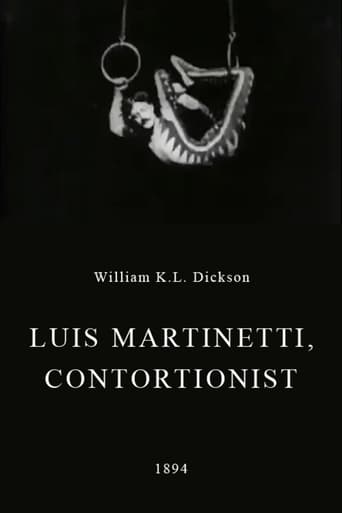
Professional contortionist and circus performer who achieved historical significance as one of the first subjects captured on motion picture film. His brief but momentous film career consisted of a single 1894 short film produced by the Edison Manufacturing Company, which showcased his remarkable physical abilities for the new medium of cinema. Prior to his film appearance, Martinetti was likely an established performer in the circus and vaudeville circuits, where contortionists were popular novelty acts. The film 'Luis Martinetti, Contortionist' was typical of early Edison productions that featured performers demonstrating their unique talents for the Kinetoscope peep-show devices. While his film career was limited to this single appearance, Martinetti's work represents an important milestone in cinema history as an example of how early filmmakers captured popular stage performances for the new medium. His performance demonstrated the potential of film to preserve and showcase extraordinary human abilities that could only be witnessed live by limited audiences. Martinetti's legacy endures not through a lengthy filmography but through his contribution to the very foundation of motion picture history.
The Craft
Milestones
- Starred in 'Luis Martinetti, Contortionist' (1894), one of the earliest motion pictures ever produced
- Became one of the first circus/variety performers captured on film
- Contributed to Edison's early film experiments with novelty acts
Best Known For
Iconic Roles
Must-See Films
Working Relationships
Studios
Why They Matter
Impact on Culture
Luis Martinetti's cultural impact lies primarily in his role as a pioneer of motion picture performance. His film represents a crucial moment in cinema history when filmmakers began capturing live performances on film, effectively bridging the gap between traditional stage entertainment and the new medium of motion pictures. As one of the first contortionists ever filmed, Martinetti helped establish the pattern of using cinema to document and preserve extraordinary physical feats that could only be witnessed by limited live audiences. His work contributed to the early film industry's understanding of how motion pictures could serve as both entertainment and documentation. The film of his performance also demonstrated the technical capabilities of early cinema to capture rapid and complex movements, pushing the boundaries of what the new technology could achieve.
Lasting Legacy
Luis Martinetti's legacy endures through his place in the very foundation of cinema history. His single film appearance has become historically significant as an example of the earliest motion pictures ever produced, studied by film historians and scholars of early cinema. While he may not have achieved lasting fame as a performer, his contribution to the development of film as an entertainment medium is undeniable. Martinetti represents the countless performers from the circus and vaudeville traditions who helped launch the motion picture industry by allowing their talents to be captured on film. His work shows how early cinema documented and preserved performing arts that might otherwise have been lost to history.
Who They Inspired
As one of the earliest performers captured on film, Luis Martinetti influenced the development of motion pictures by demonstrating the medium's ability to showcase extraordinary physical performances. His work helped establish the precedent for filming circus acts, variety shows, and novelty performances that would become staples of early cinema. While direct influence on later performers is difficult to trace, his film contributed to the growing understanding of how motion pictures could capture and preserve human performance in ways that stage presentations could not. The documentation of his contortionist act helped pave the way for future generations of physical performers to use film as a medium for showcasing their talents.
Off Screen
Very little is documented about Luis Martinetti's personal life, as was common for variety performers of the 1890s. He was a professional contortionist, suggesting a lifetime of physical training and dedication to his craft. Like many circus and vaudeville performers of his era, he likely traveled extensively with various shows and circuses, performing for audiences across different regions.
Did You Know?
- His 1894 film was produced by Thomas Edison's company and was likely viewed on Kinetoscope peep-show devices
- The film is only about 30 seconds long, typical of early Edison productions
- Contortionists were extremely popular in circus and vaudeville shows during the 1890s
- His film was part of Edison's strategy to film popular novelty acts to attract audiences to the new technology
- The film survives today and is preserved as an important historical document of early cinema
- Early films like Martinetti's were often shot in the Black Maria, Edison's studio in West Orange, New Jersey
- His performance helped demonstrate that film could capture rapid and complex movements successfully
- The film represents one of the earliest examples of a performer being specifically hired for a motion picture appearance
Frequently Asked Questions
Who was Luis Martinetti?
Professional contortionist and circus performer who became historically significant for starring in one of the earliest motion pictures ever made. His 1894 film 'Luis Martinetti, Contortionist' was produced by the Edison Manufacturing Company and showcased his remarkable physical abilities for the new medium of cinema.
What films is Luis Martinetti best known for?
Titles linked here include Luis Martinetti, Contortionist (1894).
When was Luis Martinetti born and when did he die?
Unfortunately, the birth and death dates of Luis Martinetti are not documented in historical records, which was common for circus and variety performers of the 1890s. All that is known is that he was active as a performer in 1894.
What awards did Luis Martinetti win?
Luis Martinetti did not receive any formal film awards, as he performed in 1894 before any cinema awards or honors existed. His significance lies in his role in early cinema history rather than in formal recognition.
What was Luis Martinetti's performing style?
Contortionist, which meant he specialized in extraordinary feats of flexibility and body manipulation. His performance style would have emphasized the physical limits of human flexibility, showcasing positions and movements that appeared impossible to ordinary audiences.
Why is Luis Martinetti important to film history?
Luis Martinetti is important to film history as one of the first performers ever captured on motion picture film. His 1894 appearance represents a crucial moment when cinema began documenting live performances, helping establish the foundation for how film would be used to showcase extraordinary human abilities and preserve performing arts for future generations.