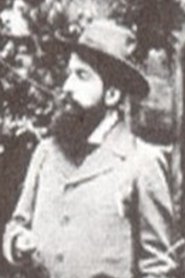
Lutteurs japonais
"Japanese kendo fighters spar for the camera."
Keys: Space play/pause · ←/→ 10s · F fullscreen · M mute · </> speed
About this film
Two fighters, in traditional costume, taking part to the national kendo tournament.
Cast & crew
More Documentary films
View all →



More from Constant Girel
View all →
More about this film
About the production
Release date1898
ProductionLumière Company
Filmed inJapan
the production was shot by Constant Girel during his expedition to Japan as one of the Lumière Company's traveling cinematographers. The production required transporting heavy and cumbersome camera equipment to Japan, which was quite remarkable for 1898. The filming likely took place outdoors due to lighting limitations of early cameras, and the fighters were probably local martial artists hired specifically for this demonstration. The entire sequence would have been filmed in one continuous take, as editing capabilities were virtually non-existent at this time.
Themes
Cultural documentationMartial arts traditionEast-West cultural exchangeModernization vs traditionPhysical discipline
Themes & topics
Historical background
Lutteurs japonais (1898) reached screens through Lumière Company. Exhibitors of the time built nickelodeon-era programs that mixed shorts, features, and live acts, so a clear premise helped Lutteurs japonais travel between cities and exchange markets.
Why this film matters
Archivists and revival programmers still cite Lutteurs japonais (1898) when tracing studio habits, casting pools, and the visual rhetoric audiences once took for granted. Even modest surviving prints help map how Lutteurs japonais fit beside competing releases of its day.
Making of
Constant Girel's journey to Japan in 1898 was part of the Lumière brothers' ambitious plan to capture authentic footage from around the world to show to European audiences. Girel had to transport the heavy cinématographe device by ship and navigate the cultural and linguistic barriers of working in Japan during the Meiji period. The fighters featured in the film were likely martial arts practitioners who agreed to demonstrate their skills for this new technology. The filming process required the performers to maintain their movements within the limited frame of the camera and under the challenging lighting conditions of early film equipment. Girel would have had to hand-crank the camera throughout the entire sequence, maintaining a consistent speed to ensure proper exposure.
What critics said
Trade coverage around 1898 discussed Lutteurs japonais for pacing, clarity, and program fit rather than blockbuster grosses. Later writers value it as evidence of period style and as a reference point beside other films from the same era.
Did you know?
- This is one of the earliest films ever made in Japan, captured just three years after the invention of cinematography
- Constant Girel was one of the Lumière brothers' most trusted cinematographers, sent on expeditions around the world
- The film predates the establishment of Japan's own film industry by several years
- Kendo itself was still evolving as a modern martial art during this period, having been formalized only in the late 19th century
- The fighters likely performed specifically for the camera, as actual tournaments would have been too chaotic and dangerous for early filming equipment
- the production represents some of the earliest moving image documentation of Japanese culture available to Western audiences
- The original film was shot on 35mm film using the Lumière cinématographe, which also served as the projector and developer
- Only a few copies of the production are known to exist today, making it an extremely rare piece of cinema history
- The film was part of a series of Japanese-themed shorts that Girel produced during his time in the country
- At 35 seconds, this was actually considered a substantial length for films of this era
Visual style
The cinematography is characteristic of Lumière Company productions from this era - stationary camera, natural lighting, and a single continuous take. The camera position was carefully chosen to capture the full range of the fighters' movements within the frame. The composition shows both fighters in their entirety, allowing viewers to appreciate their traditional costumes and the full execution of their techniques. The black and white imagery creates stark contrasts that emphasize the fighters' movements against the background. Given the technical limitations of 1898, the clarity of the image is remarkable, though the frame rate would have been inconsistent by modern standards due to hand-cranking. The fixed perspective actually works in the film's favor, creating a sense of observing a traditional demonstration or ceremony.
Innovations
The primary technical achievement of the production is simply its existence - capturing moving images in Japan in 1898 required overcoming enormous logistical and technical challenges. The transport of the cinématographe to Japan and successful operation in field conditions represents a significant accomplishment for early cinema technology. The film demonstrates the portability and reliability of Lumière equipment, which could function in diverse global locations. The clear capture of rapid martial arts movements also highlights the capabilities of early film stock and cameras to document action sequences, which would influence the future development of action cinema.
Music
the production was produced during the silent era and would have been accompanied by live music during exhibition. The type of musical accompaniment would have varied depending on the venue and could have ranged from a single pianist to a small orchestra. Some exhibitors might have used Japanese-inspired music to enhance the exotic atmosphere, while others would have used whatever was available. The original exhibition would not have had synchronized sound, and any sounds of the fighters' movements or equipment would have been imagined by the audience or suggested by the musical accompaniment.
Memorable scenes
- The opening sequence where both fighters bow to each other in traditional martial arts etiquette before beginning their demonstration, capturing the ceremonial respect inherent in Japanese martial arts culture
What audiences thought
When first exhibited, Lutteurs japonais would have fascinated European audiences who had likely never seen moving images of Japan or Japanese people. The film's novelty factor alone would have ensured positive reception, as any film from this exotic location would have been a major attraction. Audiences of the time were captivated by the Lumière Company's actualités (actuality films) showing real scenes from around the world. The martial arts demonstration would have been particularly entertaining due to its dynamic movement and cultural unfamiliarity. Modern audiences viewing the film in archives or retrospectives appreciate it primarily for its historical value rather than entertainment content, though martial arts enthusiasts find it fascinating for its documentation of early kendo practice.
Film connections
Influenced by
- Lumière actualité films
- Early ethnographic documentation
- Travelogue films
This film influenced
- Subsequent martial arts documentaries
- Japanese cultural films
- Early 20th century ethnographic cinema
Film restoration
The film is preserved in film archives, particularly at the Lumière Institute in France. While the original nitrate film stock would have been highly unstable and dangerous, preservation efforts have ensured its survival. The film exists in restored digital formats and is occasionally screened at film festivals and museum exhibitions focusing on early cinema. Some degradation is likely present due to the age of the material, but it remains viewable and historically valuable.
Where to watch
- Lumière Institute archives
- Film museum screenings
- Early cinema retrospectives
- Academic film collections
- Some online archives specializing in early cinema