Lyon, place Bellecour
"Bellecour traffic at dusk"
Keys: Space play/pause · ←/→ 10s · F fullscreen · M mute · </> speed
About this film
Pedestrian and various vehicles traffic on Place Bellecour, in Lyon. Exhibitors circulated the 1896 print in short programs.
Cast & crew
More films like this
More Documentary films
View all →
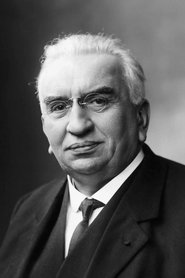
More from Louis Lumière
View all →

More about this film
About the production
Release date1896
ProductionSociété Lumière
Filmed inPlace Bellecour, Lyon, France
Filmed using the Lumière brothers' revolutionary Cinématographe device, which served as both camera and projector. The single static shot was typical of early Lumière productions, which emphasized capturing real-life scenes rather than creating narratives. The film was shot on 35mm film with a 1.33:1 aspect ratio, standard for the period. Place Bellecour was chosen as it was one of Europe's largest public squares and represented the modern urban life the Lumière brothers sought to document.
Themes
Urban LifeTransportationModernityTime and MemoryDocumentation of Reality
Themes & topics
Historical background
Lyon, place Bellecour reached screens around 1896, produced in its country of origin. Programs then mixed actualities, dances, and staged scenes in single-reel slots.
Why this film matters
Researchers cite Lyon, place Bellecour when tracing screen culture of its decade. Its brevity makes it useful for teaching how early narratives were staged.
Making of
The filming of 'Lyon, place Bellecour' required Louis Lumière to transport the relatively bulky Cinématographe device to the location and set it up in a position that would capture the maximum activity. The camera was hand-cranked, requiring steady operation to maintain consistent speed. Local authorities had to be convinced to allow filming, as motion pictures were an entirely new medium that many people viewed with suspicion. The Lumière brothers often filmed in their hometown of Lyon, using familiar locations as subjects. The filming process attracted curious onlookers, some of whom may appear in the film itself, unaware they were participating in cinema history.
What critics said
Reviewers in 1896 weighed Lyon, place Bellecour on clarity, pacing, and audience response rather than prestige status. No single canonical review dominates later reference works for the title.
Did you know?
- Place Bellecour is one of the largest public squares in Europe and remains a central landmark in Lyon today
- The film was one of approximately 1,422 films produced by the Lumière brothers between 1895 and 1905
- This film exemplifies the Lumière philosophy of 'actualités' - real-life scenes captured on film
- The Cinématographe could shoot, develop, and project film, making it a complete filmmaking system
- Louis Lumière personally operated the camera for many of these early street scenes
- The film was likely shown as part of the Lumière brothers' first public screening on December 28, 1895, at the Grand Café in Paris
- Early films like this were typically only 50-60 seconds long due to technical limitations of film reels
- The square features a statue of Louis XIV, which can be seen in the background of some shots
- This type of street scene film became a template for early documentary cinema worldwide
- The film captures the transition period between horse-drawn and motorized transportation
Visual style
The cinematography consists of a single, static wide shot captured from a fixed position, typical of early Lumière productions. The composition uses natural light and captures the full breadth of activity in the square. The camera placement provides a clear view of both pedestrian and vehicular traffic, demonstrating the Lumière brothers' understanding of spatial composition. The black and white imagery creates strong contrasts and silhouettes, emphasizing the movement within the frame. The stationary camera technique, while simple, effectively documents the scene without distraction, allowing viewers to observe the natural flow of life.
Innovations
The film showcases the revolutionary Cinématographe technology, which was lighter and more portable than competing devices like Edison's Kinetoscope. The camera used a claw mechanism to advance the film, creating smoother motion than earlier devices. The 35mm film format established by the Lumière brothers became the industry standard for decades. The ability to both shoot and project with the same device made the Cinématographe remarkably versatile. The film's preservation of motion at 16 frames per second was considered smooth and lifelike for the period. These technical innovations laid the groundwork for the entire film industry.
Memorable scenes
- The continuous flow of horse-drawn carriages and pedestrians crossing the square, capturing the rhythm of 19th-century urban life in a single, unedited take that serves as a time capsule of Lyon's history
What audiences thought
Initial audiences reacted with astonishment to the Lumière brothers' films, including 'Lyon, place Bellecour.' Many viewers reportedly ducked or moved aside when seeing the oncoming carriage on screen, believing it was real. The film's depiction of familiar scenes resonated with local Lyon audiences who recognized the location. The novelty of seeing moving images of everyday life was a primary attraction, drawing crowds to early screenings. Today, the film fascinates audiences as a historical document, offering a window into life over 125 years ago.
Film connections
Influenced by
- Photography
- Stage Magic
- Scientific Documentation
- Painting
This film influenced
- New York: The Street Life of a Great City (1898)
- Arrival of a Train at La Ciotat (1895)
- Workers Leaving the Lumière Factory (1895)
- The Square (1897)
Film restoration
Preserved by the Institut Lumière in Lyon, France. The film has been digitally restored and is part of the Lumière Collection, which is maintained as a UNESCO Memory of the World register. Multiple copies exist in film archives worldwide, including the Cinémathèque Française and the Library of Congress.
Where to watch
- Available on the Institut Lumière's official website
- Included in various early cinema compilation DVDs
- Accessible through YouTube and other streaming platforms featuring public domain films
- Available in film museum collections and archives
- Featured in educational resources about early cinema history