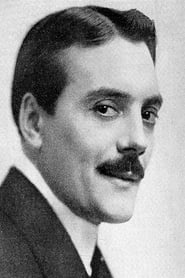


Max Wants a Divorce
"Divorce as inheritance scheme"
Keys: Space play/pause · ←/→ 10s · F fullscreen · M mute · </> speed
About this film
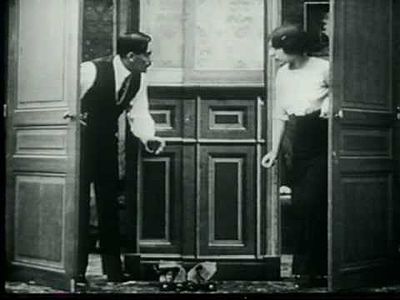
Max Linder schemes to divorce and remarry his wife while keeping an inheritance. Max is forced to choose between losing his newly wedded wife and a fortune. He hits upon a brilliant scheme: He will give his wife grounds for a divorce, secure the money and then make his ex-wife Mrs.
Cast & crew
More Comedy films
View all →






More from Max Linder
View all →
More about this film
About the production
Release dateMarch 1917
Box officeUnknown (Essanay comedies of this period typically earned $20,000-50,000 in domestic distribution)
ProductionEssanay Studios
Filmed inEssanay Studios, Niles, California, San Francisco Bay Area
This film was produced during Max Linder's American period with Essanay Studios, where he was given considerable creative control and a budget of $25,000 per month. The production utilized Essanay's state-of-the-art facilities in Niles, California, which included both indoor stages and outdoor shooting areas. The film was shot in just a few days, typical of comedy short production schedules of the era. Martha Mansfield, who plays Max's wife, was a rising star at Essanay and this film helped establish her as a leading lady in comedy productions.
Themes
Marriage and relationshipsInheritance and wealthDeception and misunderstandingLegal complicationsSocial status
Themes & topics
divorceinheritancemistaken identitycomedy of errorsmarriagelawyermisunderstandingschemereconciliationsilent comedy
Historical background
1917 placed Max Wants a Divorce within United States cinema as Essanay Studios navigated wartime markets, immigration audiences, and the shift from intertitles to sound.
Why this film matters
Archivists revisit Max Wants a Divorce (1917) for Max Linder style, genre norms at Essanay Studios, and the exhibition context of 24 minutes (2 reels) programming.
Making of
The production of 'Max Wants a Divorce' took place during a turbulent period in Max Linder's career, as he struggled to adapt his sophisticated European comedy style to American audiences. Linder had creative control over his films at Essanay, which was unusual for the time, but this freedom came with the pressure of delivering consistent hits. Martha Mansfield was specifically chosen by Linder for her ability to match his timing and her elegant screen presence, which contrasted well with his frantic comedic energy. The film's elaborate divorce schemes required complex staging and multiple location changes within the studio's facilities. Linder was known for his meticulous preparation and would rehearse scenes extensively, sometimes spending entire days perfecting a single comedic sequence. The production faced additional challenges due to wartime restrictions on film stock and resources, making efficient shooting essential. Despite these constraints, Linder insisted on maintaining the high production values and attention to detail that had made him famous in Europe.
What critics said
Retrospective writing on Max Wants a Divorce stresses craft by Max Linder, print survival, and repertory value rather than opening-week gross alone.
Did you know?
- Max Linder was one of the highest-paid actors of his time, earning $5,000 per week at Essanay Studios, equivalent to over $100,000 in today's currency
- The film was released in France under the title 'Max veut un divorce' and was one of Linder's most successful American productions in his home country
- Martha Mansfield would later die tragically in 1923 when her costume caught fire during filming, making this one of her few surviving complete performances
- This film was part of a series of 'Max' comedies that Linder produced in America, attempting to translate his European success to American audiences
- The legal premise of the film, while comedic, reflects real concerns about inheritance laws and marital property rights that were being debated in the 1910s
- Essanay Studios was also home to Charlie Chaplin before he moved to Mutual, and Linder was brought in partly to replace Chaplin as their star comedian
- The film's theme of divorce was somewhat controversial for 1917, as divorce was still socially stigmatized and relatively rare compared to today
- Max Linder performed many of his own stunts in the film, including several pratfalls and physical comedy sequences that became his trademark
- The original negative was believed lost for decades before a print was discovered in the Czech Republic in the 1970s
- This film was one of the last comedies Linder made before returning to France due to declining health and the difficulties of World War I
Visual style
The cinematography by Harry W. Gerstad utilized the sophisticated techniques that Essanay Studios was known for, including careful lighting to enhance the comedy and dramatic moments. The film employed medium shots more frequently than typical comedies of the era, allowing for better appreciation of Linder's subtle facial expressions and physical comedy. The camera work was relatively static, as was common in 1917, but showed careful composition to frame the comedic action effectively. Interior scenes used the artificial lighting techniques being developed at Essanay, creating a more polished look than many contemporary comedies. The film also made effective use of location shooting around the Niles studio grounds, adding visual variety to the proceedings.
Innovations
While not groundbreaking in technical terms, the film demonstrated the sophisticated production values that Essanay Studios was known for. The use of multiple locations within the studio complex showed efficient production planning. The film's editing, while basic by modern standards, showed good pacing for comedy, with careful attention to the timing of gags and reactions. The makeup techniques used on Linder were advanced for the period, helping to create his distinctive screen character. The film also demonstrated effective use of props and set dressing to enhance the comedy, particularly in the various schemes Max attempts to enact. The preservation of the film's visual quality in surviving prints indicates good original laboratory work in processing the footage.
Music
As a silent film, 'Max Wants a Divorce' would have been accompanied by live musical performance during its original theatrical run. Typical accompaniment would have included a piano or small orchestra playing popular songs of the era along with classical pieces adapted to fit the mood of each scene. The film's romantic elements would have been underscored with sentimental melodies, while the comedic sequences would have featured lighter, more playful music. No original score was composed specifically for the film, as was common practice in 1917. Modern screenings of restored versions often feature newly composed scores by silent film accompanists who attempt to recreate the musical styles of the period while adding contemporary sensibilities.
Famous quotes
(Intertitle) 'My dear Max, your uncle has left you five million dollars, but there's one condition...' (The Lawyer)
(Intertitle) 'A divorce? But we've only been married twenty-four hours!' (Max)
(Intertitle) 'I shall make you the most neglected wife in history!' (Max)
(Intertitle) 'Sometimes the best-laid plans of mice and comedians go astray' (Narrator)
Memorable scenes
- The sequence where Max attempts to stage his own infidelity by hiring an actress to play his lover, only to have his wife completely ignore the entire performance
- The frantic race against time as Max tries to create divorce evidence before the 24-hour deadline expires
- The final revelation scene where the lawyer admits his mistake, leading to Max's exhausted but triumphant collapse
What audiences thought
The film was moderately successful with American audiences, though it didn't achieve the same level of popularity as Chaplin's comedies of the period. American viewers found Linder's style more sophisticated than typical American comedies, which was both praised by critics and sometimes seen as less accessible to general audiences. In France, where Linder was already a major star, the film was very well received upon its release there later in 1917. European audiences appreciated seeing their beloved comedian succeeding in American productions. The film's theme of divorce, while controversial to some, was handled with enough comedic distance that it didn't alienate mainstream audiences. Over time, as Linder's reputation grew among film enthusiasts, the film has gained appreciation as an important example of early comedy craftsmanship.
Film connections
Influenced by
- French theatrical comedy traditions
- Georges Méliès' fantasy films
- Early American slapstick comedy
- European stage farce
- Commedia dell'arte character archetypes
This film influenced
- Charlie Chaplin's 'The Circus' (1928)
- Buster Keaton's 'Seven Chances' (1925)
- Harold Lloyd's 'Girl Shy' (1924)
- The Marx Brothers' 'A Night at the Opera' (1935)
Film restoration
The film is partially preserved with a complete 2-reel version held in the film archives of the Library of Congress and the Cinémathèque Française. The surviving prints are in relatively good condition for a film of this age, though some deterioration is evident. The film was restored in the 1990s as part of a comprehensive Max Linder collection preservation project. Some original tinting has been lost, but the black and white imagery remains clear and viewable. The film is considered one of the better-preserved examples of Linder's American work.
Where to watch
- Available on DVD in 'The Max Linder Collection' from Kino Lorber
- Streaming on The Criterion Channel as part of their silent comedy collection
- Occasionally screened at film festivals specializing in silent cinema
- Available for viewing at the Library of Congress Packard Campus for Audio Visual Conservation
- Included in some university film studies collections