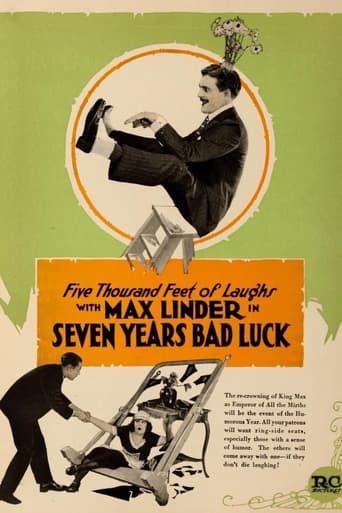
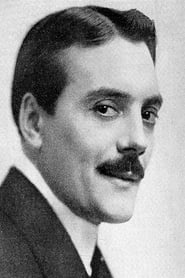
Max Linder
Actor & Director
Born: December 16, 1883 in Saint-Loubès, Gironde, France Died: October 31, 1925 Active: 1905-1925 Birth Name: Gabriel-Maximilien Leuvielle
Films
26 films
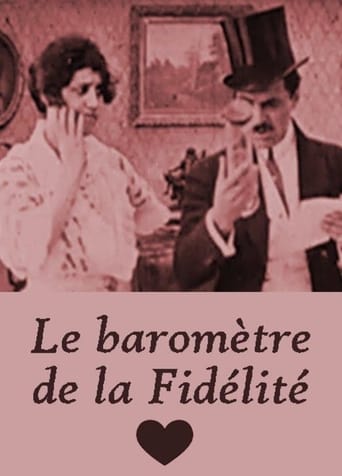
The Barometer of Fidelity
1909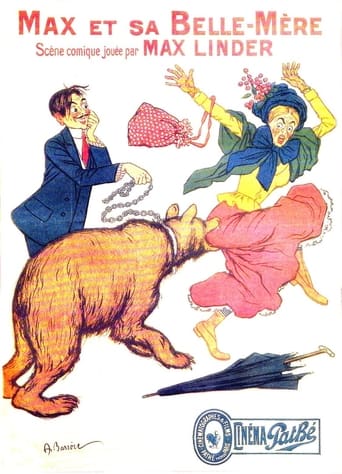
Max and His Mother-in-Law
1911
Max Takes Tonics
1911
I Want a Baby
1910
Max's First Job
1910
The Romance of Max
1912
A Farmhouse Romance
1912
An Agitated Night
1912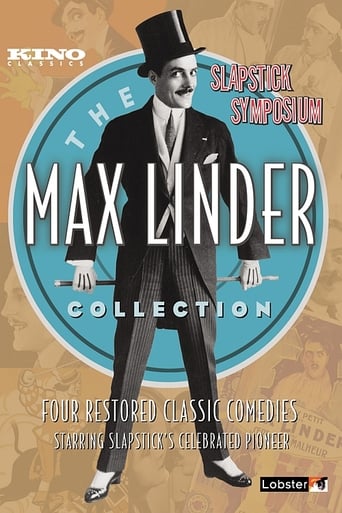
Max Wants a Divorce
1917
Beginning of the Serpentine Dance
1908No Poster
Max Fears the Dogs
1912
Max and Jane Want to Do Theater
1912
The Three Must-Get-Theres
1922
Max Speaks English
1914
Max Takes a Bath
1910No Poster
In a Difficult Position
1907
Au secours !
1924
The Water-Funker
1913
Max's Hat
1913
The Wedding Trunk
1912
Troubles of a Grass Widower
1908
Be My Wife
1921
Max as a Chiropodist
1914
Max Skiing
1910
Love's Surprises
1909About Max Linder
Max Linder, born Gabriel-Maximilien Leuvielle, was a French silent film comedian who became one of the first international movie stars. He began his career with the Pathé Frères studio in 1905, creating the character 'Max' - a sophisticated, dapper gentleman who found himself in increasingly absurd situations. By 1910, Linder was one of the highest-paid actors in the world, making hundreds of short comedies that were distributed globally. His career was interrupted by World War I, during which he served in the French army and suffered severe injuries from gas attacks. After the war, he attempted a comeback in Hollywood with films like 'Seven Years Bad Luck' (1921), but his style had fallen out of favor compared to newer comedians like Charlie Chaplin, who had been heavily influenced by him. Linder's final years were marked by declining health and depression, culminating in a tragic murder-suicide pact with his wife in 1925. Despite his tragic end, Linder's influence on comedy and cinema was profound, establishing many tropes and techniques that would become standard in film comedy.
The Craft
On Screen
Linder pioneered a sophisticated style of screen comedy characterized by elegant, restrained physical comedy and subtle facial expressions. Unlike the slapstick of his contemporaries, his 'Max' character was a refined gentleman whose humor came from the contrast between his dignified demeanor and the chaotic situations he encountered. He developed techniques for close-up emotional expression and used props innovatively, particularly his signature cane and top hat. His timing was precise and his movements economical, creating a more naturalistic style that influenced later comedians.
Behind the Camera
As a director, Linder was known for his meticulous planning and technical innovation. He often served as writer, director, and star of his films, maintaining complete creative control. His directing emphasized visual storytelling over intertitles, using clever camera angles and editing to enhance comedic timing. He pioneered techniques like split-screen effects and continuity editing that were ahead of their time. His films featured elaborate sets and sophisticated production values uncommon in comedy shorts of the era.
Milestones
- Created the iconic 'Max' character for Pathé Frères in 1905
- Became one of the world's first international film stars by 1910
- Made over 400 short films between 1905-1914
- Served in French Army during WWI, receiving the Croix de Guerre
- Signed with Essanay Studios in 1916 for $5,000 per week
- Produced 'Seven Years Bad Luck' (1921), his most famous feature
- Returned to France in 1922 for final film 'Au Secours!' (1924)
Best Known For
Iconic Roles
Must-See Films
Accolades
Won
- Croix de Guerre (1917) - For military service during WWI
- Posthumous star on Hollywood Walk of Fame (1960)
Special Recognition
- Hollywood Walk of Fame Star (1722 Vine Street)
- Preserved films in National Film Registry
- Multiple film retrospectives at Cinémathèque Française
- Featured in Museum of Modern Art's silent film collection
Working Relationships
Worked Often With
Studios
Why They Matter
Impact on Culture
Max Linder revolutionized screen comedy by introducing a more sophisticated, character-driven approach that contrasted with the broad slapstick of early cinema. His 'Max' character established the template for the gentleman comedian archetype that would be emulated by countless performers. Linder was among the first to demonstrate that film comedy could be subtle and intelligent rather than purely physical. His international popularity helped establish the concept of the movie star as a global phenomenon, and his success at Pathé proved that comedies could be both critically acclaimed and commercially viable on an international scale.
Lasting Legacy
Linder's legacy is that of a tragically overlooked pioneer who fundamentally shaped cinematic comedy. Though largely forgotten by mainstream audiences, film historians recognize him as a crucial figure who paved the way for Charlie Chaplin and other silent comedians. His daughter Maud dedicated her life to preserving and promoting his work, ensuring that his contributions to cinema would not be lost to history. Modern film scholars have reevaluated his importance, recognizing his technical innovations and sophisticated comedic sensibility as years ahead of their time. His films are now studied as masterpieces of early cinema, demonstrating an artistic sophistication that rivals the best work of his more famous contemporaries.
Who They Inspired
Linder directly influenced Charlie Chaplin, who called him 'the great master' and acknowledged borrowing elements of his elegant comedy style. His use of props as comic devices, particularly the cane and hat, became standard tools for silent comedians. His technique of combining physical comedy with emotional depth influenced the development of character-based comedy in film. The sophisticated gentleman persona he created inspired similar characters throughout film history, from Cary Grant's comedies to Hugh Grant's romantic comedy roles. His innovative camera work and editing techniques influenced not just comedians but all filmmakers working in the early 20th century.
Off Screen
Linder came from a wealthy wine merchant family and was well-educated, studying at the Bordeaux Conservatory of Dramatic Art. He married Jeanne Aylward in 1913, and they had one daughter, Maud, born in 1914. His marriage suffered due to his war injuries and subsequent depression. On October 31, 1925, in a state of severe depression, Linder and his wife committed suicide together in their Paris apartment, leaving behind their young daughter. Maud Linder would later become a film preservationist dedicated to restoring her father's work.
Education
Bordeaux Conservatory of Dramatic Art; attended Lycée de Bordeaux
Family
- Jeanne Aylward (1913-1925)
Did You Know?
- At his peak, Linder was earning over 100,000 francs per month, equivalent to millions today
- He was one of the first actors to receive screen credit, as Pathé used his name to market films
- Charlie Chaplin reportedly said 'I owe everything to Max Linder' when asked about his influences
- Linder served as a lieutenant in the French army and was seriously injured by mustard gas
- His film 'Seven Years Bad Luck' contains the famous mirror gag that was later copied by the Marx Brothers in 'Duck Soup'
- He was the first comedian to make the transition from shorts to feature-length films
- His daughter Maud was only 11 years old when her parents died
- Many of his films were lost when Pathé's archives were damaged during WWII
- He was a skilled boxer and incorporated boxing sequences into several of his comedies
- His suicide note read 'I am tired of life and I am taking my wife with me'
- He was fluent in English, French, and German, which helped his international success
In Their Own Words
I am not a clown. I am a comedian who happens to be funny.
The secret of comedy is not in falling down, but in how you get up.
A gentleman must be funny, but never ridiculous.
In comedy, as in life, timing is everything.
The camera sees everything, especially what you try to hide.
Frequently Asked Questions
Who was Max Linder?
French silent film comedian and on YTB.my. He created the sophisticated 'Max' character and made hundreds of comedy shorts for Pathé before attempting a Hollywood career in the 1920s.
What films is Max Linder best known for?
Titles linked here include The Legend of Punching (1907), I Want a Baby (1910).
When was Max Linder born and when did he die?
Born December 16, 1883; died October 31, 1925.
What awards did Max Linder win?
Linder received the Croix de Guerre for his military service during World War I. Posthumously, he received a star on the Hollywood Walk of Fame, and his films have been preserved in various film archives and museums.
What was Max Linder's acting style?
Linder's style was sophisticated and elegant, contrasting with the broad slapstick of his era. He played a dapper gentleman whose humor came from the contrast between his refined demeanor and absurd situations, using subtle facial expressions and precise timing.
How did Max Linder influence Charlie Chaplin?
Chaplin openly acknowledged Linder as a major influence, calling him 'the great master.' Linder's gentleman character, use of props like the cane and hat, and sophisticated approach to comedy directly inspired Chaplin's Tramp character and comedic style.
Why did Max Linder's career decline?
Linder's career declined after WWI due to his war injuries, changing audience tastes, and the rise of new comedians like Chaplin who had adapted his style. His Hollywood comeback was unsuccessful, and he suffered from depression in his final years.