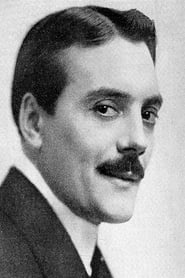



Max and Jane Want to Do Theater
"Two stage-struck youths dodge the marriages their parents arranged."
Keys: Space play/pause · ←/→ 10s · F fullscreen · M mute · </> speed
About this film
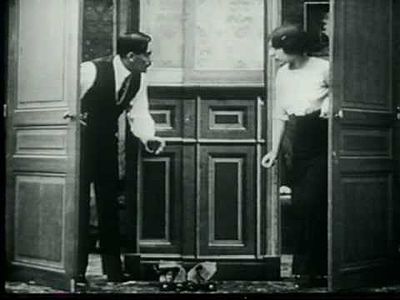
Stage-struck Max struck youth, and because of a deep-seated desire to go on the stage, refuses to consent to a marriage his father has planned for him. The girl, whom Max has never met, is also stage struck, and entertains no wish of marrying him, though her mother is anxious to see her make the alliance. The parents finally manage to bring the young people together, and they, in turn, exert all their skill in an attempt to disgust each other. An accidental meeting between the two when they are off guard causes them to change their minds.
Cast & crew
More Comedy films
View all →






More from Max Linder
View all →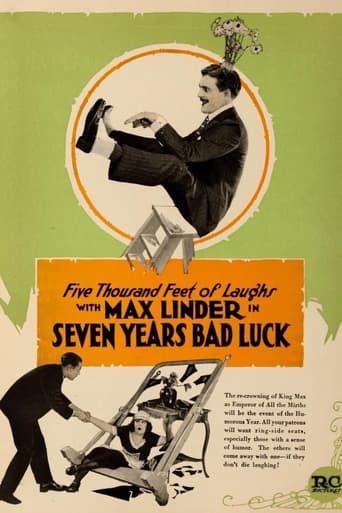
More about this film
About the production
Release date1912
ProductionPathé Frères
Filmed inParis, France
This film was part of Max Linder's popular series of comedy shorts for Pathé Frères, especially successful film production companies of the early 1910s. The film was shot during the peak of Linder's popularity when he was one of the highest-paid and most recognized film stars in the world. Like many films of this era, it was likely shot quickly with minimal sets, utilizing theatrical backdrops to represent the stage scenes.
Themes
Artistic ambition vs. social expectationsTheatricality and performanceArranged marriage and romantic choiceClass and family pressureThe nature of true connection
Themes & topics
arranged marriagetheaterstage actorsmistaken identitycomedy of errorsromantic comedyparents vs. childrenartistic passion
Historical background
Released around 1912, Max and Jane Want to Do Theater emerged while exhibitors were still defining how longer narratives could hold nickelodeon audiences.
Why this film matters
Reference works on 1912 cinema cite Max and Jane Want to Do Theater when tracing genre habits, studio economics, or regional production patterns of the period.
Making of
The production of this film took place during Max Linder's most productive period at Pathé Frères, where he had remarkable creative control over his films. Linder typically worked with a small, trusted team of technicians and actors, including regular collaborator Jane Renouardt. The film's theatrical setting allowed Linder to parody both stage acting conventions and the growing film industry itself. The quick turnaround time for these shorts meant they were often conceived, shot, and released within weeks, reflecting the insatiable demand for new content in the rapidly expanding cinema market of the early 1910s. Linder's meticulous attention to costume and set detail, even in these brief comedies, helped establish the sophisticated visual style that set his work apart from many contemporaries.
What critics said
Press clipping files from 1912 rarely give Max and Jane Want to Do Theater headline space; mentions appear in roundup columns listing what played that week.
Did you know?
- Max Linder was one of the first true international film stars, earning an unprecedented salary of 1 million francs per year at the height of his career around this time.
- The film's French title is 'Max et Jane veulent faire du théâtre' and was distributed internationally by Pathé's extensive global network.
- Max Linder's character 'Max' was one of cinema's first recurring comic personas, appearing in hundreds of short films between 1905 and 1914.
- Jane Renouardt, who co-stars in this film, was a frequent collaborator with Linder and appeared in many of his comedies during this period.
- This film was produced during what many consider the golden age of French cinema, before World War I devastated the European film industry.
- Max Linder's comedy style heavily influenced Charlie Chaplin, who reportedly studied Linder's films and called him 'the professor' of silent comedy.
- The film was likely shot on Pathé's studio sets in Joinville-le-Pont, a suburb of Paris where the company maintained extensive production facilities.
- Like most films of 1912, it would have been accompanied by live musical accompaniment in theaters, with the score varying by venue and pianist.
Visual style
The cinematography, typical of Pathé productions of this era, utilized stationary camera positions with careful composition to frame the comedic action. The film likely employed the standard 35mm format with Pathé's own proprietary equipment, which was known for its reliability and quality. The theatrical scenes would have used painted backdrops and minimal set pieces, creating a stylized environment that enhanced the comedy's artificiality. Camera work was functional rather than artistic by modern standards, but showed the growing sophistication of framing and editing techniques being developed in 1912.
Innovations
While not technically groundbreaking for its time, the film demonstrates the refined editing techniques being developed by 1912, including more sophisticated shot sequencing and timing for comedic effect. The production benefited from Pathé's advanced film processing facilities, which ensured consistent image quality across international distribution. The film's efficient storytelling within a brief runtime shows the growing mastery of narrative compression in early cinema. The use of intertitles, though minimal in this comedy, represents the continuing development of cinematic language beyond purely visual storytelling.
Music
As a silent film, Max and Jane Want to Do Theater would have been accompanied by live musical performance during theatrical exhibition. The specific musical accompaniment would have varied by venue, ranging from solo piano in smaller theaters to small orchestras in prestigious cinemas. The music likely included popular songs of the period and classical pieces chosen to match the film's moods and action. Pathé sometimes provided suggested musical cues with their film prints, but local musicians had significant freedom in their interpretations. The theatrical setting of the film would have inspired many accompanists to incorporate musical theater themes and stage-like musical motifs.
Famous quotes
Max: 'The stage is my bride! How can I take another when I have already given my heart to the footlights?'
Jane: 'Mother, I would rather die in poverty on the stage than live in luxury as a bored wife!'
Memorable scenes
- The scene where Max and Jane first meet and both attempt to disgust each other through exaggerated theatrical behavior, with Max adopting melodramatic Shakespearean poses and Jane performing over-the-top opera diva antics, creating a comic battle of theatrical excess that backfires spectacularly when they accidentally impress each other instead.
What audiences thought
The film was well-received by audiences of its time, who had developed a strong affection for Max Linder's character and his recurring comic situations. Theater-goers appreciated the familiar formula of Linder's comedies while enjoying the fresh variations each new film brought to his established persona. The theatrical theme particularly resonated with urban audiences who were increasingly familiar with both stage and cinema entertainment. The film's success contributed to Linder's status as among the leading bankable stars of the early 1910s, with his films consistently drawing crowds across Europe and in growing international markets.
Film connections
Influenced by
- Georges Méliès's theatrical fantasy films
- French theatrical comedy traditions
- Commedia dell'arte character archetypes
- Early French film comedy pioneers like André Deed
This film influenced
- Charlie Chaplin's early Mutual comedies
- Buster Keaton's theatrical-themed films
- Jacques Tati's character comedies
- Later romantic comedy formulas in cinema
Film restoration
The film is preserved in several film archives, including the Cinémathèque Française and the Library of Congress. While complete prints exist, some versions show varying degrees of deterioration typical of nitrate film from this period. The film has been included in several DVD collections of Max Linder's work, helping ensure its accessibility to modern audiences.
Where to watch
- Available on various DVD collections of Max Linder films
- Streamable on some classic film streaming platforms
- Accessible through film archive websites and educational institutions
- Occasionally screened at classic film festivals and cinematheque programs