
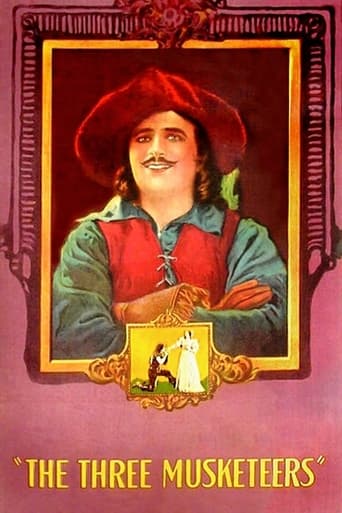
The Three Must-Get-Theres
"Max Linder skewers Dumas with three hapless swordsmen"
Keys: Space play/pause · ←/→ 10s · F fullscreen · M mute · </> speed
About this film
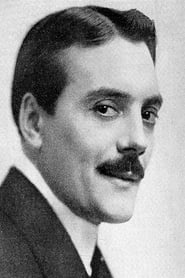
Max Linder sends up The Three Musketeers with three bumbling swordsmen who can barely hold their rapiers. Duels, romance, and royal intrigue become absurd puncture wounds rather than heroic adventure. The parody trades Dumas's grandeur for pratfalls and mistaken identity.
Cast & crew
More films like this


More Romance films
View all →



More from Max Linder
View all →
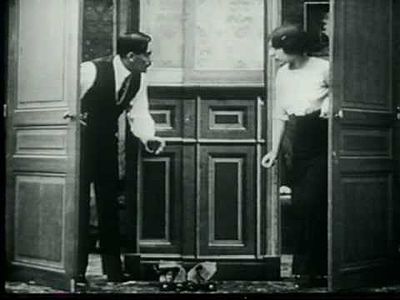
More about this film
About the production
Release dateDecember 24, 1922
Box officeUnknown
ProductionMax Linder Productions, Quality Pictures Corporation
Filmed inLos Angeles, California, Hollywood Studios
This was Max Linder's first American feature film after moving from France. The film was shot during the transition period when Linder was trying to establish himself in Hollywood. The production faced challenges due to Linder's health issues and his difficulty adapting to the American studio system. The film's title was a play on words, deliberately misspelling 'Musketeers' as 'Must-Get-Theres' for comedic effect.
Themes
Parody and SatireHeroism and Anti-HeroismCultural IdentityLove and RomanceHonor and Duty
Themes & topics
Historical background
Made during the studio era of 1922, The Three Must-Get-Theres reached audiences through theatrical programs, fairground booths, or specialized distribution channels typical of its generation. In this movie, Max Linder parodies the famous novel "The Three. Historians now read such works for what they reveal about production methods, national taste, and the expanding vocabulary of screen narrative.
Why this film matters
Archivists and programmers still screen The Three Must-Get-Theres when tracing how popular entertainment evolved. Its subject—in this movie, max linder parodies the famous novel "the three—gives later viewers tangible evidence of what drew crowds in the silent period. Home video, restorations, and festival sidebars keep the title circulating among students of film history.
Making of
Max Linder, already a superstar in European cinema, moved to America in 1921 seeking new opportunities. This film was his ambitious attempt to conquer Hollywood with his sophisticated brand of comedy, which contrasted with the more slapstick style popular in American films. Linder brought his own production team from France and insisted on creative control. The filming process was marked by cultural clashes between European and American working methods. Linder's perfectionism led to multiple retakes of scenes, especially the sword fights, which he wanted to be both technically impressive and comedically timed. The production utilized some of the same sets and costumes that had been used in other swashbuckling films of the era, demonstrating Hollywood's resourcefulness. Linder's health problems, including the aftereffects of poison gas exposure during WWI, sometimes forced production delays.
What critics said
Original trade coverage treated The Three Must-Get-Theres as routine program filler rather than a landmark production—typical of steady studio output. Later criticism emphasizes preservation, stylistic comparison with contemporaries, and whatever cast or crew names later gained prominence. Contemporary writing is mostly historical: assessing completeness, influence, and place in a director's or studio's catalog.
Did you know?
- Max Linder was one of the highest-paid and most famous comedians in the world before Charlie Chaplin, with a salary that rivaled Chaplin's in the early 1910s
- The film was Linder's attempt to capitalize on the popularity of swashbuckling films that were dominating cinema in the early 1920s
- Linder's character 'Max' was his signature persona that he developed in French cinema before bringing it to America
- The film featured elaborate sword-fighting sequences that were meticulously choreographed for comedic effect rather than authenticity
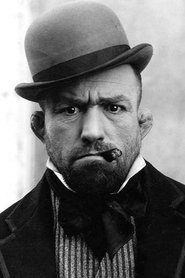
- Bull Montana, who played one of the musketeers, was a former professional wrestler turned actor known for his imposing physical presence
- The film's sets were designed to mimic the lavish productions of Douglas Fairbanks' swashbucklers but on a more modest budget
- Linder personally supervised the intertitles to ensure the humor translated well to American audiences
- The film was released just before Linder's tragic suicide attempt and subsequent death in 1925
- Original prints featured hand-tinted color sequences for certain dramatic moments
- The film's French title was 'Les Trois Mousquetaires' when shown in European markets
Visual style
The cinematography, credited to Harry F. Millarde, employed the dramatic lighting techniques popular in swashbuckling films of the era. The film used deep shadows and high contrast lighting during the sword fight sequences to enhance the dramatic tension before subverting it with comedy. Tracking shots were used during chase sequences, and the camera work during the duel scenes was particularly dynamic for its time. The cinematography successfully balanced the epic feel of swashbuckling films with the intimate moments needed for Linder's facial comedy, which was crucial to his performance style.
Innovations
The film featured innovative use of camera movement during sword-fighting sequences, employing techniques that enhanced both the action and the comedy. The production used multiple camera setups for complex scenes, which was still relatively uncommon in 1922. The film's intertitles were particularly sophisticated, using visual gags and typography that complemented the on-screen action. The sword-fighting choreography was technically impressive while maintaining comedic timing, requiring precise coordination between actors and camera. The film also utilized some early special effects techniques for the more fantastical elements of the parody.
Music
As a silent film, it would have been accompanied by live musical performances in theaters. The original score was composed by William Axt and included adaptations of popular classical pieces along with original compositions. The music ranged from dramatic orchestral pieces during sword fights to lighter, more whimsical melodies for comedic scenes. In some larger theaters, the film was accompanied by full orchestras, while smaller venues used piano or organ accompaniment. Modern restorations have been scored with period-appropriate music by silent film accompanists.
Famous quotes
Max: 'I may not be the best musketeer, but I'm certainly the most persistent!'
Cardinal Richelieu: 'This young man is either a genius or a fool... I suspect both.'
Athos: 'One for all and all for lunch!'
Memorable scenes
- The opening sequence where Max arrives in Paris and comically misunderstands the musketeers' motto
- The sword-fighting duel where Max accidentally defeats multiple opponents through sheer luck
- The palace scene where Max attempts to serve the Queen while creating chaos in the royal court
- The climactic rescue sequence featuring elaborate stunt work and comedic timing
What audiences thought
The film achieved moderate success in major urban areas but struggled in smaller American markets where Linder was less known. European audiences, particularly in France where Linder remained extremely popular, responded more enthusiastically to the film. The comedy was appreciated by those familiar with both the original Three Musketeers story and Linder's previous work. Some American audiences found the humor more subtle than the slapstick they were accustomed to from comedians like Chaplin and Keaton. The film developed a cult following among silent film enthusiasts in later years, with many considering it an underrated gem of the era.
Film connections
Influenced by
- The Three Musketeers by Alexandre Dumas
- Douglas Fairbanks' swashbuckling films
- French theatrical comedy traditions
- European literary adaptations
This film influenced
- The Pink Panther series (parody elements)
- Airplane! (parody technique)
- The Princess Bride (swashbuckling comedy)
- Robin Hood: Men in Tights (literary parody)
Film restoration
The film is partially preserved with some scenes missing or damaged. A restored version exists combining elements from various international prints. The film is held in the collections of several archives including the Library of Congress and the French Cinémathèque. Some original nitrate footage has been preserved and digitized, though the complete original version may be lost.
Where to watch
- Available on DVD from various silent film distributors
- Streaming on The Criterion Channel
- Available on YouTube through public domain uploads
- Screened occasionally at silent film festivals and revival theaters
- Accessible through university film archives and libraries