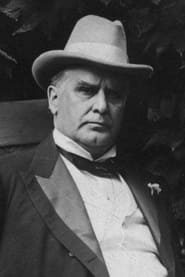
McKinley at Home, Canton, Ohio
"McKinley at home on his Canton lawn"
Keys: Space play/pause · ←/→ 10s · F fullscreen · M mute · </> speed
About this film
On his lawn in Canton, Ohio, President William McKinley walks with his secretary, accepts a telegram, and reads it with visible satisfaction while the camera records his familiar stride and gestures.
Cast & crew
More films like this
More Documentary films
View all →
More about this film
About the production
Release dateSeptember 1896
Box officeNot commercially released - primarily used for exhibition purposes
ProductionEdison Manufacturing Company
Filmed inMcKinley Home, Canton, Ohio
This film was part of Edison's 'Actualities' series, which captured real events and people rather than staged narratives. The filming required special permission from the McKinley campaign and was likely arranged to promote the candidate's image. The camera was positioned to capture McKinley's full figure and movements, demonstrating the new medium's ability to convey personality through body language. The telegram reading was likely staged for the camera to create a dramatic moment.
Themes
Political LeadershipAmerican DemocracyTechnological ProgressPublic ImageDomestic Life
Themes & topics
Historical background
Contemporary records classify McKinley at Home, Canton, Ohio (1896) as 1896 american film, placing it within the earliest years of projected motion pictures.
Why this film matters
McKinley at Home, Canton, Ohio (1896) helps trace genre evolution, performer careers, and the material conditions of silent exhibition.
Making of
The filming of 'McKinley at Home' was arranged through the Edison Manufacturing Company's efforts to capture newsworthy subjects for their popular 'Actualities' series. The McKinley campaign recognized the promotional value of this new technology and cooperated with the filmmakers. The shoot required bringing heavy, cumbersome camera equipment to the McKinley residence and setting up in the lawn area. The entire sequence was likely filmed in a single take due to the limitations of early cameras, which could only hold short amounts of film. The appearance of reading a telegram was probably suggested by the Edison crew to create visual interest and suggest the candidate's importance and connection to national affairs.
What critics said
Where contemporary reviews survive, McKinley at Home, Canton, Ohio is discussed in terms of audience appeal at release; later criticism often reframes it through archive restoration and festival programming.
Did you know?
- This is one of the earliest films ever made featuring a sitting or future U.S. President
- The film was created during McKinley's successful 1896 presidential campaign against William Jennings Bryan
- George B. Cortelyou, seen in the film, would later serve as the first White House Chief of Staff under President Theodore Roosevelt
- The film was shot on 35mm film using an Edison Vitascope camera
- Only one print of this film is known to survive, preserved at the Library of Congress
- The McKinley home in Canton where this was filmed is now a National Historic Site
- This film represents an early example of using motion pictures for political propaganda
- The telegram McKinley reads was likely staged - actual campaign news would have been delivered more formally
- Ida McKinley, the President's wife, is listed in the cast but may not appear in the surviving footage
- The film was exhibited in vaudeville theaters as part of variety programs featuring Edison's latest inventions
Visual style
The cinematography reflects the technical limitations of 1896 filmmaking. The camera was stationary, capturing a wide shot of the lawn action. The film was shot in natural daylight, as artificial lighting was not yet available for motion pictures. The composition places McKinley as the central figure, with careful attention to capturing his full body movements and gestures. The image quality shows the characteristic grain and contrast of early 35mm film stock. Despite technical constraints, the framing effectively conveys the domestic setting and the informal nature of the scene.
Innovations
This film represents several technical achievements for its era, including successful outdoor filming with natural lighting, capturing movement in an exterior setting, and maintaining focus on multiple moving subjects. The use of the Edison Vitascope camera and 35mm film stock was state-of-the-art for 1896. The film also demonstrates early understanding of how camera placement could effectively document human movement and personality. The survival of the film itself is notable, given the fragility of early film stock and the fact that an estimated 90% of films from this period have been lost.
Music
No original soundtrack existed for this silent film. During theatrical exhibition, the film would have been accompanied by live piano music or a small orchestra, with the musical selection left to the discretion of the theater's musical director. The music would typically be patriotic or light in character to match the film's tone.
Famous quotes
The characteristic walk and gestures of Mr. McKinley will be noted with interest by his friends. - AMB Picture Catalogue
This view was taken upon Mr. McKinley's lawn at his home in Canton, Ohio. - Original film description
Memorable scenes
- The iconic moment when McKinley receives and reads the telegram, displaying his presidential demeanor and confidence in a casual setting, creating a powerful image of leadership accessible to ordinary citizens.
What audiences thought
Audiences of 1896 were fascinated by the novelty of seeing a presidential candidate captured on film. The film was exhibited in vaudeville houses and special exhibitions of Edison's inventions, where it drew crowds eager to witness this new technology. Viewers particularly noted McKinley's dignified bearing and the authenticity of the setting. The film's brief running time and simple action made it accessible to audiences still adjusting to the concept of moving pictures. Many viewers reported feeling a personal connection to the candidate after seeing him in such an intimate setting.
Film connections
Influenced by
- Edison's Black Maria Studio productions
- Lumière Brothers' Actualities
- Early documentary photography
- Political portraiture tradition
This film influenced
- Theodore Roosevelt Rough Riders (1898)
- President McKinley's Inspection of Camp Wikoff (1898)
- Early newsreels
- Political campaign films
Film restoration
Preserved at the Library of Congress Motion Picture, Broadcasting & Recorded Sound Division. The film has been digitally restored and is part of the National Film Registry's collection of historically significant American films.
Where to watch
- Library of Congress website (free streaming)
- Internet Archive
- Early Cinema collections
- Academic film archives
- Museum of Modern Art film collection