Mother's Baby Boy
"Percival is a spoiled mama's boy"
Keys: Space play/pause · ←/→ 10s · F fullscreen · M mute · </> speed
About this film
Percival is a spoiled mama's boy. When two toughs make time with his girlfriend he sends a telegram to his mother for help.
Cast & crew
More films like this
More Comedy films
View all →







More from Arthur Hotaling
View all →
More about this film
About the production
Release dateApril 1914
ProductionLubin Manufacturing Company
Filmed inJacksonville, Florida
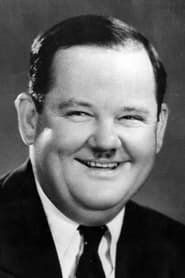
This film was part of the Lubin Manufacturing Company's Jacksonville studio output, which was one of the first film production centers in the American South. The Jacksonville studio operated from 1908-1916 and produced hundreds of short films during this period. This was one of many comedy shorts featuring Oliver Hardy before his partnership with Stan Laurel.
Themes
Themes & topics
Historical background
Mother's Baby Boy (1914) circulated in the silent era. Percival is a spoiled mama's boy Contemporary trade papers and later preservation notes document its place among nickelodeon and cinema-club programs.
Why this film matters
Mother's Baby Boy remains accessible to researchers and viewers as a comedy short in museum, archive, and streaming collections. Programmers cite it when tracing regional production history and surviving early prints.
Making of
The film was produced during the peak of Jacksonville's brief reign as a film production hub. Arthur Hotaling was running the Lubin studio there and was known for giving opportunities to young talent. Oliver Hardy, who was still using his real name and had not yet adopted his famous 'Babe' nickname, was building his filmography with these short comedies. The production would have been shot very quickly, as was typical for shorts of this era, often completing filming in just one or two days. The simple plot and limited locations made it an efficient production for the studio system. Hardy was still developing his screen persona and appears here in a more conventional supporting role rather than the comic foil he would later perfect with Laurel.
What critics said
Day-one reviews for Mother's Baby Boy are sparse in digitized press archives; later criticism treats it as a reference point for 1914 cinema programming and preservation.
Did you know?
- This film features Oliver Hardy in one of his earliest screen appearances, nearly a decade before his partnership with Stan Laurel began in 1927.
- Arthur Hotaling was a prolific director who made over 200 films between 1912-1928 and is credited with giving both Oliver Hardy and Stan Laurel some of their earliest film work.
- The Lubin Manufacturing Company, which produced this film, was one of the major early American film studios but went bankrupt in 1916.
- This film was shot in Jacksonville, Florida, which was briefly a major film production center before the industry consolidated in Hollywood.
- The character of Percival represents a common comedic archetype of the era - the effeminate, cowardly man who is dominated by women.
- Oliver Hardy appears in a supporting role rather than as the lead, as he was still building his career in 1914.
- The film's title plays on the phrase 'mama's boy,' which was already a well-established concept in American culture by 1914.
- Silent comedies of this period often relied heavily on physical comedy and exaggerated character types due to the lack of dialogue.
- The telegram subplot reflects the technological changes of the era, as telegrams were a primary means of urgent long-distance communication in 1914.
- This type of short comedy was typically shown as part of a larger program of films, newsreels, and sometimes live acts in theaters of the time.
Visual style
The cinematography would have been standard for the period, using stationary cameras with basic composition techniques common in 1914. The film was likely shot on 35mm film with natural lighting when possible. As a comedy, the focus would have been on clearly capturing the physical comedy and actors' expressions rather than artistic camera movement or elaborate lighting setups.
Innovations
No significant technical achievements are associated with this film. It represents standard filmmaking techniques for its era, with no notable innovations in cinematography, editing, or special effects.
Music
As a silent film, it would have been accompanied by live music in theaters, typically a pianist or small ensemble. The score would have been compiled from popular pieces of the era or standard photoplay music collections, with selections chosen to match the mood of each scene - comic music for the funny moments, romantic music for the love scenes, and dramatic music during confrontations.
Memorable scenes
- The scene where Percival frantically composes and sends the telegram to his mother while trying to delay the street toughs represents the comedic climax of the film's premise.
What audiences thought
Contemporary audience reception would have been based on the film's success as a comedy short in theater programs. The simple premise and recognizable character types would have appealed to the broad audiences of nickelodeons and early movie theaters. The film's humor, based on the reversal of traditional gender roles and the cowardly protagonist, was typical of the period and would have been familiar to audiences of the time.
Film connections
Influenced by
- Earlier comedy shorts from the Edison and Biograph studios
- Stage comedy traditions of vaudeville and burlesque
Film restoration
Like many films from this era, the preservation status is unclear. Many Lubin films have been lost due to the 1916 studio fire and general deterioration of nitrate film stock. If any copies survive, they would likely be in film archives such as the Library of Congress or the Museum of Modern Art.
Where to watch
- Currently, there are no known legitimate streaming or home video releases of this film. If preserved, it may be available through film archives or special screenings at silent film festivals.