Move On
"Push-cart vendors scatter when the bluecoat waves his stick"
Keys: Space play/pause · ←/→ 10s · F fullscreen · M mute · </> speed
About this film
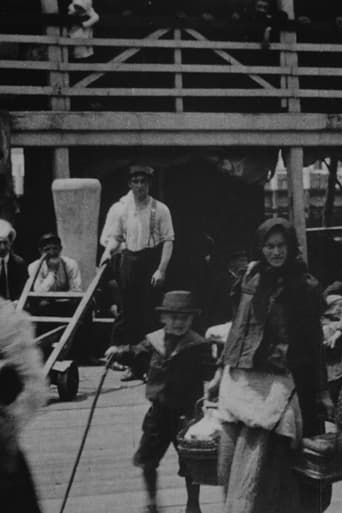
Jewish and Italian push-cart vendors crowd the sidewalks of New York's Lower East Side, selling fruit and vegetables beneath an elevated railway. When policemen appear to clear the street, the peddlers rush their heavily loaded carts away, anxious about arrest and spilled wares. Alfred C. Abadie photographed the scene for Edison in 1903 as a one-minute actuality preserved today by the Library of Congress.
Cast & crew
More films like this
More Documentary films
View all →
More from A.C. Abadie
View all →
More about this film
About the production
Release dateOctober 1903
ProductionEdison Manufacturing Company
Filmed inNew York City, New York, USA
Filmed on location in New York City's Lower East Side, the short represents one of the earliest examples of street documentary or 'actuality' filmmaking. The Edison Company frequently produced such short documentaries showcasing everyday urban life, often focusing on immigrant communities and their economic activities. The picture was shot using a portable camera, which was still relatively innovative for the time, allowing filmmakers to capture authentic street scenes rather than staged studio productions.
Themes
ImmigrationUrban lifeEconomic struggleAuthority vs. individualStreet commerce
Themes & topics
push-cart vendorsNew York Cityimmigrantspolicestreet vendorsLower East Sidedocumentaryactuality filmJewish vendorsItalian vendors
Historical background
Edison marketed the October 1903 release as a comic street document of immigrant commerce on the Lower East Side, part of a wave of urban actualities shot before narrative features dominated programs.
Why this film matters
Preservationists prize the reel for showing elevated trains, horse traffic, and push-cart culture at the moment nickelodeons were multiplying across Manhattan.
Making of
The filming of 'Move On' required the Edison camera crew to navigate the chaotic streets of New York's immigrant neighborhoods during a period when filming equipment was bulky and conspicuous. The filmmakers likely had to position themselves discreetly to capture authentic reactions from both vendors and police. The presence of a camera would have been a novelty in 1903, potentially affecting the behavior of subjects, though the picture appears to capture genuine moments of panic and urgency. The Edison Company employed a team of cameramen who specialized in these 'actuality' films, developing techniques for capturing spontaneous street scenes while maintaining visual quality. The production would have been challenging due to the unpredictable nature of street life, requiring the cameraman to anticipate moments of action and adjust quickly to changing conditions.
What critics said
Edison's catalog praised the 'combined fear and anxiety' on vendors' faces; modern scholars debate how much of the chase was staged yet still find the footage invaluable urban history.
Did you know?
- is part of Edison's 'actuality' series, which were early documentary films capturing real-life scenes rather than staged narratives
- the picture was shot during the peak period of Ellis Island immigration, when New York's Lower East Side was among the leading densely populated places on Earth
- Edison Manufacturing Company catalog described it as 'Very fine photographically' and noted the 'interesting and amusing' expressions on the vendors' faces
- the picture provides rare visual documentation of push-cart vending, a major economic activity for newly arrived immigrants in early 1900s NYC
- At only one minute long, it was typical of the extremely short films produced during cinema's infancy
- the picture n early example of ethnographic documentary, capturing the daily life and struggles of specific ethnic communities
- Police officers were commonly called 'bluecoats' during this period, hence the catalog's terminology
- the picture was likely shown as part of vaudeville programs alongside other short Edison productions
- It represents one of the earliest films to document police-civilian interactions in American urban settings
- The push-cart vendors shown would have been subject to strict city regulations regarding street vending, a source of constant tension
Visual style
The cinematography in 'Move On' reflects the technical limitations and innovations of early 1900s filmmaking. Shot on 35mm film using Edison's equipment, the camera was likely hand-cranked and required careful positioning to capture the street action. The black and white imagery shows remarkable clarity for the period, with sufficient detail to discern facial expressions and the contents of the vendors' carts. The fixed camera position, typical of the era, creates an observational perspective that enhances the documentary feel. The lighting would have been entirely natural, relying on daylight to illuminate the street scene, which contributes to the authentic quality of the footage.
Innovations
Move On demonstrates the portable camera technology that Edison Manufacturing Company had developed by 1903, allowing filmmakers to move beyond studio settings and capture authentic street scenes. the picture early documentary techniques for capturing spontaneous action and human emotion without staging. The ability to record clear images of moving subjects and facial expressions in an uncontrolled environment represented a significant technical achievement for the period. the picture also exemplifies the efficient production methods Edison had developed for creating short actuality films quickly and economically.
Famous quotes
The picture shows how the frightened peddlers hurry away when a bluecoat appears. Some of the carts are piled high with fruits of all kinds, and it is interesting and amusing to see the expressions of combined fear and anxiety on the faces of the men as they hurry away; the fear of being arrested if they stand, and of losing some of their wares if the carts strike an obstruction in the street. Very fine photographically.
Edison film company catalog description]
memorableScenes
preservationStatus
the picture is preserved in the Library of Congress collection and has been digitized as part of their early motion picture archives. It remains accessible through various film archives and educational institutions that specialize in early cinema. The survival of this 1903 film is remarkable given the fragility of early film stock and the loss rate of films from this period.
whereToWatch
What audiences thought
Early 1900s audiences would have viewed 'Move On' as both educational and entertaining, offering a glimpse into the bustling streets of New York City for those who had never visited. the picture's brief runtime and clear visual narrative would have made it accessible to audiences of the period, who were still acclimating to cinema as a medium. The spectacle of panicked vendors and the novelty of seeing real street life on screen likely provided amusement and curiosity for viewers. Modern audiences viewing the picture through archives and museums appreciate its historical value and the window it provides into immigrant experiences during the Progressive Era.
Film connections
Influenced by
- Edison Manufacturing Company's actuality film series
- Early documentary traditions
- Urban ethnographic photography
This film influenced
- Later documentary films about immigrant communities
- Urban social realist films
- Police procedural documentaries
Where to watch
- Internet Archive: https://archive.org/details/move_on_1903