Neck 'n' Neck
"Oswald takes Miss Rabbit out for a ride in his jalopy and soon finds."
Keys: Space play/pause · ←/→ 10s · F fullscreen · M mute · </> speed
About this film
Oswald takes Miss Rabbit out for a ride in his jalopy and soon finds himself in a race with a chasing police car.
Cast & crew
More films like this

More Animation films
View all →



More from Walt Disney
View all →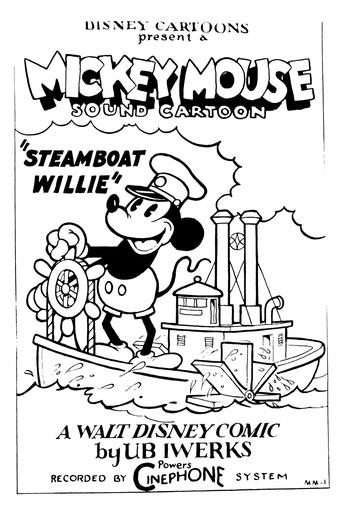

More about this film
About the production
Release dateMarch 19, 1928
Box officeUnknown - box office data for individual shorts from this era was not systematically recorded
ProductionWalt Disney Productions, Winkler Pictures
Filmed inLos Angeles, California - Disney studio on Hyperion Avenue
This was one of the final Oswald the Lucky Rabbit cartoons produced by Walt Disney before he lost the rights to the character. The film was created during a crucial transitional period when Disney was developing new animation techniques that would later be refined for Mickey Mouse. The cartoon showcases the rubber-hose animation style popular in the late 1920s, with characters having flexible, hose-like limbs without joints.
Themes
Pursuit and evasionCourtship and romanceRebellion against authorityTechnology and modernityComedy through chaos
Themes & topics
Historical background
Viewers in 1928 encountered Neck 'n' Neck alongside competing releases that were collectively teaching new cinematic grammar.
Why this film matters
Reference works on 1928 cinema cite Neck 'n' Neck when tracing genre and regional production patterns.
Making of
The production of 'Neck 'n' Neck' occurred during among the leading turbulent periods in Walt Disney's early career. Disney had created Oswald in 1927 under contract with producer Charles Mintz and Universal Pictures, achieving significant success with the character. However, by early 1928, Disney was in heated negotiations with Mintz for better compensation and creative control. While working on cartoons like 'Neck 'n' Neck,' Disney discovered that Mintz had secretly hired away most of his animators and planned to produce Oswald cartoons without Disney's involvement. This betrayal led Disney to lose the Oswald rights but also motivated him to create Mickey Mouse, who would debut later in 1928. The animation team working on this short included future Disney legends like Ub Iwerks and Les Clark, who would go on to revolutionize the animation industry.
What critics said
Modern retrospectives screen Neck 'n' Neck to illustrate 1928 pacing and camera norms.
Did you know?
- This was the 26th Oswald the Lucky Rabbit cartoon produced by Disney
- The film was released just months before Disney lost the rights to Oswald to Universal Pictures
- Oswald was Disney's first major animated star, predating Mickey Mouse
- The character of Miss Rabbit was one of Oswald's recurring love interests
- This cartoon features early examples of what would become Disney's signature chase sequences
- The police car in the film is anthropomorphized, a common trope in early animation
- Many Disney animators who worked on this cartoon later became key figures in the studio's golden age
- The film was originally released with a synchronized music and sound effects track
- Only fragments of this cartoon are known to survive today
- The jalopy car design was reused in several other Oswald cartoons
Visual style
The film utilized black and white 35mm film with standard silent-era aspect ratios. The animation employed the traditional cel animation process, with characters drawn on clear celluloid sheets over painted backgrounds. The visual style featured the rubber-hose animation technique popular in the late 1920s, with characters having exaggerated, flexible movements and no visible joints. The chase sequences made innovative use of perspective and speed lines to convey motion, techniques that were still being developed in animation at the time. The backgrounds were relatively simple but effective, using minimal detail to keep focus on the character action while still establishing the rural setting.
Innovations
While 'Neck 'n' Neck' doesn't feature groundbreaking technical innovations, it represents the refinement of animation techniques that Disney and his team were developing. The cartoon demonstrates improved character consistency and more fluid movement compared to earlier animations of the period. The effective use of timing and spacing in the animation creates believable momentum during the chase sequences. The film also shows early experimentation with camera angles and perspective to enhance the action, techniques that would become more sophisticated in later Disney works. The synchronization of character movement with musical rhythms, even in silent form, shows Disney's attention to the relationship between animation and music.
Music
Originally, 'Neck 'n' Neck' would have been accompanied by a musical score provided by the theater's organist or pianist, following the standard practice for silent films. Some theaters may have used the cue sheets provided by the studio, which suggested appropriate musical pieces for different scenes. The film was released just as sound-on-film technology was becoming available, and some later showings might have featured a synchronized music track. The typical score would have included upbeat, jaunty music for the driving sequences, romantic themes for the scenes with Miss Rabbit, and frantic, comical music during the chase portions.
Famous quotes
(Silent film - no dialogue, but intertitles would have included text such as 'Oswald takes Miss Rabbit for a spin!' and 'The long arm of the law!')
Memorable scenes
- The opening scene where Oswald proudly shows off his jalopy to Miss Rabbit, the car comically falling apart and reassembling itself as he demonstrates its features. The climactic chase sequence where Oswald uses increasingly absurd methods to evade the police car, including driving through barns, across fields, and even briefly flying through the air after hitting a bump. The final scene where Oswald, having apparently escaped, receives a kiss from Miss Rabbit just as the police car reappears, ending with a freeze-frame of their shocked expressions.
What audiences thought
Audiences in 1928 responded enthusiastically to Oswald the Lucky Rabbit cartoons, including 'Neck 'n' Neck.' The character was extremely popular with moviegoers, particularly children, and the shorts were reliable box office attractions for theaters. The combination of slapstick comedy, romantic elements, and the exciting chase sequence would have appealed to the broad family audiences of the era. The automobile theme was especially timely, as car ownership was rapidly increasing and represented modernity and freedom to 1920s audiences. While specific audience reactions to this particular cartoon aren't documented, the Oswald series as a whole was a commercial success until Disney lost the character.
Film connections
Influenced by
- Felix the Cat cartoons
- Charlie Chaplin's chase sequences
- Harold Lloyd's comedy films
- Mickey Mouse shorts (later influenced by Oswald)
- Contemporary newspaper comic strips
This film influenced
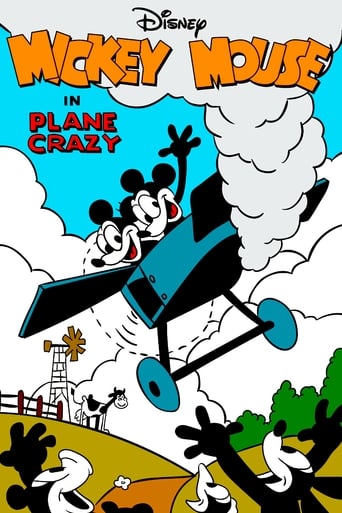
- Plane Crazy (1928)
- Steamboat Willie (1928)
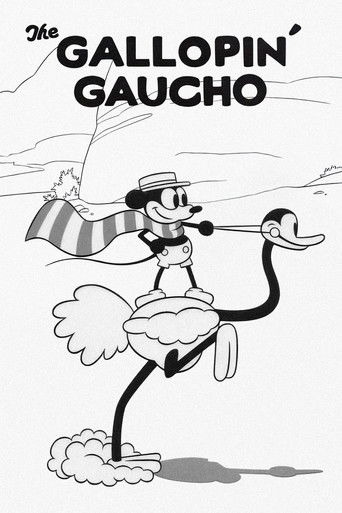
- The Gallopin' Gaucho (1928)
- Later Mickey Mouse chase cartoons
- Universal's later Oswald shorts
Film restoration
Unfortunately, 'Neck 'n' Neck' is considered a lost film, with no complete copies known to survive. Only fragments and still images from the cartoon exist in various archives and private collections. This is not uncommon for silent-era animated shorts, as nitrate film was highly volatile and many early cartoons were not preserved properly. The Walt Disney Archives and the Library of Congress hold some production materials and still photographs from the film, but the complete cartoon has not been located despite extensive searches by film historians and preservationists.
Where to watch
- Currently unavailable for viewing due to lost status
- Fragments may occasionally appear in documentary features about early Disney animation
- Still images and production materials can be found in Disney archival exhibitions
- The Oswald the Lucky Rabbit collection at the Disney Family Museum contains related materials