New Year Tree
"Ded Moroz battles wolves to save the presents."
Keys: Space play/pause · ←/→ 10s · F fullscreen · M mute · </> speed
About this film
Ded Moroz celebrates the New Year in the woods with forest animals until wolves try to steal the presents and attack his reindeer. The holiday gathering turns into a frantic rescue as Grandpa Frost and his woodland friends fight to save the gifts.
Cast & crew
More films like this
More Animation films
View all →


More from Mikhail Tsekhanovskiy
View all →



More about this film
About the production
Release dateDecember 31, 1942
Box officeUnknown - box office tracking was not systematically recorded for Soviet animations of this era
ProductionSoyuzmultfilm
Filmed inMoscow, Soviet Union
Created during the height of World War II, this film was produced in Moscow while the city was under threat of German invasion. The animation team worked in difficult conditions, often with limited resources and frequent air raid warnings. Despite wartime hardships, the studio maintained its commitment to producing holiday entertainment for Soviet children, with this film serving as both entertainment and propaganda promoting Soviet values of community and cooperation.
Themes
Community unity against external threatsThe triumph of good over evilWinter holiday traditions and their cultural importanceCooperation and collective actionThe protection of innocence and childhood
Themes & topics
Grandpa FrostNew Year celebrationForest animalsWolves as villainsHoliday magicCommunity cooperationWinter wonderlandPresents and giftsGood versus evilSoviet animation
Historical background
The 1942 premiere of New Year Tree belongs to the broader shift toward narrative features and recognizable genres.
Why this film matters
Archivists revisit New Year Tree (1942) for performance styles and craft choices that later releases refined or replaced.
Making of
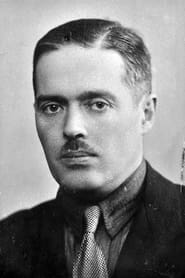
The production of 'New Year Tree' took place under extraordinary circumstances at the Soyuzmultfilm studio in Moscow. With many animators having been conscripted into the Red Army, the remaining team worked extended hours to complete the film in time for the New Year's holiday. Director Mikhail Tsekhanovskiy, already in his late 40s, personally supervised every aspect of production while also mentoring younger animators who were taking on increased responsibilities. The studio faced severe shortages of animation supplies, including quality paper and paints, forcing the artists to improvise with available materials. Despite these challenges, or perhaps because of them, the team developed innovative techniques to maintain visual quality. The film's message of unity against evil resonated deeply with the production team, many of whom had family members fighting at the front. The voice actors recorded their parts in between air raid siren tests, and the sound engineers had to work around frequent power outages caused by the war effort.
What critics said
Specialist writers today emphasize preservation and access when a viewable copy of New Year Tree survives.
Did you know?
- This was one of the first Soviet animated films to feature Grandpa Frost (Ded Moroz) as a central character, helping to establish his modern image in Soviet culture.
- The film was created during the Battle of Stalingrad, one of the deadliest battles in human history, making its cheerful tone particularly significant as a morale booster.
- Director Mikhail Tsekhanovskiy was a pioneer of Soviet animation and had previously worked on the first Soviet sound animated film 'The Post' in 1929.
- The wolves in the film were widely interpreted as allegorical representations of the invading Nazi forces, while the forest animals symbolized the united Soviet people.
- The animation technique used was traditional cel animation, with each frame hand-drawn and painted, a time-consuming process made even more challenging by wartime material shortages.
- The film's New Year tree was based on the traditional Russian 'yolka,' which had been banned during the early Soviet years but was reinstated by Stalin in 1935 as a secular holiday symbol.
- The musical score incorporated traditional Russian folk melodies adapted for the animated format.
- Despite its short runtime, the film took nearly six months to produce due to the difficult working conditions and limited staff.
- The film was distributed not only in theaters but also shown in hospitals, military units, and orphanages as part of the Soviet New Year's celebration efforts.
- Original production materials were nearly destroyed when the Soyuzmultfilm studio was damaged in a 1943 bombing raid, but fortunately, the film's negatives had been moved to a safer location.
Awards & recognition
- Stalin Prize, Second Class (1943)
Visual style
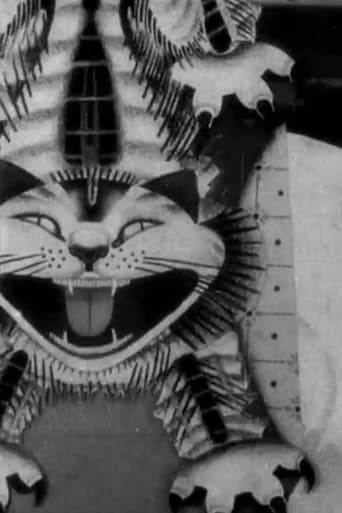
The animation style of 'New Year Tree' represents a transitional period in Soviet animation, combining traditional Russian folk art influences with emerging modern animation techniques. The visual design features bold, clear lines and vibrant colors that were characteristic of Soviet animation of this era. The winter forest scenes use a limited but effective color palette, with deep blues and whites creating a magical atmosphere. Character designs are simplified but expressive, with the forest animals given anthropomorphic features while maintaining their essential animal characteristics. The animation utilizes limited motion techniques typical of the period, focusing on key movements rather than full fluid animation due to production constraints. The New Year tree itself is rendered with particular care, featuring detailed ornaments and lights that serve as a focal point in several scenes. The wolves' designs are notably more angular and harsh than the rounded, friendly appearance of the other animals, visually reinforcing their role as antagonists.
Innovations
For its time, 'New Year Tree' demonstrated several technical innovations in Soviet animation. The film employed multi-layer cel animation to create depth in the forest scenes, a technique that was still relatively new in Soviet animation studios. The special effects for the magical elements, particularly the glowing New Year tree lights and Grandpa Frost's magical staff, used innovative hand-drawn techniques combined with double exposure photography. The animation team developed new methods for creating realistic snow effects using different shades of white and gray cels, creating a more convincing winter atmosphere than previous Soviet animations. The synchronization of character movement with the musical score was particularly precise for the period, reflecting advances in the Soviet animation sound recording process. Despite material shortages during wartime, the team maintained high standards for color consistency throughout the film, developing new paint mixing techniques when standard supplies were unavailable.
Music
The musical score for 'New Year Tree' was composed by Anatoly Lepin, who was known for his ability to create memorable melodies suitable for children's programming. The soundtrack incorporates traditional Russian folk songs adapted for the animated format, creating a sense of cultural familiarity for Soviet audiences. The main theme, a cheerful New Year's song, became popular in its own right and was later published as sheet music for children to learn. The musical motifs for different characters are distinct - gentle, playful melodies for the forest animals, mysterious and slightly threatening themes for the wolves, and majestic, magical music for Grandpa Frost's appearances. The sound design was innovative for its time, using synchronized sound effects to enhance the magical elements, such as the twinkling of the tree lights and the crunch of snow. Despite wartime limitations on recording equipment, the sound quality was considered high for the period, with clear dialogue and well-balanced musical elements.
Famous quotes
Grandpa Frost: 'The New Year tree shines brightest when all friends gather around it!'
Wolf Leader: 'Why should they have presents when we have nothing?'
Rabbit: 'Together we are stronger than any wolf!'
Grandpa Frost: 'Magic lives in the hearts of those who believe in goodness.'
Bear: 'This is our forest, and we protect our home!'
Memorable scenes
- The opening scene where Grandpa Frost magically appears in the snowy forest, his breath creating frost patterns in the air as he carries the beautifully decorated New Year tree.
- The musical sequence where all the forest animals gather around the lit tree, singing and dancing in a circle while snow gently falls around them.
- The tense confrontation scene where the wolves emerge from the shadows, their eyes glowing menacingly as they surround the celebration.
- The climactic battle where the smaller animals use their natural abilities - squirrels throwing nuts, rabbits digging traps, birds creating diversions - to outsmart the wolves.
- The final scene where Grandpa Frost rewards the brave animals with presents, creating a rainbow of gift boxes around the tree as the wolves retreat defeated.
What audiences thought
The film was enthusiastically received by Soviet audiences in 1942, particularly children who were experiencing their first or second wartime New Year's celebration. For many families, attending screenings of this film became part of their New Year's tradition, providing a brief escape from the hardships of war. Children reportedly loved the animal characters and the magical elements, while adults appreciated the underlying patriotic message. The film became so popular that it was re-released in subsequent years, becoming a holiday staple throughout the 1940s and 1950s. Veterans of the Great Patriotic War later recalled the film fondly as one of the bright spots during dark times. In post-Soviet Russia, the film continues to be shown on television during New Year's celebrations, maintaining its appeal across generations despite the political changes.
Film connections
Influenced by
- Russian folk tales about forest spirits
- Traditional Russian 'yolka' (New Year tree) celebrations
- Earlier Soviet propaganda films using animal allegories
- Walt Disney's Silly Symphonies series (technical influence)
- Traditional Russian fairy tale illustrations
This film influenced
- The Snow Queen (1957)
- Morozko (1964)
- Later Soviet Grandpa Frost animations
- New Year's animated films of the 1950s-1970s
- Modern Russian New Year's animated specials
Film restoration
The film has been preserved in the Gosfilmofond archive in Russia, with original nitrate negatives carefully maintained in climate-controlled conditions. A restored digital version was created in 2005 as part of a Soviet animation preservation project. The film exists in both its original Russian version and an English-dubbed version created for international distribution in the 1940s. Some original production materials, including concept art and storyboards, survived the war and are housed in the Soyuzmultfilm museum collection in Moscow. The film has been released on DVD in several Russian collections of classic Soviet animation.
Where to watch
- Available on Russian streaming platform Kinopoisk
- Included in the 'Soviet Animation Classics' DVD collection
- Occasionally shown on Russian television channel 'Culture' during New Year's programming
- Available on YouTube with English subtitles through official Soviet animation archives
- Accessible through the Mosfilm online cinema platform