
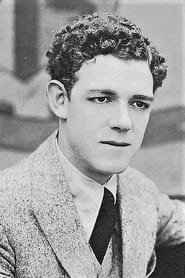
One A.M.
"Chaplin staggers home to a hostile house"
Keys: Space play/pause · ←/→ 10s · F fullscreen · M mute · </> speed
About this film
A drunken homeowner has a difficult time getting about in his home after arriving home late at night. is a unique Charlie Chaplin silent film created for Mutual Film in 1916. It was the first film he starred in alone, and also one of the very few films in which he did not play the Tramp character.
Cast & crew
More films like this

More Comedy films
View all →







More from Charlie Chaplin
View all →


More about this film
About the production
Release dateAugust 7, 1916
Box officeUnknown (Mutual films were highly profitable, with Chaplin's comedies grossing significantly more than their production costs)
ProductionMutual Film Corporation
Filmed inLos Angeles, California, Charlie Chaplin Studios (under construction during filming)
One A.M. is notable for being essentially a one-man show, with Chaplin carrying the entire film with minimal supporting cast. The film was shot during the construction of Chaplin's own studio, and some scenes were filmed in the partially completed building. Albert Austin appears briefly as a taxi driver in the opening sequence, making this one of Chaplin's most solo performances. The mounted animal prop was reportedly difficult to work with, requiring multiple takes to achieve the desired comedic effect of it seemingly coming to life.
Themes
Intoxication and loss of controlThe struggle between man and his environmentThe comedy of failureIsolation and lonelinessThe absurdity of everyday obstacles
Themes & topics
drunkennessphysical comedysolo performancehomecomingstrugglestairstaxidermylate nightmansionobstacles
Historical background
One A.M. appeared in 1916, when the silent era before Hollywood consolidated into a studio system shaped how movies were financed, distributed, and discussed. Audiences of the day encountered the work amid shifting tastes in acting, pacing, and spectacle. Its focus on a drunken homeowner has a difficult time getting about in his home after arriving home late at night mirrors themes circulating in popular culture of that moment.
Why this film matters
One A.M. (1916) belongs to the wider archive of world cinema, documenting a drunken homeowner has a difficult time getting. Archivists and historians value such titles for what they reveal about craft, genre, and audience expectations. Restorations and festival screenings keep the work visible to viewers far beyond its first run.
Making of
The production of One A.M. was unique in Chaplin's filmography due to its minimalist cast. Chaplin wanted to prove he could carry an entire film with his performance alone, proof of his confidence in his comedic abilities. The filming was particularly challenging because Chaplin was simultaneously directing, writing, and performing complex physical comedy. The famous staircase sequence required Chaplin to fall repeatedly, and he reportedly suffered several minor injuries during filming. The taxidermy animal prop was so realistic that it unnerved the cast and crew, with Chaplin having to overcome his own discomfort to perform the scenes. The film was made during a particularly creative period in Chaplin's career, when he had complete artistic control under his lucrative Mutual contract.
What critics said
Press coverage from 1916 is fragmentary for many titles of this vintage; surviving notices for One A.M. tend to stress novelty, star power, or topical appeal. Later writing places the picture within its national and generic context, weighing both period conventions and moments that still land for modern viewers. Streaming and disc releases have revived discussion among classic-film audiences.
Did you know?
- This is one of the few Chaplin films where he appears alone for almost the entire duration, making it essentially a one-man show
- The title 'One A.M.' refers to the time the character returns home, though the entire action takes place in what seems like hours of struggle
- Albert Austin, who appears briefly as the taxi driver, was one of Chaplin's most reliable supporting actors, appearing in many of his Mutual films
- The film was shot while Chaplin was building his own studio, with some scenes filmed in the unfinished structure
- The mounted animal head that Chaplin struggles with was a real taxidermy piece that Chaplin reportedly found terrifying to work with
- This film showcases Chaplin's ability to create comedy without dialogue or other characters, relying solely on physical performance
- The staircase sequence required extensive rehearsal and was considered among the leading dangerous stunts Chaplin performed
- Chaplin was paid $670,000 by Mutual Film Corporation for a 12-film contract, making One A.M. part of among the leading lucrative deals of the silent era
- The film's minimalist approach influenced later comedians who performed solo routines
- Some critics consider this Chaplin's most purely physical comedy film, devoid of the social commentary present in many of his other works
Visual style
The cinematography in One A.M. was handled by Roland Totheroh, Chaplin's trusted cameraman. The film features innovative camera work for its time, including low-angle shots that emphasize the height of the staircase and close-ups that capture Chaplin's facial expressions during his struggle. The lighting was carefully orchestrated to create shadows that enhance the feeling of a dark, disorienting home late at night. Totheroh used moving shots to follow Chaplin's movements through the house, creating a sense of continuous action that was advanced for 1916. The film's visual composition demonstrates Chaplin's understanding of cinematic space and how to use it for comedic effect.
Innovations
One A.M. showcased several technical innovations for its time. The film utilized complex camera movements that were difficult to achieve with the bulky equipment of 1916. The staircase sequence required innovative rigging to capture Chaplin's falls from multiple angles. The film also demonstrated sophisticated editing techniques, with precise timing between shots to maximize comedic effect. Chaplin's use of props, particularly the mounted animal and moving furniture, represented an advancement in how inanimate objects could be used to create character and comedy in film. The production also benefited from improved film stock that allowed for better low-light filming, essential for the nighttime setting.
Music
As a silent film, One A.M. was originally accompanied by live musical performance in theaters. Chaplin himself composed musical themes for many of his films, though specific compositions for One A.M. are not well-documented. Typical theater orchestras would have used popular comedic pieces of the era, along with classical selections that matched the on-screen action. When the film was later restored and released for home video, new musical scores were composed by Chaplin historians and silent film accompanists. These scores typically incorporate light, playful melodies that enhance the comedy without overwhelming the visual performance.
Famous quotes
As a silent film, One A.M. contains no spoken dialogue, but Chaplin's character communicates through grunts, groans, and expressive facial movements throughout his struggle
Memorable scenes
- The staircase sequence where Chaplin attempts to climb the grand stairs while intoxicated, repeatedly falling and tumbling back down in increasingly inventive ways. This scene showcases Chaplin's mastery of physical comedy and his ability to find humor in failure and persistence.
What audiences thought
One A.M. was enormously popular with audiences upon its release, drawing large crowds to theaters across America. Viewers were particularly impressed by Chaplin's ability to maintain their interest throughout the entire 25-minute performance without other characters to interact with. The film's universal theme of struggling with simple tasks while intoxicated resonated with audiences of all classes and backgrounds. Contemporary newspaper accounts reported that audiences laughed continuously throughout the screening, with some theaters reporting that they had to run the film multiple times per day to meet demand. The film's success contributed to Chaplin's status as the biggest international star of the 1910s.
Film connections
Influenced by
- French comedic theater traditions
- Music hall performance styles
- Earlier silent film comedies by Mack Sennett
- Commedia dell'arte character archetypes
This film influenced
- The Gold Rush (1925) - for its solo survival sequences
- City Lights (1931) - for its physical comedy elements
- Modern Times (1936) - for its machine vs. man struggle themes
- Jacques Tati's Monsieur Hulot films - for their minimalist dialogue and physical comedy
Film restoration
One A.M. has been preserved and restored by the Chaplin estate and film archives. The film exists in its complete form and has been included in several Chaplin collections and DVD/Blu-ray releases. The restoration work has ensured that the film's visual quality remains clear for modern audiences, though some minor deterioration typical of films from this period is still visible. The film is part of the permanent collection at the British Film Institute and the Library of Congress.
Where to watch
- The Criterion Collection (Chaplin Mutual Comedies box set)
- The Chaplin Revue DVD collection
- Various streaming services specializing in classic cinema
- Film archives and museums that screen silent films
- Public domain versions available on some internet archive sites (though quality varies)