One Day in Soviet Russia
"One day across the Soviet Union"
Keys: Space play/pause · ←/→ 10s · F fullscreen · M mute · </> speed
About this film
On 24 August 1940, Soviet camera crews crossed the USSR filming factories, farms, schools, and daily life months before the Nazi invasion. The resulting compilation aimed to present a unified socialist homeland to domestic and foreign viewers.
Cast & crew
More Documentary films
View all →

More about this film
About the production
Release date1940
ProductionMosfilm Studio, Soviet State Committee for Cinematography (Goskino)
Filmed inMoscow, Soviet Union, Various locations across the USSR including collective farms, industrial centers, and rural communities
The film was part of the Soviet Union's international propaganda efforts to showcase the achievements of socialism to foreign audiences. The production involved multiple camera teams working simultaneously across different time zones to capture the 'one day' concept. Quentin Reynolds, an American journalist, served as narrator and commentator for the international version, lending Western credibility to the Soviet production. The filming took place during a critical historical period, just months before the German invasion of the Soviet Union in June 1941.
Themes
Socialist progress and achievementUnity of the Soviet peoplesIndustrialization and modernizationCollectivization and agricultural reformInternational solidarity
Themes & topics
documentarypropagandaSoviet Unionindustrializationcollective farmssocialismpre-WWIIdaily lifeMoscowworkerseducationagricultureindustryprogressunity
Historical background
One Day in Soviet Russia belongs to late Stalin-era documentary propaganda showcasing modernization before World War II reshaped Soviet cinema priorities.
Why this film matters
This documentary represents an important example of Soviet cinematic propaganda from the pre-WWII period, demonstrating how the USSR used film as a tool for international diplomacy and image management. The film's innovative 'one day' structure influenced later documentary filmmaking techniques, particularly in its ambitious scope and logistical complexity. For Western audiences, the film provided one of the few visual records of everyday life in the Soviet Union during this period, albeit through a carefully curated lens. The collaboration with Quentin Reynolds marked a rare instance of Soviet-Western media cooperation during this tense political period. The film now works as an invaluable historical document, preserving images of Soviet society and infrastructure that would be irrevocably changed by the war. Its preservation of pre-war Soviet architecture, technology, and social customs makes it an important resource for historians studying this period.
Making of
The production of 'One Day in Soviet Russia' was a massive logistical undertaking requiring coordination between multiple film crews spread across the vast Soviet territory. Director Mikhail Slutsky and his team had to meticulously plan the filming schedule to ensure all crews captured their footage within the same 24-hour period. The involvement of Quentin Reynolds was a strategic decision by Soviet authorities to make the film more palatable and credible to Western audiences. Reynolds was given unprecedented access to Soviet facilities and communities, though his movements were carefully controlled by Soviet officials. The filming process required special permits and coordination with various Soviet ministries and local authorities. The technical challenges were significant, including transporting equipment to remote locations and dealing with varying weather conditions across different regions. The post-production process involved editing footage from multiple sources and creating a cohesive narrative that presented the Soviet Union in the most favorable light possible.
What critics said
Historians read it as staged optimism; visually it documents 1940 architecture and public ritual.
Did you know?
- The film was shot in a single day, August 24, 1940, using multiple camera teams across the Soviet Union's eleven time zones
- Quentin Reynolds, the American narrator, was a prominent war correspondent for Collier's magazine who later became known for his WWII reporting
- The film was one of the last major Soviet documentaries made before the German invasion of the USSR
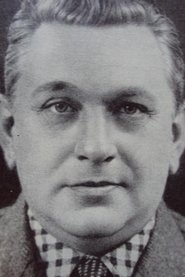
- Director Mikhail Slutsky was a Soviet documentary filmmaker known for his innovative techniques
- The international version featuring Reynolds' narration was distributed in the United States and other Western countries
- The film showcased several major Soviet construction projects and industrial achievements that would later become strategic targets during WWII
- Many of the locations and people featured in the film would be affected by the German invasion less than a year later
- The documentary was part of a series of Soviet films aimed at presenting a positive image of the USSR to foreign audiences
- The film's release coincided with the peak of the Nazi-Soviet non-aggression pact period
- Original Soviet version had different narration and was longer than the international release
Awards & recognition
- Stalin Prize (Second Degree) for Documentary Film, 1941
Visual style
The film employed innovative documentary techniques for its time, including mobile camera work, aerial photography, and synchronized filming across multiple locations. The cinematographers utilized both handheld cameras for intimate scenes and fixed cameras for industrial processes, creating a comprehensive visual record. The film made extensive use of wide shots to emphasize the scale of Soviet industrial projects and collective farms. Lighting techniques were adapted for various indoor and outdoor locations, from factory floors to agricultural fields. The visual style combined the aesthetic principles of socialist realism with documentary realism, creating images that were both informative and artistically composed. The film's technical achievements were particularly notable given the challenging conditions of filming across diverse Soviet locations in a single day.
Innovations
The film's most significant technical achievement was its successful execution of the 'single day' filming concept across the vast Soviet territory. This required unprecedented coordination between multiple camera teams, synchronized timekeeping across eleven time zones, and meticulous planning of transportation and logistics. The production utilized the latest Soviet camera equipment and film stock, ensuring high-quality footage in diverse lighting conditions. The film demonstrated advanced techniques in location sound recording, capturing clear audio in industrial and outdoor settings. The editing process was technically complex, requiring the seamless integration of footage from multiple sources while maintaining narrative continuity. The film also employed innovative techniques in aerial photography, providing sweeping views of Soviet industrial and agricultural projects.
Music
The musical score was composed by Soviet composers and featured a mix of traditional Russian folk music and contemporary socialist compositions. The soundtrack included patriotic songs and workers' anthems that reinforced the film's ideological message. For the international version, the original score was retained but Quentin Reynolds' English narration was layered over the Soviet soundtrack. The audio engineering was sophisticated for its time, featuring clear field recordings of industrial processes, agricultural activities, and interviews with Soviet citizens. The sound design emphasized the sounds of progress and productivity, with machinery, trains, and collective activities prominently featured in the audio mix.
What audiences thought
The film generated significant interest among Western audiences curious about life in the Soviet Union, which remained largely mysterious to most Americans and Europeans. Viewers were fascinated by the glimpses of Soviet industrial achievements and daily life, though many recognized the film's propagandistic nature. In the Soviet Union, the film was shown widely as part of patriotic education programs, reinforcing pride in socialist achievements. The film's timing, just before the Soviet Union became an Allied power, gave it particular resonance in the West as audiences sought to understand their future Soviet allies. Post-war audiences viewed the film with renewed interest as a document of the world that had been lost to the devastation of the Eastern Front.
Film connections
Influenced by
- Soviet montage theory
- Leni Riefenstahl's documentary techniques
- John Grierson's documentary movement
- Socialist realist art principles
This film influenced
- Russian Miracle
- The Fall of Berlin
- The Unforgettable Year 1919
- Communist
- similarFilms
Where to watch
- Wikimedia Commons: https://commons.wikimedia.org/wiki/File:%D0%94%D0%B5%D0%BD%D1%8C%20%D0%BD%D0%BE%D0%B2%D0%BE%D0%B3%D0%BE%20%D0%BC%D0%B8%D1%80%D0%B0%20(1940).webm