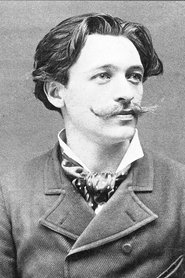

Petit Faust
"The price of the"
Keys: Space play/pause · ←/→ 10s · F fullscreen · M mute · </> speed
About this film
On the eve of 1910, The various parts of Faust are played by puppets.
Cast & crew
More Animation films
View all →


More from Émile Cohl
View all →
More about this film
About the production
Release date1910
Box officeUnknown - box office tracking was not systematically recorded for early French shorts
ProductionSociété des Etablissements L. Gaumont
Filmed inParis, France
Petit Faust was created using Émile Cohl's innovative puppet animation technique, which involved manipulating jointed puppets frame by frame. The production required meticulous craftsmanship, with each puppet carefully constructed with movable joints to enable smooth motion. Cohl worked with a small team of craftspeople to create the detailed puppet characters and miniature sets. The filming process was extremely time-consuming, with each second of screen time requiring numerous individual photographs of the puppets in slightly different positions.
Themes
The temptation of power and knowledgeThe consequences of making deals with supernatural forcesThe conflict between age and youthMoral redemption and salvationThe dangers of unchecked ambition
Themes & topics
puppetsanimationFaustdevilpactsupernaturaltransformationtemptationredemptionmagicscholaryouthconsequences
Historical background
Production in 1910 placed Petit Faust among silent era releases competing for attention in a rapidly expanding market.
Why this film matters
Retrospective programs include Petit Faust when mapping silent era output across genres and national cinemas.
Making of
The creation of Petit Faust represented a significant technical challenge for Émile Cohl and his team in 1910. The puppets were meticulously crafted by hand, with each figure requiring hours of detailed work to create the necessary articulation points for smooth movement. Cohl developed a specialized lighting setup to minimize shadows and ensure the puppets appeared three-dimensional on screen. The animation process involved moving each puppet incrementally between frames, a technique that required enormous patience and precision. Cohl reportedly worked with a small crew of assistants who helped position the puppets while he operated the camera. The miniature sets were built to scale with the puppets, creating a cohesive visual world. The production took several weeks to complete, an unusually long time for a short film in that era, due to the labor-intensive nature of the animation process.
What critics said
Festival revivals have renewed discussion of Petit Faust among silent era specialists.
Did you know?
- Émile Cohl is often called 'the father of the animated cartoon' and Petit Faust represents one of his earliest experiments with puppet animation
- The film is one of the earliest known examples of stop-motion puppet animation in cinema history
- Cohl had previously worked with Georges Méliès, which influenced his approach to fantastical storytelling
- The puppets used in the film were reportedly made of paper-mâché and wire framework for articulation
- This adaptation predates many other famous Faust films, including F.W. Murnau's 1926 version
- The film was originally released as part of Gaumont's theatrical program, shown before feature presentations
- Only fragments of the original film are known to survive today, making it a partially lost film
- Cohl created several other literary adaptations using similar techniques around the same period
- The film's title 'Petit Faust' (Little Faust) distinguishes it from other contemporary adaptations of the story
- The animation technique used was groundbreaking for its time, predating more famous stop-motion works by over a decade
Visual style
The cinematography of Petit Faust employed early film techniques adapted for animation. Cohl used a stationary camera positioned to capture the puppet stage from a fixed angle, a common practice in early animation. The lighting was carefully arranged to create depth and highlight the three-dimensional quality of the puppets while minimizing unwanted shadows. The film was shot on black and white film stock, with contrast used to emphasize the magical elements of the story. The camera work demonstrates Cohl's understanding of how to frame miniature sets to create the illusion of a full-scale world. Each frame was composed with attention to visual storytelling, using the limited space of the puppet stage effectively. The surviving footage shows a sophisticated use of focus and depth of field that was advanced for animation of the period.
Innovations
Petit Faust represents several important technical achievements in early cinema. The film pioneered puppet animation techniques that would influence generations of animators. Cohl developed methods for creating articulated puppets that could be manipulated smoothly between frames, solving technical challenges that had limited earlier attempts at three-dimensional animation. The film demonstrated sophisticated understanding of timing and movement in animation, creating more naturalistic motion than many contemporaneous animated works. The production also showcased advances in miniature set construction and lighting for animation. Cohl's approach to staging the action within the limited space of the puppet stage showed innovative solutions to spatial constraints. The film's survival, even in fragmentary form, provides valuable documentation of early animation techniques that might otherwise have been lost to history.
Music
As a silent film from 1910, Petit Faust would have been accompanied by live musical performance during theatrical exhibition. The specific musical score is not documented, but theaters typically provided appropriate accompaniment based on the film's content. Given the film's basis in the Faust legend, it likely would have been accompanied by classical or theatrical music appropriate to the dramatic and supernatural elements. The music would have been performed by a pianist or small theater orchestra, with selections possibly including pieces from Gounod's opera 'Faust,' which was extremely popular at the time. The musical accompaniment would have helped establish mood and emphasize the dramatic moments in the story.
Famous quotes
No dialogue is available as this is a silent film from 1910
Memorable scenes
- The transformation scene where the aged Faust becomes young again through the devil's magic, achieved through clever puppet manipulation and possibly substitution techniques
- The climatic confrontation between Faust and Mephistopheles, showcasing the dramatic possibilities of puppet animation
- The introduction of the devil character, which would have been visually striking through puppet design and movement
What audiences thought
Audience reception of Petit Faust in 1910 is not extensively documented, but contemporary reports suggest that audiences were fascinated by the novel technique of puppet animation. The film was reportedly well-received in Parisian theaters, where audiences were accustomed to experimental cinema from Gaumont. The magical quality of the moving puppets would have been particularly impressive to early cinema audiences who were still discovering the possibilities of the medium. The familiar Faust story likely helped audiences connect with the innovative presentation. Modern audiences who have seen the surviving fragments often express amazement at the sophistication of the animation for its time period, though the incomplete nature of the surviving material makes full appreciation challenging.
Film connections
Influenced by
- Goethe's 'Faust' (the primary literary source)
- Georges Méliès' trick films (technical influence)
- Traditional puppet theater traditions
- Operatic adaptations of Faust, particularly Gounod's version
- Earlier French animation experiments
This film influenced
- Later stop-motion animation works
- Other literary adaptations in animation
- French animated shorts of the 1910s
- Puppet animation techniques developed by other pioneers
Film restoration
Petit Faust is considered a partially lost film. Only fragments of the original production are known to survive, preserved in film archives. The surviving material is held by various film institutions, including the Cinémathèque Française. The incomplete nature of the surviving footage makes it difficult to appreciate Cohl's complete vision for the film. Preservation efforts have focused on stabilizing the existing fragments and preventing further deterioration. The film's status as a partially lost work makes it particularly valuable to animation historians, as surviving footage provides rare insight into early puppet animation techniques.
Where to watch
- Due to its status as a partially lost film from 1910, Petit Faust is not commercially available. Surviving fragments may occasionally be shown at film archives specializing in early cinema, such as the Cinémathèque Française in Paris. Some fragments may be included in educational programs or retrospectives of early animation. The film is not available on streaming platforms or home video. Researchers and serious film scholars may be able to access archival copies through specialized film libraries or museum collections.