Pistol Duel
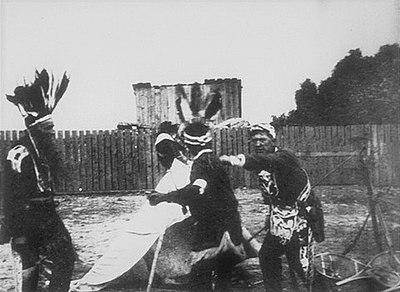
"Mexican deputies duel in Chapultepec Park."
Keys: Space play/pause · ←/→ 10s · F fullscreen · M mute · </> speed
About this film
A dramatic pistol duel between two men, reenacting a real-life political confrontation that occurred between two deputies in Mexico's Chapultepec Park. The film shows the two opponents facing each other, drawing their pistols, and exchanging fire in a tense confrontation typical of honor duels of the era. The action culminates with one of the duelists falling to the ground after being struck by a bullet, while the other stands victorious. The entire sequence captures the dramatic tension and fatal consequences of the real political dispute that inspired the film. As was typical of films from t…
Cast & crew
More films like this
More Drama films
View all →







More from Gabriel Veyre
View all →

More about this film
About the production
Release date1896
Box officeNot tracked in 1896; films were shown as part of variety programs
ProductionLumière
Filmed inFrance (likely Lyon area, where Lumière was based)
Filmed using the Lumière Cinématographe, this was one of the earliest narrative films created. The production would have been extremely simple by modern standards, requiring only two actors, basic costumes, and prop pistols. The entire film was likely shot in one take, as editing technology did not exist yet. Gabriel Veyre was working as an operator for the Lumière company when he made the production, which was distributed as part of their catalog of short subjects.
Themes
HonorPolitical conflictViolenceRevengeJustice
Themes & topics
DuelPistolsPolitical conflictDeathConfrontationReenactmentViolence
Historical background
Pistol Duel (1896) reached screens through Lumière. Exhibitors of the time built nickelodeon-era programs that mixed shorts, features, and live acts, so a clear premise helped Pistol Duel travel between cities and exchange markets.
Why this film matters
Archivists and revival programmers still cite Pistol Duel (1896) when tracing studio habits, casting pools, and the visual rhetoric audiences once took for granted. Even modest surviving prints help map how Pistol Duel fit beside competing releases of its day.
Making of
Gabriel Veyre created the production while working as one of the Lumière company's early cinematographers. The production would have been remarkably simple by any modern standard - likely filmed outdoors with natural lighting, using the hand-cranked Cinématographe camera. The two actors would have been local performers or possibly Veyre himself and an assistant, as professional film actors did not yet exist. The pistols were props, and the 'gunshot' effects would have been achieved through the actors' performances rather than any special effects. The entire film was shot in one continuous take, as editing technology had not yet been developed. Veyre's approach to this political subject shows the early ambition of filmmakers to move beyond simple documentation of everyday life into dramatic storytelling.
What critics said
Trade coverage around 1896 discussed Pistol Duel for pacing, clarity, and program fit rather than blockbuster grosses. Later writers value it as evidence of period style and as a reference point beside other films from the same era.
Did you know?
- This is one of the earliest examples of a narrative film based on a real political event
- Gabriel Veyre was a pioneering filmmaker who later became famous for his work in documenting the French colonies
- The film was created just one year after the Lumière brothers invented the Cinématographe
- At less than 60 seconds, it represents the typical length of films from cinema's first year
- The real duel it depicts was a political scandal in Mexico between deputies Ignacio Martínez and José María Villanueva
- the production demonstrates how early cinema quickly moved from simple actualities to staged dramatic recreations
- Veyre would later become an important documentarian of Morocco and other French colonial territories
- The film was likely shown as part of Lumière's traveling cinema programs that amazed audiences worldwide
- No copies of this specific film are known to survive, making it a lost film of cinema's earliest period
- The pistol duel genre would become a recurring theme in early Western films of the 1900s
Visual style
The cinematography would have been extremely basic by modern standards, utilizing the Lumière Cinématographe camera which was both a camera, developer, and projector. The film was likely shot outdoors using natural daylight, as artificial lighting for film had not yet been developed. The camera would have been stationary on a tripod, capturing the action in a single wide shot, as camera movement was not yet practiced. The frame would have been approximately 1.33:1 aspect ratio, standard for early films. The entire sequence was filmed in one continuous take, creating a theatrical, stage-like presentation. The visual style would have been stark and direct, with no close-ups or changes in perspective.
Innovations
The primary technical achievement of the production was its creation using the revolutionary Lumière Cinématographe, which was lighter and more portable than Edison's Kinetoscope. The film demonstrated early narrative storytelling capabilities despite technical limitations. The ability to recreate a dramatic event with actors and props showed the potential of cinema beyond simple documentation. However, the film was technically primitive even for its time, lacking any camera movement, editing, or special effects that would soon become standard in filmmaking.
Music
As a silent film from 1896, there was no synchronized soundtrack. The film would have been accompanied by live music during exhibition, typically a pianist or small orchestra playing appropriate dramatic music. The choice of music would have been left to the individual exhibitor or theater musician. Sound effects, such as gunshots, might have been created live by the theater staff or musicians. The lack of recorded sound meant that the entire dramatic effect depended on the visual action and live musical accompaniment.
Memorable scenes
- The climactic moment when one duelist falls after being shot, representing the fatal consequences of the political dispute that inspired the film
What audiences thought
1896 audiences were typically astonished by any moving images, as the technology was completely new. A dramatic reenactment of a real pistol duel would have been particularly thrilling for viewers of the era. The film would have been shown as part of a variety program of short films, each lasting less than a minute. Contemporary accounts suggest that audiences reacted with gasps and excitement to dramatic films like this one. The novelty of seeing a reenactment of a real political event from another country would have added to the film's appeal. However, detailed audience reactions from this period are scarce, as film criticism and audience surveys did not yet exist in any systematic form.
Film connections
Influenced by
- Stage melodrama
- Theatrical traditions
- Newspaper accounts of real events
This film influenced
- Early Western films
- Duel films
- Political drama shorts
Film restoration
Lost film - no known copies survive. Like approximately 75% of films from the 1890s, this early Lumière production is considered lost, existing only in written descriptions and film catalogs.
Where to watch
- Not available for viewing - considered a lost film. Some film archives may have written descriptions or catalog entries, but no visual material survives.