Poor Papa
"Love, loss, and oswald"
Keys: Space play/pause · ←/→ 10s · F fullscreen · M mute · </> speed
About this film
Over Jazz Age life, oswald gets a visit from the stork ... again and again and again. He has to resort to a variety of strategies to stop the continual flow of babies.
Cast & crew
More films like this

More Animation films
View all →


More from Walt Disney
View all →

More about this film
About the production
Release dateAugust 20, 1928 (though produced in 1927)
Box officeBox office figures for individual shorts not tracked during this era
ProductionWalt Disney Productions, Winkler Pictures, Universal Pictures
Filmed inLos Angeles, California - Disney Studio on Hyperion Avenue
Poor Papa was actually the first Oswald cartoon produced but was initially rejected by Universal distributor Charles Mintz for being too crude and not having enough gags. The cartoon was later released after Oswald became successful, making it one of the last Disney-produced Oswald shorts. The animation was created using traditional cel animation techniques with each frame hand-drawn and inked. The production faced significant challenges as Disney and his team were still developing their animation style and techniques during this period.
Themes
Overwhelming parenthoodDomestic chaosPersistence vs. resistanceUnwanted responsibilitiesComedy of desperation
Themes & topics
storkbabiesdeliveryparenthoodoverwhelmedchasecomedysilent filmanimationrabbitfamilydesperationphysical humor
Historical background
Audiences in 1928 encountered Poor Papa at a point when the Jazz Age was reshaping what movies could say and show. It is the first cartoon produced in 1927 to feature Oswald the Lucky Rabbit, but its release was held back due to Universal Pictures' displeasure over its premise.
Why this film matters
Poor Papa continues to attract interest because it captures a distinctive Jazz Age approach to character and spectacle.
Making of
The production of Poor Papa marked a crucial moment in Disney's early career. Walt Disney and Ub Iwerks developed Oswald specifically for Universal Pictures, with Disney hoping to create a character that could compete with Felix the Cat. The initial rejection of Poor Papa by Universal executive Charles Mintz was devastating to Disney, who had poured significant resources into the cartoon. Mintz demanded changes to Oswald's design, wanting him to be younger and more appealing. This led to a redesign that made Oswald sleeker and more heroic. The production team worked tirelessly in their small Hyperion Avenue studio, with animators often working late into the night to meet deadlines. The cartoon's theme of unexpected parenthood may have reflected Disney's own anxieties about his growing family and business responsibilities. The technical challenges of animating multiple babies simultaneously pushed the studio's capabilities and led to innovations in crowd animation techniques.
What critics said
Later criticism frames Poor Papa through restoration quality and its director or studio filmography.
Did you know?
- Poor Papa was the very first Oswald the Lucky Rabbit cartoon produced but wasn't released until after several other Oswald shorts had already been shown in theaters
- The cartoon was initially rejected by Universal's Charles Mintz who complained that Oswald looked too old and fat and that the cartoon lacked enough jokes
- This was one of the last Disney-produced Oswald cartoons before Disney lost the rights to the character to Universal in a bitter contract dispute
- The stork character in this cartoon would later influence similar characters in Disney animations, including the stork in Dumbo (1941)
- Oswald's design in Poor Papa shows an earlier, rounder version of the character before he was redesigned to be sleeker and more rabbit-like
- The baby delivery theme was a popular trope in early animation, reflecting 1920s anxieties and humor about family size and parenthood
- The cartoon features some of the most complex crowd scenes Disney had attempted up to this point with multiple babies on screen simultaneously
- Poor Papa was one of the few Oswald cartoons that featured domestic themes rather than the more typical adventure or romance plots
- The animation includes early examples of what would become Disney's signature rubber hose animation style
- Despite being produced first, Poor Papa was the 26th Oswald cartoon released, making it chronologically confusing for animation historians
Visual style
The cinematography of Poor Papa represents early Disney animation techniques using traditional cel animation on paper. The cartoon features black and white photography typical of the silent era, with careful attention to contrast and clarity to ensure gags read well on screen. The animation uses static camera angles for most scenes, with occasional pans and tracking shots to follow the action. The visual composition emphasizes clarity and readability, with characters positioned prominently against simple backgrounds to ensure the physical comedy is easily understood. The cartoon demonstrates early use of squash and stretch techniques, particularly in Oswald's movements and the babies' actions. The animation includes multiple layers of depth through background, middle-ground, and foreground elements, creating a sense of space despite the two-dimensional medium.
Innovations
Poor Papa showcased several technical innovations for its time, particularly in the complexity of animating multiple characters simultaneously. The cartoon demonstrated early mastery of crowd animation techniques with the numerous babies on screen, a significant technical challenge for 1928. Disney's use of rubber hose animation style was becoming more sophisticated, with more fluid and naturalistic character movements. The cartoon featured relatively complex background designs compared to earlier cartoons, showing Disney's growing attention to visual detail. The animation included early examples of secondary action, where supporting elements moved independently of main character actions. The production also experimented with timing and spacing to create more dynamic movement, techniques that would become fundamental to Disney animation. The cartoon's success in maintaining clarity despite the chaotic action demonstrated Disney's growing understanding of visual storytelling principles.
Music
As a silent cartoon, Poor Papa would have been accompanied by live musical performance in theaters. Typical theater orchestras or organists would have used generic compilation scores of popular songs and classical pieces appropriate for comedy scenes. The music would have been synchronized to the on-screen action, with faster tempos during chase sequences and softer melodies for tender moments. No original composed score was created specifically for Poor Papa, as was common for most animated shorts of this period. The cartoon's visual rhythms and pacing were designed to work with musical accompaniment, with action timed to allow for musical punctuation of gags and dramatic moments. Some theaters might have used cue sheets provided by Universal to suggest appropriate musical selections for different scenes.
Famous quotes
(Silent film - no dialogue, but notable intertitles include: 'Oswald's troubles begin when the stork comes to call!', 'Too many babies!', 'Help! I'm being overwhelmed!']
Memorable scenes
- The opening sequence where the stork makes his first delivery to Oswald's doorstep, setting up the cartoon's premise with visual humor and establishing the stork's persistent character. The chaotic scene where Oswald attempts to manage dozens of babies simultaneously, showcasing early Disney crowd animation techniques. The climactic chase sequence where Oswald desperately pursues the stork through various obstacles, demonstrating the cartoon's mastery of physical comedy and timing. The final scene where Oswald, exhausted and defeated, sits surrounded by his unexpected brood, providing a humorous resolution to the domestic comedy.
What audiences thought
Audience reception to Poor Papa during its 1928 theatrical run appears to have been positive, though specific records are scarce. Oswald the Lucky Rabbit had already become popular by the time Poor Papa was released, so audiences were familiar with and fond of the character. The cartoon's theme of overwhelming parenthood likely resonated with 1920s audiences, who were experiencing changing family dynamics and social norms. The visual gags and frantic comedy were well-suited to the tastes of silent-era moviegoers who appreciated physical humor. Modern audiences viewing Poor Papa through archival screenings or home video releases often express fascination with seeing early Disney animation and the primitive version of Oswald. Animation enthusiasts particularly appreciate the historical context and the opportunity to see the evolution of Disney's style.
Film connections
Influenced by
- Felix the Cat cartoons
- Charlie Chaplin comedies
- Buster Keaton films
- Harold Lloyd movies
- Early Disney Laugh-O-Grams
- Aesop's Fables cartoons
- Mutt and Jeff comics
This film influenced
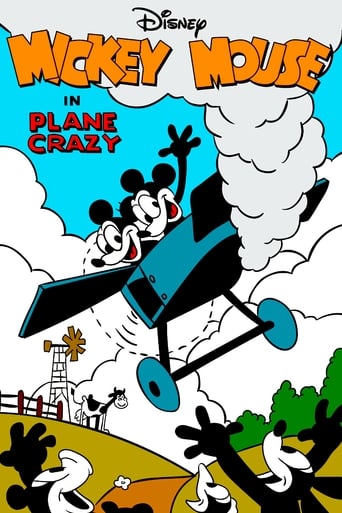
- Plane Crazy (1928)
- Steamboat Willie (1928)
- The Skeleton Dance (1929)
- The Barnyard Battle (1929)
- Mickey's Orphans (1931)
- The Delivery Boy (1931)
- Dumbo (1941)
Film restoration
Poor Papa survives today through 16mm and 35mm film copies held in various archives. The cartoon has been preserved by the Walt Disney Company archives and the Library of Congress. Some versions show varying degrees of deterioration, reflecting the age and handling of the original film elements. The cartoon has been digitally restored for inclusion in Disney home video collections and special features. While not considered lost, some original elements may be missing or damaged, making preservation efforts ongoing. The cartoon is occasionally screened at animation festivals and special events celebrating early Disney animation.
Where to watch
- Disney+ (as part of Oswald the Lucky Rabbit collection)
- Walt Disney Treasures: The Adventures of Oswald the Lucky Rabbit DVD set
- Various public domain animation websites
- Animation archives and museum screenings
- Classic animation streaming services specializing in silent-era cartoons